To deep clean your home after fleas or ticks, start by vacuuming carpets and upholstery daily to capture eggs and larvae. Wash all fabrics, including bedding and pet items, in hot water. Clean hard surfaces with a disinfectant and pay attention to corners where pests might hide. Don’t forget pet areas and toys. Finally, consider natural remedies for added pest control. Stay tuned for more tips on maintaining a pest-free environment.
Understanding Flea and Tick Life Cycles
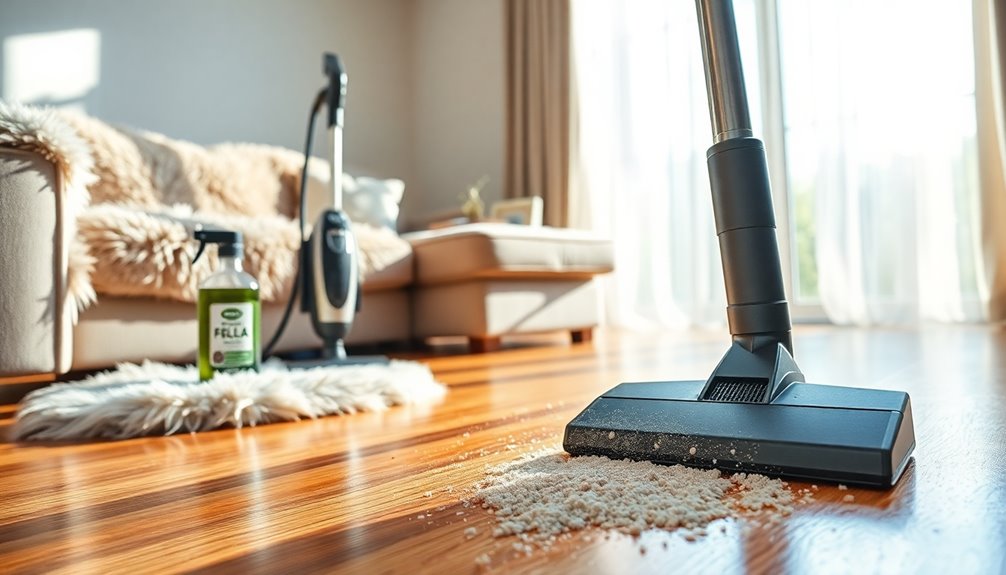
Understanding the life cycles of fleas and ticks is essential for effectively tackling an infestation.
Fleas go through four stages: egg, larva, pupa, and adult. Adult fleas, with their unique flea anatomy, can jump up to 200 times their body length, making them difficult to catch. You’ll want to disrupt each stage to eliminate them completely.
Ticks, on the other hand, have a different life cycle, consisting of four stages as well: egg, larva, nymph, and adult. Their behavior includes waiting patiently for a host to latch onto, often hiding in tall grass or shrubs.
Recognizing these life cycles helps you target your cleaning efforts, ensuring you address all potential hiding spots and break the cycle of infestation effectively. Additionally, using eco-friendly methods to clean your home can further enhance your efforts by minimizing chemical exposure for both you and your pets.
Why Deep Cleaning Is Essential After Infestation
After dealing with a flea or tick infestation, deep cleaning is essential to prevent reinfestation. You’ll need to eliminate any remaining eggs and larvae that could hide in your home. Plus, a thorough clean protects your family’s health by removing allergens and potential disease carriers. Incorporating time-saving cleaning strategies can help streamline the process and ensure no area is overlooked.
Prevent Reinfestation Risks
To effectively prevent reinfestation of fleas or ticks, deep cleaning your home is essential. It goes beyond just getting rid of the pests; it helps eliminate their hiding spots and disrupt their life cycle.
Start by vacuuming carpets, rugs, and upholstery to remove any remaining fleas or ticks. Pay special attention to corners and crevices where they might linger.
Wash pet bedding and any fabric items in hot water to aid in flea prevention. Additionally, consider using a steam cleaner for a thorough tick control approach.
Don’t forget to treat your yard, as outdoor areas can also harbor these pests. By maintaining a clean environment, you greatly reduce the chances of fleas and ticks returning to your home.
Eliminate Eggs And Larvae
Since fleas and ticks reproduce rapidly, deep cleaning your home becomes crucial for eliminating their eggs and larvae. You can’t just vacuum; you need to focus on thorough egg removal to break the life cycle.
Start by washing all bedding, including pet items, in hot water to kill any hidden eggs. For carpets and rugs, use a strong vacuum, and consider a steam cleaner for additional larvae treatment.
Don’t forget to treat upholstery and curtains, as these areas can harbor eggs. After vacuuming, dispose of the bag or empty the canister outside to prevent re-infestation.
Protect Family Health
When your home faces a flea or tick infestation, deep cleaning isn’t just about tidying up; it’s crucial for protecting your family’s health. These pests can carry diseases that pose significant health risks, making thorough cleaning a must.
By eliminating fleas and ticks from your living space, you reduce the chances of bites and the potential transmission of harmful pathogens.
Focus on high-traffic areas, carpets, and upholstery, where these pests often hide. Regular cleaning helps maintain family safety and guarantees a healthier environment for everyone.
Don’t forget to wash bedding and pet items, too. By taking these steps, you safeguard your loved ones and create a more comfortable home free from the threats posed by fleas and ticks.
Preparing Your Home for a Deep Clean
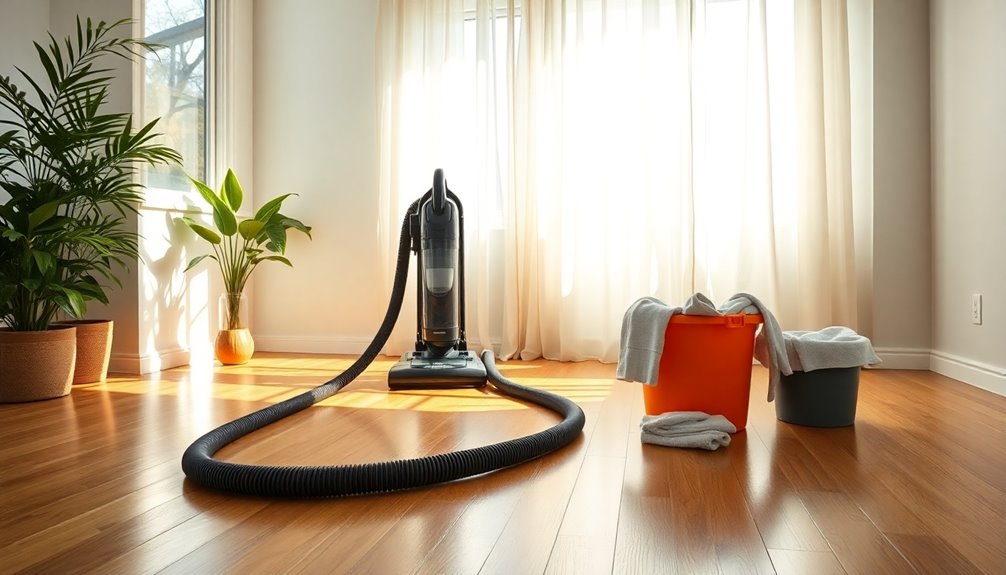
Before you start your deep clean, make sure to remove pets and any items that could get in the way.
Gather all the cleaning supplies you’ll need to tackle the infestation effectively.
This preparation will set you up for a thorough cleaning process. Additionally, consider using eco-friendly solutions to ensure a safe environment for your pets and family during the cleaning process.
Remove Pets and Items
To effectively prepare your home for a deep clean after dealing with fleas or ticks, you’ll need to first remove your pets and any items that could hinder your efforts.
Start with pet relocation; take your furry friends to a friend’s house or a pet boarding facility to guarantee their safety and comfort during the cleaning process.
Next, focus on item storage. Clear out any clutter, including toys, blankets, and furniture that might obstruct your cleaning. This makes it easier to reach all surfaces and helps prevent any hiding places for pests.
Once your pets are settled, and items are stored away, you’ll have a clean slate to tackle the deep cleaning process effectively.
Gather Cleaning Supplies Needed
Having the right cleaning supplies is essential for effectively deep cleaning your home after a flea or tick infestation.
Start by gathering your cleaning tools, including a vacuum with a HEPA filter, brushes, and mops. These will help you tackle floors, carpets, and upholstery.
Don’t forget to stock up on laundry supplies like detergent and fabric softener, as washing bedding, curtains, and pet items is vital in eliminating any lingering pests.
You may also want to include insecticide spray specifically designed for fleas and ticks.
Finally, grab trash bags for discarding any infested items.
With everything in hand, you’re ready to begin the deep cleaning process and reclaim your space from these unwanted visitors.
Vacuuming: The First Step to Eliminate Fleas and Ticks
When tackling a flea or tick infestation, vacuuming is an essential first step that can considerably reduce the problem.
Start by using effective vacuuming techniques, focusing on carpets, rugs, and upholstered furniture where these pests like to hide. Make sure to vacuum every corner and crevice, as eggs and larvae can easily be overlooked.
Aim to vacuum at least once a day for a week to keep the population in check. After each session, don’t forget to empty the vacuum bag or canister outside your home to prevent any fleas or ticks from escaping back into your living space. This consistent vacuuming frequency will help you take control of the situation and pave the way for further cleaning efforts. Additionally, it’s important to remember that sponges can harbor millions of germs, so keeping your cleaning tools sanitized is essential during this process.
Washing Fabrics: Bedding, Curtains, and Pet Items
After tackling the vacuuming, it’s time to focus on washing fabrics like your bedding, curtains, and pet items.
These items can harbor fleas and ticks, so you’ll want to wash them thoroughly and regularly. Regular purging helps maintain a clean and fresh fridge and prevents odors, so similarly, ensure your fabrics are sanitized to reduce any lingering pests.
Wash Bedding Thoroughly
To effectively tackle a flea or tick infestation, washing your bedding thoroughly is crucial. Start with your sheets, pillowcases, and duvet covers, since these bedding types harbor pests and their eggs. Wash them in hot water, ideally at least 130°F, to kill any lingering bugs.
Don’t forget about mattress covers and blankets; they need attention too. Aim to wash all your bedding at least once a week during an infestation, and consider doing this more frequently if you have pets.
After washing, dry your items on high heat to guarantee any remaining pests are eliminated. By maintaining a consistent washing frequency, you’ll create an environment that’s less hospitable to fleas and ticks, keeping your home safer and more comfortable.
Clean Curtains Regularly
Curtains can be a hidden haven for fleas and ticks, making it vital to clean them regularly during an infestation. You should wash your curtain fabrics at least once a month to eliminate any lurking pests and their eggs.
Use hot water and a suitable detergent to guarantee a thorough clean. If your curtains are delicate, consider using gentle cleaning techniques, such as hand washing or a gentle cycle in the washing machine. Don’t forget to check for any specific care instructions on the label.
After washing, hang them outside to dry, as sunlight can help kill remaining fleas and ticks. Regular cleaning not only keeps your home pest-free but also freshens up your living space.
Sanitize Pet Items
Keeping your home free of fleas and ticks also means addressing your pet’s items. Start by washing your pet’s bedding in hot water to effectively sanitize pet bedding. Use a pet-safe detergent to eliminate any lingering pests and their eggs. After washing, dry the bedding on high heat to guarantee everything is thoroughly killed off.
Next, don’t forget to disinfect pet toys. Soak them in a mixture of warm water and vinegar or a pet-safe disinfectant. Rinse well and let them air dry.
Regularly cleaning these items not only helps eliminate fleas and ticks but also promotes a healthier environment for your furry friend. By keeping their belongings clean, you’re taking a big step toward a flea-free home.
Treating Carpets and Upholstery With Specialized Products
Fleas and ticks can easily hide in carpets and upholstery, making it crucial to use specialized products for effective treatment.
Start by thoroughly vacuuming your carpets and upholstery to remove any visible pests and their eggs. After vacuuming, apply specialized sprays designed specifically for fleas and ticks. These sprays penetrate deep into the fibers to eliminate any hidden invaders.
Confirm you follow the product instructions carefully, paying attention to drying times and safety precautions. For an added layer of protection, consider a deep cleaning method, like steam cleaning, which can kill any remaining larvae. Regularly treating your carpets and upholstery to prevent future infestations is essential, as regular maintenance enhances longevity of your home environment, keeping it safe and comfortable for you and your pets.
Cleaning Hard Surfaces: Floors, Baseboards, and Furniture
When it comes to cleaning hard surfaces like floors, baseboards, and furniture, you’ll want to make sure you tackle every nook and cranny to eliminate any lingering pests.
Start with a thorough vacuuming to remove any debris and eggs. For hard surfaces, use a solution designed for hard surface cleaning, applying it with a mop or cloth.
Don’t forget to wipe down baseboards, as fleas and ticks can hide there too. For furniture sanitization, consider using a disinfectant spray on non-fabric surfaces, ensuring you follow the manufacturer’s instructions.
Pay special attention to corners and crevices where pests may hide. Additionally, using natural cleaning solutions can help ensure a safe and effective cleaning process. Finally, allow everything to dry completely before reintroducing any items to the space, ensuring a pest-free environment.
Using Natural Remedies for Additional Pest Control
If you’re looking for eco-friendly ways to enhance your pest control efforts, natural remedies can be a powerful addition.
You can create your own natural pest deterrents at home using essential oils. For instance, mixing a few drops of peppermint or lavender oil with water in a spray bottle can help repel fleas and ticks. Simply spray this mixture around your home, focusing on areas where pests are likely to hide. Additionally, combining essential oils with natural agents like vinegar can enhance their effectiveness as natural alternatives to harsh chemicals.
Diatomaceous earth is another effective, natural option. Sprinkle it on carpets and pet bedding, then vacuum it up after a few hours. This powder harms pests without affecting your family or pets.
Incorporating these methods into your cleaning routine can greatly boost your pest control efforts while keeping your home safe and chemical-free.
Preventative Measures to Avoid Future Infestations
To keep your home free from future infestations, it’s essential to implement a few simple preventative measures.
Start by regularly vacuuming carpets, rugs, and upholstery, as this helps eliminate any eggs or larvae that might be hiding. Wash pet bedding and blankets weekly in hot water to eliminate any pests.
Regularly vacuum carpets and wash pet bedding in hot water to remove hidden eggs and larvae, keeping your home pest-free.
Make sure to treat your pets with veterinarian-recommended flea and tick prevention products. Additionally, seal any cracks or gaps in windows and doors to prevent pests from entering.
Keeping your yard tidy by mowing the lawn and trimming bushes can also reduce outdoor breeding grounds. Regular cleaning habits can also promote a serene living environment, making it easier to spot potential infestations.
Finally, maintain ongoing vigilance; regularly check for signs of fleas or ticks to catch any potential infestations early.
Maintaining a Clean Home Environment Post-Infestation
After taking steps to prevent future infestations, focus on maintaining a clean environment to guarantee pests don’t return.
Establish regular cleaning routines that include vacuuming carpets and upholstery at least once a week. Don’t forget to wash pet bedding and toys frequently; this helps eliminate any eggs or larvae that might be lurking. In addition, keep clutter to a minimum, as it provides hiding spots for pests. Regular home maintenance, like sealing cracks and crevices, can also prevent re-entry. To further enhance your cleaning efforts, consider implementing a personalized cleaning schedule to ensure no area is overlooked.
If you have a garden or yard, regularly trim the grass and bushes to discourage ticks and fleas.
Conclusion
After tackling the deep clean, you’ll feel a sense of relief as your home transforms from a flea and tick haven to a fresh, safe sanctuary. While the battle against these pests may seem intimidating, taking proactive steps guarantees they won’t return. Embrace the contrast between chaos and calm—your hard work today paves the way for peaceful nights ahead. By maintaining this cleanliness, you not only protect your home but also enjoy the comfort it brings.