Cleaning hardwood floors with white vinegar is a safe, effective choice. Its natural acidity breaks down dirt and grime without harming the wood. Just mix one part vinegar with ten parts water for a gentle solution that disinfects and enhances shine. Use a microfiber mop to apply it, and avoid excess water to prevent warping. Regular maintenance keeps your floors looking great. Stick around to discover more tips and alternative cleaning solutions for your hardwood.
Why Choose White Vinegar for Hardwood Floors?
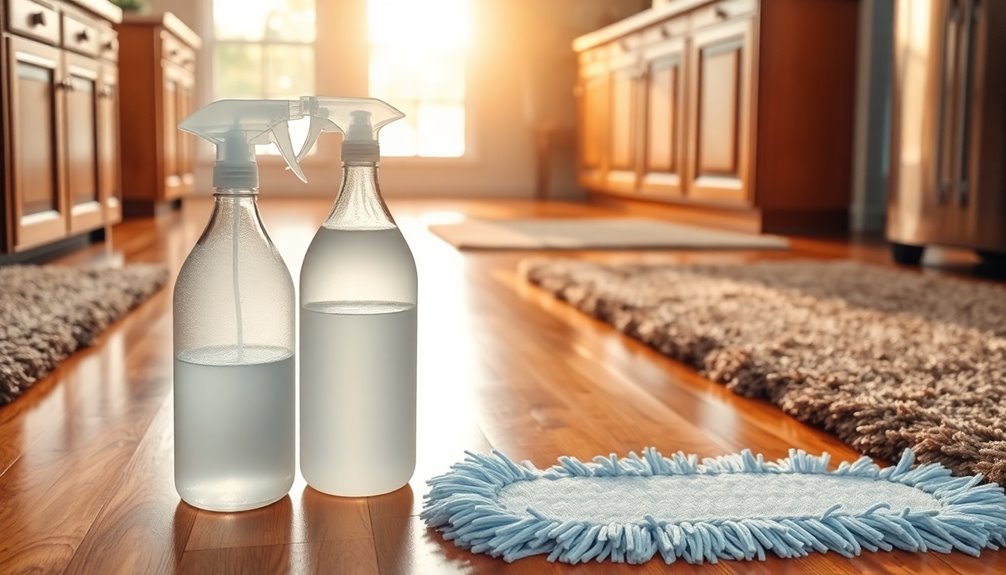
When you want to clean your hardwood floors effectively, white vinegar is an excellent choice. Its natural acidity helps break down dirt and grime without damaging the wood.
One of the key vinegar benefits is its ability to disinfect, making it a safe option for your home. You won’t have to worry about harsh chemicals harming your floors or your family.
One of the standout benefits of vinegar is its disinfecting power, ensuring a safe and chemical-free clean for your home.
For hardwood care, simply mix equal parts of white vinegar and water in a spray bottle. Lightly mist the solution on your floors and wipe with a microfiber cloth.
This method not only cleans but also enhances the natural shine of the wood. By choosing vinegar, you’re opting for an eco-friendly solution that promotes both cleanliness and safety. Additionally, it’s important to maintain moisture levels to prevent warping, ensuring the longevity of your floors.
Understanding the Benefits of Natural Cleaning
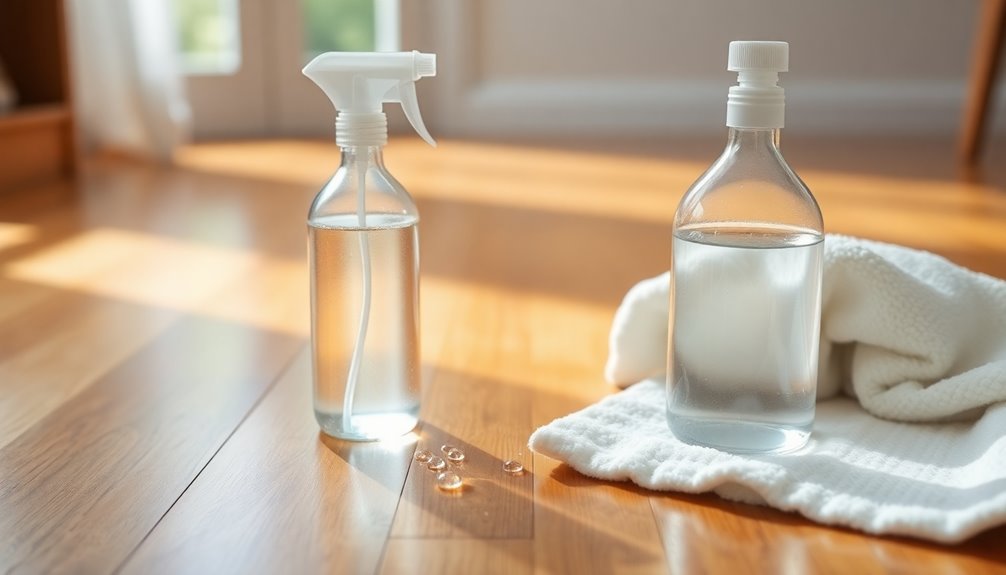
Natural cleaning offers numerous benefits that make it a smart choice for your home. By using eco-friendly solutions like white vinegar, you not only protect the environment but also create a healthier living space for you and your family.
Traditional cleaners often contain harsh chemicals that can trigger allergies or irritate the skin, but natural disinfectants effectively eliminate germs without the negative side effects. Plus, these solutions are usually more affordable and easily accessible. Embracing eco-friendly alternatives can also significantly reduce waste and promote a sustainable lifestyle.
You’ll find that natural cleaning methods are just as effective at keeping your hardwood floors spotless and shining. Embracing these practices can lead to a cleaner home and a more sustainable lifestyle, allowing you to enjoy peace of mind while maintaining your beautiful floors.
How to Dilute White Vinegar for Safe Use
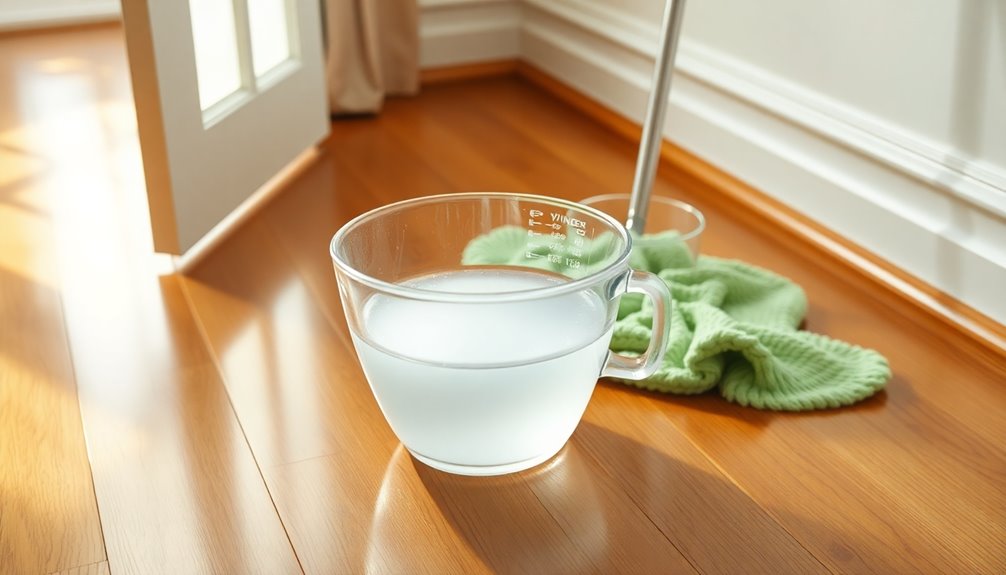
To safely use white vinegar on your hardwood floors, you’ll need to dilute it properly. Aim for a vinegar-to-water ratio that balances effectiveness with safety. For optimal results, consider using a vinegar-water mix that maintains the natural disinfectant properties of vinegar while protecting your floor’s finish.
Ideal Vinegar Ratio
Finding the right vinegar ratio is essential for safely cleaning hardwood floors. You’ll want to use a mixture of one part white vinegar to ten parts water for effective cleaning without damaging the wood.
While various vinegar types exist, white vinegar is the safest choice for hardwood. This ratio helps maintain your floors’ shine and integrity, especially if you clean them regularly.
If you clean your floors weekly, this dilution will keep them looking their best. Avoid using stronger vinegar solutions, as they can strip finishes and cause long-term damage.
Stick to this ideal vinegar ratio, and you’ll enjoy beautifully clean hardwood floors without the risk of harm.
Mixing With Water
Mixing white vinegar with water is a straightforward process that guarantees your hardwood floors stay safe and clean. To achieve the right vinegar concentration, aim for a 1:1 ratio. This means mixing one cup of vinegar with one cup of water.
If your floors require more frequent cleaning, you might consider adjusting the concentration slightly, but always keep it mild to avoid damage.
Remember to test a small area first; this way, you can confirm that your hardwood can handle the mixture. Regular cleaning with this solution helps maintain your floors’ shine and longevity.
With the right dilution, you’ll effectively remove dirt and grime without compromising your beautiful hardwood.
Safety Precautions To Consider
While cleaning hardwood floors is crucial, it’s important to prioritize safety when using white vinegar. Always dilute vinegar with water to prevent damage to your floor types. A common ratio is one cup of vinegar to one gallon of water. This guarantees you maintain the wood’s finish while effectively cleaning.
When using your cleaning tools, opt for a soft mop or cloth to avoid scratches. Avoid abrasive brushes, as they can harm the surface.
Before applying the solution, test it in a small, inconspicuous area to verify compatibility with your floor type. Finally, make sure the room is well-ventilated to minimize any strong odors.
Following these precautions will help keep your hardwood floors looking great and safe.
Best Techniques for Cleaning Hardwood Floors
Cleaning hardwood floors can feel intimidating, but with the right techniques, it becomes a breeze. For effective hardwood floor maintenance, follow these steps:
- Use a microfiber mop: It captures dust and dirt without scratching your floor.
- Mix vinegar with water: Combine one cup of white vinegar with a gallon of warm water for an eco-friendly cleaning solution.
- Spot clean stains promptly: Tackle spills and stains immediately to prevent damage. Additionally, employing advanced cleaning technologies can enhance the overall cleaning process.
Always remember to avoid excess water, as it can warp your floors.
Essential Tools for Cleaning With White Vinegar
To effectively clean your hardwood floors with white vinegar, you’ll need a few essential tools at your disposal.
Start with a high-quality mop that’s suitable for hardwood—microfiber mops are often the best choice since they’re gentle yet effective.
You’ll also want a bucket for mixing your vinegar solution. A spray bottle can be handy for targeted spots, allowing you to apply the solution directly where needed.
Don’t forget a soft cloth or towel for any stubborn areas or spills.
Finally, consider your cleaning frequency; regular maintenance with these tools can keep your floors looking great. Additionally, using pH-balanced cleaners alongside vinegar can help ensure you don’t damage your floor’s finish.
With the right gear, you’ll make the most of your vinegar cleaning routine.
Step-by-Step Guide: Cleaning Your Floors
To clean your hardwood floors effectively, you’ll first want to gather the necessary supplies. Once you have everything ready, follow a simple cleaning technique to guarantee your floors shine. Incorporating non-toxic cleaners into your routine ensures a safe environment for your family and pets. Let’s walk through the steps together.
Gather Necessary Supplies
Gathering the right supplies is essential for a successful hardwood floor cleaning. Having the appropriate cleaning supplies will guarantee you maintain your floors effectively while promoting hardwood care.
Here are three key items you’ll need:
- White Vinegar: A natural cleaner that helps remove grime without damaging the finish.
- Microfiber Mop: Soft and absorbent, it’s perfect for trapping dust and dirt without scratching.
- Bucket: Use this to mix your cleaning solution and conveniently wring out your mop.
Cleaning Technique Steps
Start by sweeping or vacuuming your hardwood floors to remove loose dirt and debris. This pre-cleaning preparation is essential for effective cleaning.
Next, mix a solution of equal parts white vinegar and water in a spray bottle. Lightly mist the solution onto a microfiber mop or cloth—avoid soaking the floor.
Begin mopping in small sections, working your way across the room. Remember to rinse the mop frequently to prevent spreading dirt.
Once you’ve cleaned the entire area, use proper drying techniques by allowing air to circulate or using a dry mop to speed up drying. This helps prevent water damage and streaks.
Your hardwood floors will look clean and refreshed!
How to Remove Stains and Odors Effectively
When tackling stains and odors on hardwood floors, a few effective methods can make a big difference. For ideal stain removal and odor elimination, try these three steps:
- White Vinegar Solution: Mix equal parts of white vinegar and water. Dampen a cloth and gently wipe the stained area.
- Baking Soda Paste: For tough stains, create a paste with baking soda and water. Apply it to the stain, let it sit for a few minutes, then wipe clean.
- Essential Oils: Add a few drops of essential oil, like lemon or lavender, to your cleaning solution for a fresh scent and added odor elimination. Additionally, consider using natural cleaning solutions like vinegar and baking soda for effective stain removal.
Tips for Maintaining Your Hardwood Floors
To keep your hardwood floors looking their best, regular maintenance is essential. Start by sweeping or vacuuming your floors at least once a week to remove dust and dirt. This simple step helps prevent scratches and keeps your floors shiny.
Depending on foot traffic, you might need to increase your cleaning frequency. For deeper cleans, use a damp mop with a gentle hardwood floor cleaner, avoiding excess water. Additionally, using pH-neutral cleaners ensures you maintain the finish of your hardwood floors.
Consider placing mats at entryways to trap dirt before it reaches your floors. Also, use felt pads under furniture to prevent scratches.
Finally, maintain humidity levels in your home to avoid warping. By following these tips for floor maintenance, you’ll extend the life and beauty of your hardwood floors.
Common Mistakes to Avoid When Using Vinegar
When using vinegar to clean your hardwood floors, you might be tempted to pour it on liberally, but that’s a mistake.
Using too much vinegar or neglecting to dilute it can damage your floors over time. Additionally, regular maintenance with reusable cleaning cloths can help prevent scratches and enhance the overall appearance of your flooring.
Let’s explore these common pitfalls to keep your hardwood looking great.
Using Too Much Vinegar
Although vinegar is a popular choice for cleaning hardwood floors, using too much can lead to damage rather than a shine. High vinegar concentration can strip the finish from your hardwood surface, leaving it dull and vulnerable.
To avoid this mistake, keep these tips in mind:
- Dilute properly: Always mix vinegar with water; a 1:1 ratio is often effective.
- Test first: Apply your solution to a small, hidden area to verify it won’t harm the finish.
- Limit frequency: Using vinegar too often can weaken the wood over time, so save it for occasional deep cleans.
Ignoring Dilution Recommendations
Many homeowners underestimate the importance of following dilution recommendations when using vinegar on hardwood floors. Ignoring these guidelines can lead to adverse vinegar concentration effects, causing more harm than good.
Highly concentrated vinegar can strip away the protective finish on your floors, resulting in hardwood floor damage that’s costly to repair.
To prevent this, always dilute vinegar with water according to recommended ratios—typically one part vinegar to three parts water. This way, you can effectively clean without risking your floor’s integrity.
How Often Should You Clean With Vinegar?
To keep your hardwood floors looking their best, it’s important to know how often to clean with vinegar. Following the right frequency recommendations will help maintain their shine without causing damage.
Here’s a simple cleaning schedule to follow:
- Weekly: For high-traffic areas, clean with vinegar once a week to prevent buildup.
- Bi-weekly: In less-trafficked rooms, a bi-weekly vinegar cleaning should suffice.
- Monthly: For areas that see minimal use, a monthly cleaning will keep dust and grime at bay. Regular vacuuming and mopping can also enhance the effectiveness of your vinegar cleaning routine.
Alternative Natural Cleaners for Hardwood Floors
When you’re looking for natural alternatives to keep your hardwood floors clean, you’ll find several effective options that are gentle yet powerful.
Eco-friendly options like castile soap mixed with water work wonders without harsh chemicals. You might also try citrus cleaners, which not only clean but leave a revitalizing scent.
Eco-friendly solutions like castile soap and citrus cleaners effectively clean while refreshing your home with delightful scents.
Baking soda can tackle stubborn spots when mixed with water to form a paste. For a fragrant twist, add a few drops of essential oils to your cleaning solution.
If you need something stronger, diluted alcohol can effectively remove grime without damaging the finish.
These alternatives guarantee your floors shine while being kind to the environment and safe for your home.
Troubleshooting: What to Do If Vinegar Doesn’t Work?
What should you do if vinegar doesn’t deliver the results you expected on your hardwood floors? Don’t fret—there are effective vinegar alternatives you can try.
If stubborn stains persist, consider these steps:
- Baking Soda Paste: Mix baking soda with water to form a paste. Apply it to the stain and let it sit for about 15 minutes before wiping it away.
- Dish Soap Solution: Combine a few drops of dish soap with warm water. Use a soft cloth to gently scrub the area, then rinse with a damp cloth.
- Commercial Cleaners: If natural solutions fail, look for a hardwood floor cleaner specifically designed for your floor type. Always follow the manufacturer’s instructions.
These methods can help restore your hardwood floors effectively!
Final Thoughts on Vinegar as a Cleaning Solution
If vinegar hasn’t worked for your hardwood floors, it’s worth considering its overall effectiveness as a cleaning solution.
While many swear by vinegar, it’s essential to recognize that it’s not a one-size-fits-all answer. Some cleaning myths suggest vinegar is safe for all surfaces, but that’s not true for hardwood.
If you’re still struggling, you might want to explore vinegar alternatives like mild soap or specialized hardwood floor cleaners. These options can be gentler and more effective for your specific needs.
Ultimately, it’s about finding what works best for your floors. Don’t hesitate to experiment with different solutions to discover the ideal cleaning method for your hardwood surfaces.
Happy cleaning!
Conclusion
In the dance of cleaning, white vinegar takes the lead, swirling away grime and leaving your hardwood floors shining like new. By embracing this natural solution, you’re not just tidying up; you’re nurturing your home’s heart. So grab that bottle, mix your potion, and watch as your floors gleam with gratitude. With each sweep, you’ll breathe life into your space, proving that sometimes, simplicity is the secret ingredient for a sparkling finish.