For cleaning hardwood floors, you should use a water to vinegar ratio of 10:1. This means one part vinegar to ten parts water. Diluting vinegar prevents damage to the floor’s finish while effectively cutting through dirt and odors. Avoid using straight vinegar, as it can make floors dull and vulnerable to scratches. Keep your hardwood looking its best by testing your solution first, and there’s more helpful info about maintaining your floors ahead.
Understanding the Importance of the Right Ratio
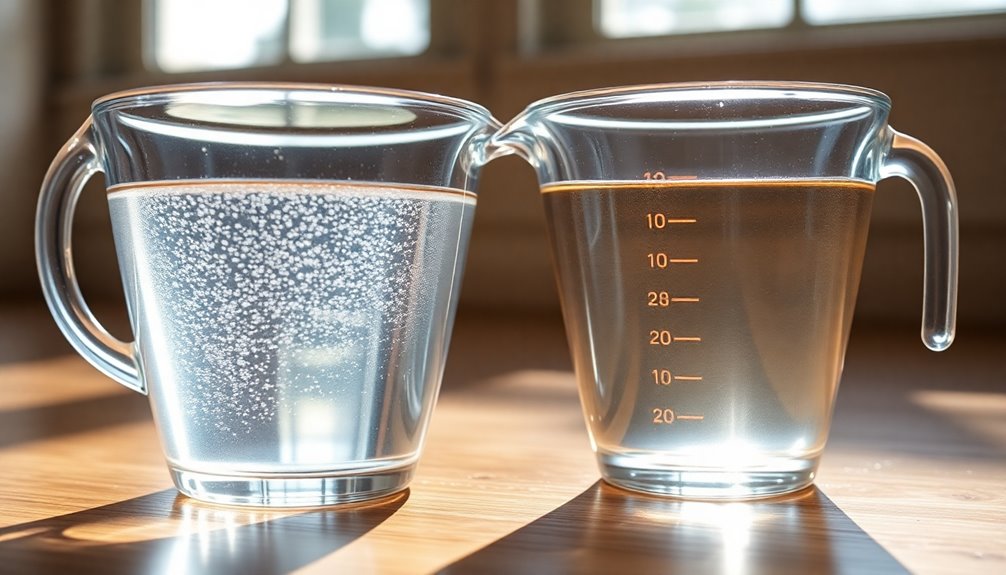
When you’re cleaning hardwood floors, getting the right water to vinegar ratio is essential for effective results.
Using vinegar offers numerous benefits, like cutting through grime and eliminating odors, but too much can damage your floors. You want to preserve their finish and natural beauty while guaranteeing a thorough clean.
Proper hardwood care involves understanding how vinegar works—it’s acidic and can break down dirt without harsh chemicals. By mixing it with water, you dilute its strength, making it safe for your flooring.
This balance guarantees you reap the vinegar benefits without risking damage. With the right ratio, you’ll keep your hardwood looking great while maintaining its longevity. Regular maintenance, such as sweeping or dust mopping, is also crucial for optimal care.
Clean smart, and your floors will thank you!
The Ideal Water-to-Vinegar Ratio for Hardwood Floors
To effectively clean your hardwood floors without risking damage, aim for a water-to-vinegar ratio of 10:1. This balance allows you to enjoy the vinegar benefits, like its natural disinfectant properties, while minimizing the risk of dulling your floors. Many cleaning myths suggest using straight vinegar, but that can be too harsh for your wood. Instead, diluting vinegar helps maintain the integrity of your floors while still providing an effective clean. When you mix one part vinegar with ten parts water, you create a solution that tackles dirt and grime without compromising the finish. Additionally, this diluted solution can help prevent mold and mildew growth in damp areas, making it a versatile choice for cleaning.
Why Too Much Vinegar Can Damage Your Floors
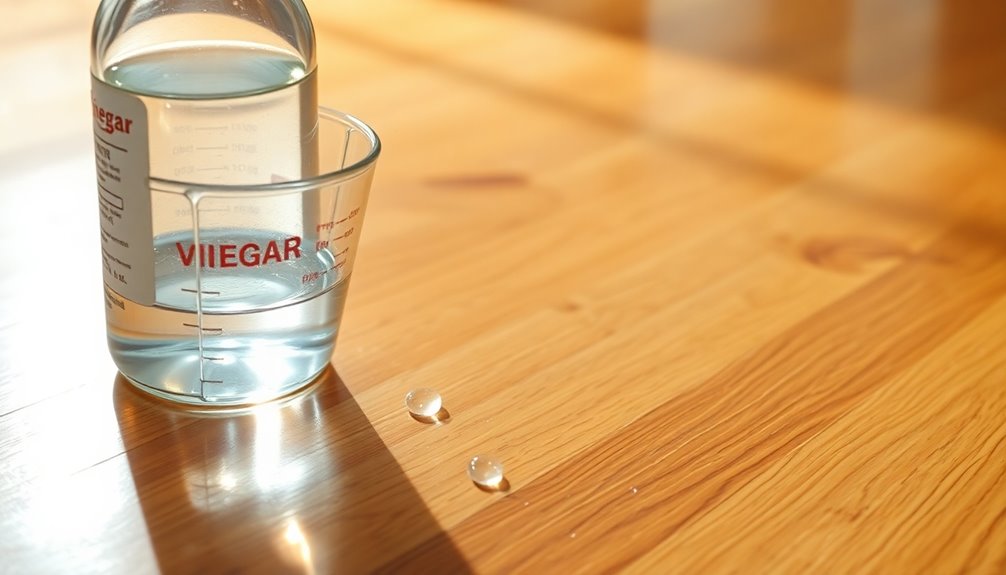
Using too much vinegar in your cleaning solution can lead to significant damage to your hardwood floors. The high vinegar acidity can break down your floor finish, causing unsightly issues.
Excess vinegar in your cleaning solution can damage hardwood floors by breaking down the finish and causing unsightly issues.
Here are three ways excess vinegar can harm your floors:
- Dull Appearance: Over time, the vinegar wears away the protective finish, leaving your floors looking lackluster.
- Surface Scratches: The acidic nature can weaken the wood fibers, making them more susceptible to scratches and dents.
- Water Damage: Excessive moisture from a vinegar solution can seep into seams, leading to warping and swelling.
To protect your investment, stick to the recommended water-to-vinegar ratio, ensuring your floors remain beautiful and well-maintained. Regular maintenance with eco-friendly cleaning agents not only preserves your floors but also contributes to a healthier home environment.
How to Properly Mix Your Cleaning Solution
To get the best results when cleaning your hardwood floors, it’s essential to use the right water-to-vinegar ratio. Aim for a mix that balances effectiveness without risking damage. Additionally, white vinegar’s antimicrobial properties can help keep your floors not only clean but also healthy. Plus, I’ll share some handy tips to help you mix your solution smoothly.
Ideal Water-To-Vinegar Ratio
Finding the right water-to-vinegar ratio is essential for effectively cleaning hardwood floors without causing damage. A proper mix maximizes vinegar benefits while ensuring your floors remain pristine.
Aim for a solution that suits your cleaning frequency; here’s a simple guideline:
- 1 part vinegar to 4 parts water: Ideal for regular maintenance, this mix is gentle yet effective.
- 1 part vinegar to 3 parts water: Use this ratio for tougher stains, balancing cleaning power and floor safety.
- 1 part vinegar to 2 parts water: Reserve this stronger mix for deep cleaning sessions, but use sparingly to protect your finish.
With these ratios, you’ll achieve clean, shiny floors while enjoying the natural benefits of vinegar!
Mixing Tips and Techniques
Once you’ve settled on the right water-to-vinegar ratio for your hardwood floors, it’s time to mix your cleaning solution effectively.
Start by measuring the vinegar and water carefully; precision’s key when using dilution methods. Pour the vinegar into a clean spray bottle or bucket first, then add the water. This order helps to minimize any reaction that might produce excess foam.
For better mixing techniques, consider using a whisk or a wooden spoon to guarantee the solution blends well.
If you’re making a larger batch, use a larger container to give it enough room to mix thoroughly.
Once combined, you’re ready to tackle those floors with a fresh, homemade cleaner that’s safe and effective!
Tips for Testing Your Cleaning Solution on Hardwood
Before applying your cleaning solution to the entire floor, test it on a small, inconspicuous area. Watch how the surface reacts, and give it some time to verify it doesn’t cause any damage. This simple step can save you from costly mistakes and help keep your hardwood looking its best. Additionally, consider using eco-friendly methods to ensure your cleaning solution is safe for both your floors and the environment.
Test On Small Area
How can you guarantee your cleaning solution is safe for your hardwood floors? Start by testing it on a small area. This step confirms surface compatibility and prevents damage.
Here are three effective test methods you can use:
- Choose an inconspicuous spot: Find a corner or beneath furniture where any potential damage won’t be noticeable.
- Apply the solution: Dip a soft cloth into your water-vinegar mix and gently rub the area.
- Wait and observe: Let it sit for a few minutes, then check for any discoloration or peeling.
Observe Surface Reaction
As you test your cleaning solution on hardwood floors, pay close attention to how the surface reacts to the mixture.
Start by observing any immediate changes in color or sheen. Look for signs of damage like discoloration, warping, or sticky residue—these indicate poor surface compatibility.
If the hardwood begins to lose its luster or feels tacky, it mightn’t be the right blend for your floors.
Also, notice if the solution leaves streaks; this could mean it’s too strong or not suitable.
Keep a close eye on these details during your reaction observation, as they’ll guide you in adjusting the water-to-vinegar ratio for the best cleaning without harming your beautiful hardwood.
Wait Before Full Application
After observing the surface reaction to your cleaning solution, it’s important to wait before applying it to the entire floor. This pause allows you to gauge the solution’s effectiveness and prevents potential damage.
Here are three tips to evaluate during this waiting period:
- Test a Small Area: Choose a discreet corner to assess how the wood reacts over time.
- Monitor for Changes: Keep an eye out for discoloration or stickiness in the test area.
- Decide on Cleaning Frequency: If your solution works well, plan a regular application timing to maintain your hardwood floors.
Best Practices for Cleaning Hardwood Floors
When it comes to maintaining the beauty of your hardwood floors, following best practices can make all the difference.
Start by establishing a regular cleaning frequency; weekly sweeping or vacuuming prevents dirt buildup. For deeper cleans, use a solution of water and vinegar, but avoid soaking the floors. Instead, dampen a microfiber mop and go with the grain for ideal results.
Always dry the floor afterward to prevent water damage. Additionally, consider using furniture pads to protect against scratches. Regular cleaning with non-toxic solutions ensures safe practices while maintaining your floors.
Finally, keep humidity levels stable; extreme fluctuations can cause wood to expand or contract. By sticking to these hardwood maintenance tips, you’ll guarantee your floors remain stunning for years to come.
Alternative Eco-Friendly Cleaning Solutions
Many homeowners seek alternative eco-friendly cleaning solutions to maintain their hardwood floors without harsh chemicals.
Homeowners increasingly prefer eco-friendly cleaning solutions for maintaining hardwood floors without the use of harsh chemicals.
If you’re looking for effective natural cleaners, consider these eco-friendly alternatives:
- Castile Soap: This plant-based soap gently cleans while being biodegradable, making it safe for your floors and the environment.
- Essential Oils: Adding a few drops of lemon or tea tree oil not only freshens the scent but also provides antibacterial properties.
- Baking Soda: This versatile powder can tackle tough stains when mixed with water, leaving your floors spotless without harmful residues. Regular use of these natural alternatives minimizes exposure to harmful chemicals that can affect your health and the environment.
Common Misconceptions About Using Vinegar
When it comes to cleaning with vinegar, you might think it’s always safe and that stronger solutions give you a better clean.
Many believe vinegar can tackle every stain, but that’s not the case.
Let’s clear up these common misconceptions so you can clean your hardwood floors effectively. Additionally, while vinegar is a natural cleaner, it’s important to note that it can damage certain surfaces, especially when used in excessive amounts, highlighting the need for safe cleaning practices.
Vinegar Is Always Safe
Vinegar is often touted as a miracle cleaner, but it’s essential to recognize that it isn’t always safe for every surface, especially hardwood floors.
While there are vinegar benefits, using it improperly can compromise hardwood safety. Here are three important considerations:
- Acidity: Vinegar’s acidity can erode the finish on your hardwood, leading to dullness or damage.
- Moisture: Excess moisture from vinegar solutions can seep into seams, causing warping or swelling.
- Residue: Vinegar can leave a film if not rinsed properly, attracting dirt and making your floors look worse.
Stronger Means Better Clean
While it might seem logical that a stronger vinegar solution equates to a better clean, that’s not always the case. In fact, using stronger solutions can lead to more harm than good on your hardwood floors.
High concentrations of vinegar can damage the finish and wood itself, making it less effective for cleaning in the long run. Instead, a diluted solution provides the right balance for effective cleaning without risking your floor’s integrity.
A mixture of one part vinegar to ten parts water often works best. This ratio guarantees you get rid of dirt and grime while protecting your floors.
Vinegar Removes All Stains
Many people believe that vinegar can tackle any stain on hardwood floors, but that’s not entirely true. While it’s a great natural cleaner, certain stain types require more specialized treatment.
You might find it effective for:
- Water stains – Vinegar can help lift these marks if you address them quickly.
- Food spills – It works well on sticky residues, especially when cleaned frequently.
- Pet accidents – Vinegar can neutralize odors but may not fully remove deep-set stains.
For best results, it’s essential to know your stain types and adjust your cleaning frequency.
Relying solely on vinegar could lead to disappointment, so consider other cleaning solutions for tougher messes.
Balance is key for maintaining your hardwood floors!
Additional Maintenance Tips for Hardwood Floors
To keep your hardwood floors looking their best, regular maintenance is essential.
Start by establishing a cleaning frequency that suits your home, ideally sweeping or vacuuming weekly to prevent dust buildup. Use proper tools like microfiber mops to avoid scratches.
For hardwood protection, apply a suitable polish every few months to maintain the finish and shine. If you notice any scratches, address them promptly with a scratch repair kit or wood filler.
Humidity control is also vital; aim to keep indoor levels between 30-50% to prevent warping. Additionally, consistent cleaning helps prevent wear, warping, and scratches, ensuring your floors remain beautiful for years to come.
When to Consult a Professional for Floor Care?
Determining when to consult a professional for floor care can save you time and prevent further damage. Here are three key situations that warrant a professional assessment:
- Severe Scratches or Dents: If your hardwood floors have deep scratches or dents, a professional can restore them without compromising floor longevity.
- Water Damage: Notice warping or discoloration? This could indicate water damage. A pro can evaluate the extent and recommend proper repairs.
- Persistent Odors: Unpleasant smells could signal underlying issues. A professional can identify and resolve these problems to guarantee your floors remain in top condition. Additionally, they can implement stackable trays to help organize cleaning supplies and tools effectively.
Conclusion
To sum up, finding the right water-to-vinegar ratio is like striking a delicate balance on a tightrope. Too much vinegar can tip the scale and harm your beautiful hardwood floors. By mixing your solution carefully and testing it first, you can keep your floors gleaming without risking damage. Remember, a little caution goes a long way in maintaining that warm, inviting shine. If you’re ever in doubt, don’t hesitate to call in the pros for help!