Creating a family cleaning routine that gets everyone involved boosts teamwork and responsibility while keeping your home tidy. Start by assigning age-appropriate tasks like toy pickup for toddlers and vacuuming for teens. Make it fun with cleaning games and themed days to keep spirits high. Set a regular schedule to maintain consistency and adjust roles as family dynamics change. You’ll soon find how effective this approach can be, and there’s even more to discover!
Why a Family Cleaning Routine Matters
When you establish a family cleaning routine, you not only create a tidy home but also foster teamwork and responsibility among family members.
The cleaning benefits extend beyond just a neat space; they help everyone feel part of a shared goal. By working together, you reinforce teamwork importance, teaching kids valuable life skills like cooperation and accountability.
Each member contributes, making chores less intimidating and more enjoyable. Plus, seeing tangible results boosts morale and pride in your living environment.
A consistent routine cultivates healthy habits, making cleaning a normal part of life rather than a dreaded task. Ultimately, it transforms not just your home but also strengthens family bonds through collaboration and shared responsibility. Additionally, celebrating small successes can significantly enhance kids’ confidence and enjoyment in the cleaning process.
How to Involve Everyone in the Process
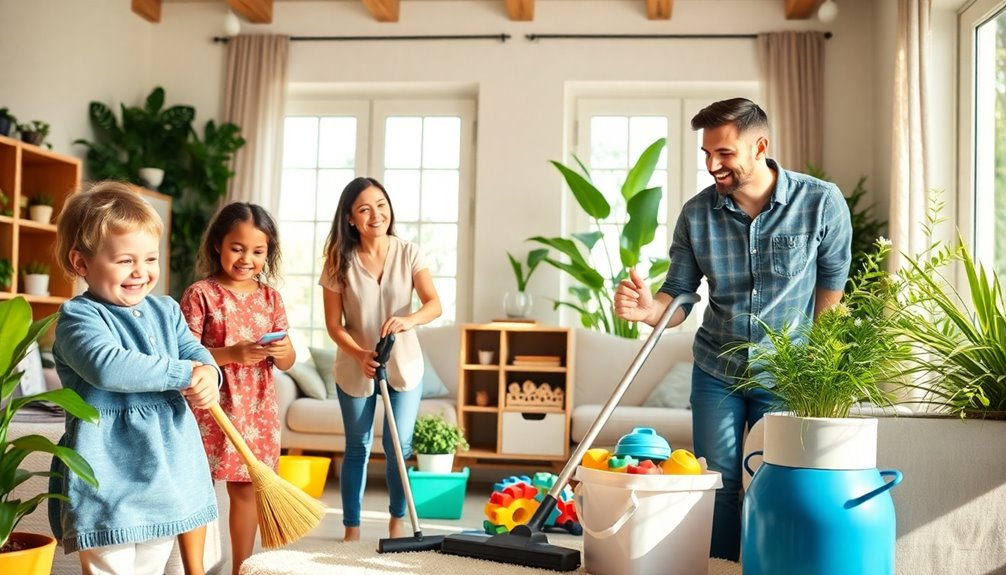
Getting everyone on board with cleaning can be a game-changer for your family’s routine.
By assigning age-appropriate tasks, you empower each member to contribute meaningfully.
Plus, making it fun can turn chore time into quality time together! Additionally, implementing a structured daily cleaning schedule can help ensure that tasks are manageable and everyone knows their responsibilities.
Assign Age-Appropriate Tasks
Involving everyone in the cleaning routine can make the task feel less intimidating and more enjoyable. By assigning age-appropriate tasks, you help foster task ownership and highlight the cleaning benefits for your family.
Here’s how to delegate effectively:
- Toddlers (2-4 years): Simple tasks like picking up toys or wiping spills can instill a sense of responsibility.
- Children (5-8 years): They can handle dusting surfaces or sorting laundry. This gives them a role in maintaining the home.
- Teens (9+ years): Assign them more complex tasks, like vacuuming or organizing their rooms, which builds independence and accountability.
Make It Fun
Making cleaning enjoyable can turn a mundane chore into a family bonding experience.
Start by creating fun chore charts that let everyone pick tasks they actually like. You can even set up a rotation system to keep things fresh.
Add some energy by blasting cleaning songs that get everyone moving. Create a mini dance-off during breaks to keep spirits high!
For younger kids, turn tasks into games—like racing to see who can pick up the most toys in a minute.
Celebrate small victories with treats or family movie nights.
When cleaning feels like a team effort, everyone’s more likely to pitch in, and you’ll all enjoy the process together!
Creating a Weekly Cleaning Schedule Together
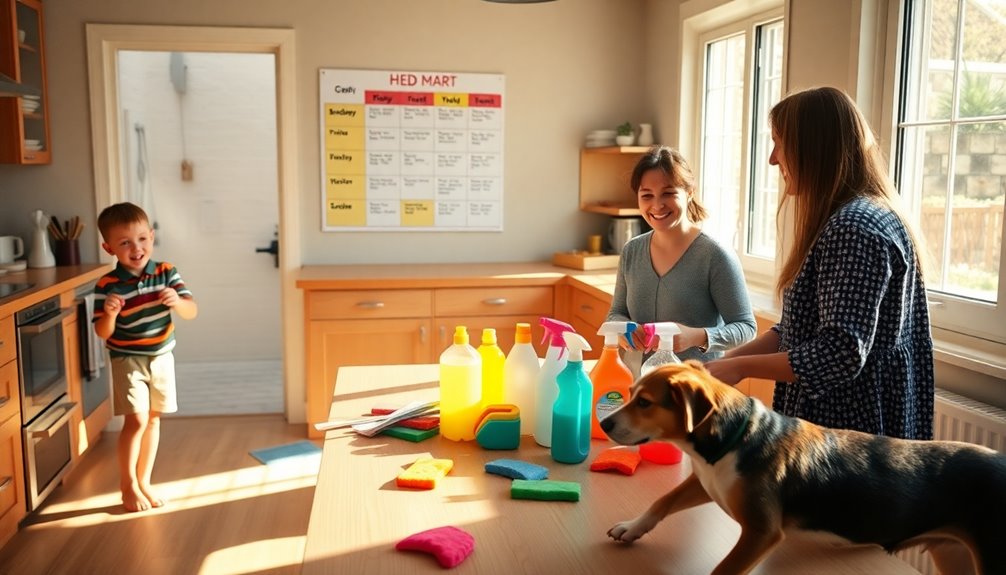
While tackling household chores can feel intimidating, creating a weekly cleaning schedule together can transform the process into a manageable routine. By involving the whole family, you not only share the workload but also foster teamwork.
Here’s how to get started:
- Set Clear Cleaning Goals: Discuss what areas need attention and prioritize them.
- Choose a Family Meeting Time: Gather everyone to brainstorm and agree on a schedule that works for all.
- Assign Tasks: Make sure everyone has a role that fits their abilities, promoting family involvement and accountability.
Incorporating a structured cleaning schedule can help everyone stay focused and organized. This collaborative approach makes the cleaning process less intimidating and more enjoyable, making certain everyone contributes to a clean and organized home.
Assigning Age-Appropriate Tasks
When assigning cleaning tasks, it’s essential to match them with your kids’ ages and abilities. Toddlers can help with simple chores like picking up toys, while teens might tackle more complex duties like vacuuming or organizing. This approach not only fosters a sense of responsibility but also aligns with the idea of establishing a consistent cleaning schedule to enhance efficiency in maintaining a clean home.
Toddlers and Preschoolers Tasks
Assigning age-appropriate tasks to toddlers and preschoolers can be a fun way to engage them in family cleaning routines.
Involving your little ones in toddler chores not only lightens your load but also teaches them responsibility.
Here are three simple tasks they can handle during preschool cleaning:
- Picking Up Toys: Encourage them to gather their toys and put them in designated bins.
- Wiping Surfaces: Give them a damp cloth to wipe down low tables or chairs.
- Sorting Laundry: Let them help separate clothes by color, turning it into a game.
These tasks are manageable and enjoyable, making cleaning a shared family effort.
Plus, you’ll instill good habits early on!
Teens and Preteens Duties
As kids grow into their teen and preteen years, they can take on more responsibilities around the house. Involving them in chores not only helps lighten your load but also fosters responsibility building.
Start by discussing their chore preferences; they’re more likely to engage if they’ve a say. Consider tasks like vacuuming, laundry, or even cooking simple meals—these can be both age-appropriate and skill-building.
Establish a rotating schedule to keep things fair and interesting. Encourage them to set goals, like completing all their chores for a week, which can lead to rewards.
This approach not only teaches valuable life skills but also strengthens your family bond through teamwork and shared responsibilities.
Making Cleaning Fun With Games and Rewards
Cleaning doesn’t have to feel like a chore; instead, it can be a fun family adventure. By turning tasks into games, you encourage everyone to participate and enjoy the process.
Cleaning can transform into an exciting family adventure when you turn chores into engaging games everyone can enjoy.
Implementing cleaning challenges can spark excitement. Consider these ideas:
- Race Against the Clock: Set a timer for each task and see who can finish first.
- Point-Based System: Create a reward system where each completed task earns points, redeemable for treats or privileges.
- Themed Cleaning Days: Choose fun themes (like “Superhero Saturday”) and dress up while you clean.
Additionally, incorporating engaging music playlists can create a lively atmosphere and make cleaning even more enjoyable.
Tips for Maintaining Motivation and Consistency
Making cleaning enjoyable can spark initial excitement, but keeping that momentum going requires a few strategies.
First, pair up with accountability partners—family members who can help remind and encourage each other. Share your goals and celebrate small wins together.
Next, implement positive reinforcement; reward yourself and your kids after completing tasks. This could be a fun family movie night or a special treat.
Additionally, set a consistent schedule so everyone knows when to expect cleaning time.
Finally, rotate responsibilities to keep things fresh and engaging. Incorporating daily cleaning habits can also make the process feel less overwhelming and more manageable.
Adapting Your Routine as Family Dynamics Change
When family dynamics shift—whether due to a new job, a child heading off to college, or a change in household size—it’s essential to reassess your cleaning routine.
Embracing cleaning flexibility helps everyone adapt to new roles and responsibilities. Here are three strategies to guarantee a smooth change:
Embracing cleaning flexibility allows families to adapt seamlessly to new roles and responsibilities during transitions.
- Evaluate Responsibilities: Discuss role adjustments and determine who’s best suited for each task.
- Redistribute Tasks: As family changes occur, consider task redistribution to balance the workload effectively.
- Communicate Openly: Use effective communication strategies to share thoughts and feelings about the evolving routine. Implementing a chore chart can help visualize responsibilities and enhance engagement.
Conclusion
So, you thought cleaning was just a chore? Turns out, it can be a family bonding experience! By involving everyone, you’re not just tidying up; you’re creating memories—who knew scrubbing floors could spark laughter? As you adapt your routine and keep things fun, you’ll find that cleaning together isn’t just about getting the house in order; it’s about building teamwork. Embrace the chaos, and watch your family transform cleaning into a cherished tradition instead of a dreaded task!