You can easily create a safe vinegar cleaner for your hardwood floors. Mix one part white vinegar with ten parts water in a spray bottle. This solution cuts through grime without damaging the finish. Use a microfiber mop for even coverage, and avoid soaking the floor. Regularly check for scratches or dull spots to maintain shine. Want more tips on keeping your floors sparkling? There’s plenty more to explore on effective cleaning methods!
Why Choose Vinegar for Cleaning Hardwood Floors?
When it comes to cleaning hardwood floors, vinegar stands out as a powerful yet gentle solution. Its natural acidity helps break down grime without damaging your floor’s finish, making it perfect for regular hardwood maintenance.
You’ll appreciate the vinegar benefits, like its ability to disinfect and eliminate odors without leaving harmful residues. Using vinegar also saves you money since it’s an inexpensive alternative to chemical cleaners. Just mix it with water, and you’ve got a safe cleaner that’s effective against dirt and stains. Plus, it’s environmentally friendly, which means you’re caring for both your floors and the planet. Additionally, natural alternatives like vinegar minimize environmental impact while providing effective cleaning solutions.
The Benefits of Using Natural Cleaners
Using natural cleaners not only protects your hardwood floors but also promotes a healthier home environment.
Using natural cleaners safeguards your hardwood floors while fostering a healthier living space for your family.
By opting for eco-friendly solutions, you can enjoy several natural benefits that enhance your cleaning routine:
- Safer for Your Family: Natural cleaners reduce exposure to harmful chemicals, making your home safer for kids and pets.
- Environmentally Friendly: Many natural ingredients are biodegradable, contributing to a cleaner planet and reducing pollution.
- Cost-Effective: You can often create your own natural cleaners with common household items, saving you money on commercial products. Additionally, vinegar contains 4-6% acetic acid, which effectively combats germs and odors.
Making the switch to natural cleaners is a simple way to maintain your floors and support a healthier lifestyle.
What You’ll Need for Your Vinegar Cleaner Recipe
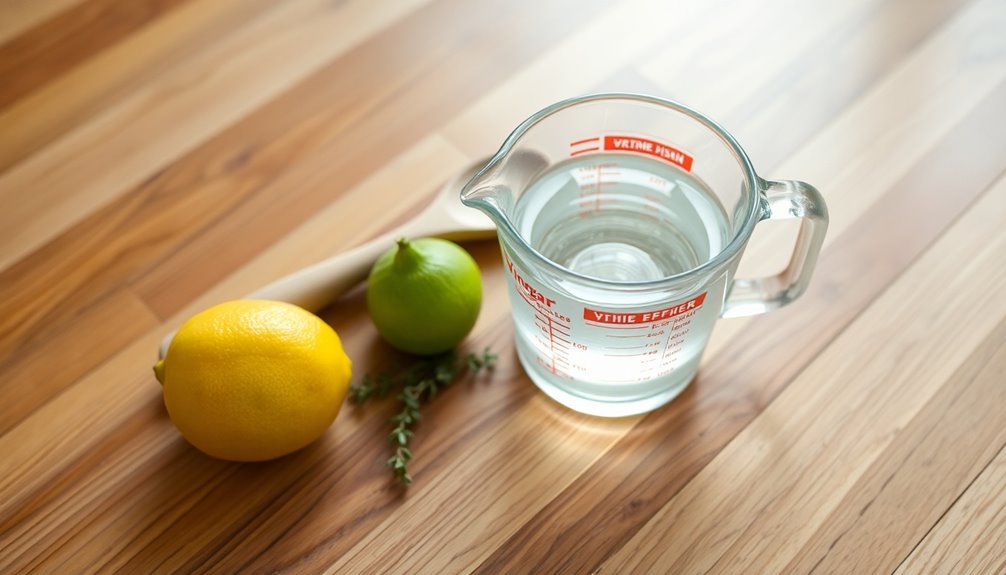
To create your vinegar cleaner, you’ll need a few essential ingredients that are easy to find. Make sure you measure them accurately for the best results and follow safe mixing techniques to keep things simple. For added effectiveness, consider using natural cleaning methods to ensure your home remains healthy and safe. Let’s get started on gathering what you need!
Essential Ingredients Overview
Creating an effective hardwood floor cleaner starts with a few essential ingredients that work wonders together. By combining these elements, you’ll achieve a natural, safe cleaner that keeps your floors looking pristine. Here’s what you need:
- White vinegar: This is the primary cleaning agent that cuts through grime and buildup.
- Water: It helps dilute the vinegar, allowing for the right cleaning ratios.
- Essential oils: Adding a few drops of your favorite oils not only provides a pleasant scent but also enhances cleaning properties.
With these ingredients, you’re well on your way to making a cleaner that’s both effective and safe for your hardwood floors.
Remember to choose essential oils that suit your preferences for a fresh finish!
Measuring Your Ingredients
For ideal cleaning power, use a 1:1 ingredient ratio, mixing one part vinegar with one part water. If you prefer a milder solution, adjust the ratio to 1:2, using one part vinegar and two parts water.
Verify you’re precise in your measurements; even slight variations can affect the cleaner’s effectiveness.
Using measuring spoons for smaller amounts of essential oils can enhance the scent without overpowering the vinegar.
With proper measuring accuracy, you’ll create a reliable solution that keeps your hardwood floors looking their best.
Safe Mixing Techniques
While mixing your vinegar cleaner, it’s essential to gather the right tools to confirm safety and effectiveness. This assures you’re practicing safe mixing and achieving proper dilution for your hardwood floors.
Here’s what you’ll need:
- Measuring cups: Accurate measurements help maintain the right vinegar-to-water ratio.
- Spray bottle: A clean, empty spray bottle allows for easy application without waste.
- Stirring stick: Use a wooden or plastic stick to mix the solution thoroughly without damaging your container.
Step-by-Step Instructions for Making the Cleaner
Gather your ingredients and let’s jump into making an effective hardwood floor cleaner. You’ll need one cup of white vinegar, one gallon of warm water, and a spray bottle for easy application.
Start by mixing the vinegar and warm water in the bottle. As you prepare, remember to take safety precautions—wear gloves to protect your hands, and make certain the area is well-ventilated. It’s also essential to use pH-neutral cleaners for hardwood floors to maintain their finish.
Mix the vinegar and warm water in a bottle, and don’t forget to wear gloves and ensure good ventilation for safety.
It’s wise to test the solution on a small, hidden section of your floor first. Regarding cleaning frequency, aim to clean your hardwood floors every couple of weeks to maintain their shine and longevity.
Once you’ve mixed everything, you’re ready to tackle those dirty floors!
How to Properly Apply the Vinegar Solution
To get the best results from your vinegar solution, start by spraying it directly onto a small section of the floor. This allows you to control the application techniques and avoid excess moisture.
Use a microfiber mop or cloth to gently spread the solution, ensuring even coverage. Consider these tips for ideal results:
- Apply in long, even strokes to prevent streaks.
- Work in small sections and wipe up excess solution promptly.
- Adjust your cleaning frequency based on foot traffic and dirt levels. Additionally, regular checks for scratches or dull spots are essential for immediate attention.
Common Mistakes to Avoid When Cleaning Hardwood Floors
Cleaning hardwood floors can be tricky, especially when it comes to avoiding common mistakes that could damage their finish.
One mistake is neglecting the right cleaning frequency; too infrequent cleaning leads to dirt buildup, while over-cleaning can harm the finish.
Choose your cleaning tools wisely—avoid abrasive materials like steel wool that can scratch the surface. Instead, opt for microfiber mops or soft cloths.
Another common error is using excess water; hardwood absorbs moisture, which can cause warping.
Finally, don’t forget to check the manufacturer’s guidelines for specific care instructions. Additionally, using the right cleaning tools can prevent unintended scratches and preserve the floor’s finish.
How Often Should You Clean With Vinegar?
When it comes to cleaning your hardwood floors with vinegar, consistency is key.
For daily maintenance, a quick vinegar solution can keep dust and grime at bay, while a thorough weekly cleaning helps tackle deeper dirt. Incorporating a regular cleaning schedule can enhance the effectiveness of your vinegar cleaning routine.
Let’s explore how often you should incorporate vinegar into your routine for the best results.
Daily Maintenance Tips
Although many people love the shine vinegar brings to hardwood floors, it’s essential to use it wisely. Incorporating vinegar into your daily routines can help maintain that beautiful finish without damaging your wood.
Here are some tips for effective daily maintenance:
- Quick Sweeping: Remove dust and debris daily to prevent scratches.
- Spot Cleaning: Wipe up spills immediately with a damp cloth and a vinegar solution to avoid stains.
- Weekly Assessment: Review your cleaning schedule to guarantee vinegar is used sparingly, keeping the shine without overdoing it.
Weekly Deep Cleaning
To keep your hardwood floors looking their best, plan for a weekly deep clean using vinegar, but remember that moderation is key.
Vinegar is effective in cutting through grime without damaging your floors, making it a fantastic choice for hardwood care. When you clean weekly, you’ll maintain the shine and beauty of your floors while preventing buildup that can lead to more significant issues.
As a part of your floor maintenance tips, mix one part vinegar with ten parts water for a safe solution.
Use a damp mop to gently clean the surface, ensuring you don’t soak the wood. This simple routine will help preserve the longevity of your floors and keep them looking fresh and vibrant.
Alternative Ingredients to Enhance Your Vinegar Cleaner
Here are three ingredients to take into account:
- Citrus infusion: Adding lemon or orange peels not only enhances the scent but also provides extra grease-cutting power.
- Essential oils: Oils like tea tree or lavender can add antimicrobial properties, leaving your floors cleaner and fresher.
- Baking soda: A small amount can help neutralize odors and lift stains, making it a great companion to vinegar.
These enhancements make your cleaner more effective while keeping it safe for your hardwood floors. Enjoy the added benefits! Additionally, using non-toxic ingredients ensures that your cleaning routine is safe for both kids and pets.
Tips for Maintaining Your Hardwood Floors
Maintaining your hardwood floors is essential for preserving their beauty and longevity, so it’s important to adopt a few simple habits.
First, sweep or vacuum regularly to remove dirt and debris that can scratch the surface.
Regularly sweeping or vacuuming keeps your hardwood floors free from dirt and debris that can cause scratches.
Next, use a damp mop with a gentle cleaner to keep them clean without damaging the wood.
Apply a quality floor polish every few months to enhance shine and protect the finish.
Consider using protective finishes when refinishing to guard against wear and tear.
Also, place rugs in high-traffic areas to minimize scratches.
Finally, avoid walking on your hardwood floors with shoes that have hard soles. Regular maintenance not only prevents wear but also promotes sustainability of raw materials.
How Does Vinegar Compare to Commercial Cleaners?
How do vinegar and commercial cleaners stack up against each other when it comes to cleaning hardwood floors? While both can be effective, they’ve distinct differences worth noting.
- Vinegar Effectiveness: Vinegar’s natural acidity cuts through grime and leaves your floors shiny without harsh chemicals.
- Commercial Costs: Many commercial cleaners come with higher price tags, making vinegar a budget-friendly option.
- Safety: Vinegar is non-toxic and safe for kids and pets, unlike some commercial products that contain harmful ingredients. Additionally, using vinegar reduces indoor air pollution and minimizes exposure to harmful VOCs.
Signs You Might Need Professional Floor Care
If you’re noticing deep scratches and dents on your hardwood floors, it might be time to call in the pros.
Persistent stains and odors that just won’t budge can also signal that your floors need expert care.
Don’t wait until the damage worsens; recognizing these signs early can save you time and money.
Deep Scratches And Dents
While minor scratches can often be remedied with a little DIY care, deep scratches and dents signal it might be time to call in the professionals.
If you notice significant damage, don’t hesitate to seek expert help. Professionals can guarantee proper scratch repair and dent removal, restoring your floors to their original beauty.
Here are a few signs you need to look out for:
- Visible deep scratches that catch your fingernail.
- Dents that affect the integrity of the wood.
- Water damage around the scratched or dented areas.
Ignoring these issues can lead to more extensive damage, so it’s best to address them promptly with the right expertise.
Your floors deserve the best care!
Persistent Stains And Odors
Even after addressing deep scratches and dents, you might find your hardwood floors plagued by persistent stains and odors.
If you’ve tried various cleaning methods without success, it might be time to contemplate professional floor care. Stubborn stains can embed themselves in the wood, making stain removal a challenge, while lingering odors often signal deeper issues.
Professional services have specialized tools and products designed for effective odor elimination and stain removal that you may not have access to at home. Additionally, they can assess whether your floors need refinishing or a more thorough cleaning process.
Don’t let these issues detract from your home’s beauty; seeking expert help can restore your hardwood floors to their former glory.
FAQs About Using Vinegar on Hardwood Floors?
Wondering whether vinegar is safe for cleaning your hardwood floors? The answer is yes, but with caution.
Vinegar offers some amazing benefits, like cutting through grime and deodorizing. However, you should keep hardwood safety in mind to avoid damage.
Here are a few FAQs to reflect upon:
- How often can I use vinegar? Limit it to occasional cleanings, as too much acidity can harm finishes.
- Should I dilute vinegar? Yes, mix it with water to reduce its potency and protect your floors.
- What if I see residue? Wipe the area with a damp cloth to remove any leftover solution.
Final Thoughts on Keeping Your Floors Sparkling
Maintaining the beauty of your hardwood floors requires a thoughtful approach, especially after using cleaning solutions like vinegar. To keep your floors sparkling, establish a consistent cleaning routine. Regular dusting and sweeping remove dirt and debris, preventing scratches and dullness.
When you do mop, stick to your vinegar solution, but don’t overdo it; less is more. Also, consider using a pH-balanced cleaner for deeper cleans, ensuring it’s safe for hardwood. Pay attention to high-traffic areas, as they may need more frequent maintenance.
Finally, protect your floors by using area rugs and furniture pads. With these simple steps, you’ll enhance your floor maintenance efforts, ensuring your hardwood stays beautiful for years to come.
Conclusion
Now that you know how to make and apply your vinegar cleaner, imagine the satisfaction of seeing your hardwood floors gleam like new. But wait—what if you discover hidden scratches or stubborn stains lurking beneath the surface? Don’t worry; you’re equipped with the knowledge to tackle it all. So grab that vinegar solution, put on some music, and get ready to transform your space. Your sparkling floors await, and you won’t believe the difference!