A consistent house cleaning routine helps you create a more organized and healthy home. Start by identifying cleaning zones, like the kitchen or bedroom, and tackle daily tasks like making your bed or quick vacuuming. Weekly, focus on maintenance chores, and set aside time each month for deep cleaning. You can also maximize space with clever storage solutions and involve family members in the process. Discover tips to stay motivated and adjust your routine seasonally to enhance your home!
Why a Cleaning Routine Matters for Your Home
A well-structured cleaning routine is the backbone of a tidy home. When you stick to a consistent routine, you reap numerous cleaning benefits that make your space more enjoyable.
Regular cleaning helps reduce allergens, improves air quality, and prevents dust buildup, which can affect your health. Plus, a clean environment boosts your mood and productivity.
Regular cleaning not only enhances air quality and reduces allergens but also elevates your mood and productivity.
By establishing specific tasks for each day or week, you eliminate the stress of last-minute clean-ups. Routine consistency guarantees that no area gets neglected, making your cleaning efforts more efficient.
You’ll find that maintaining your home becomes second nature, freeing up time for what truly matters. Embrace the benefits of a cleaning routine, and enjoy a clutter-free, inviting space. Additionally, tailoring your cleaning list allows you to better understand specific cleaning needs, enhancing overall efficiency.
Identify Your Cleaning Zones: Room by Room

Dividing your home into cleaning zones makes the task more manageable and less overwhelming.
Start with kitchen organization; tackle surfaces, appliances, and pantry items.
Move to bedroom decluttering, focusing on closets and under-bed storage.
For bathroom maintenance, scrub fixtures and organize toiletries.
Next, guarantee living room tidiness by fluffing cushions and clearing clutter.
Don’t forget entryway efficiency; keep shoes and coats organized.
In the laundry room, sort clothes and clean lint traps.
For garage cleanup, categorize tools and seasonal items.
Finally, address workspace arrangement by sorting papers and supplies.
Consider pet-friendly cleaning methods to keep your home safe and fresh. Additionally, maintaining a solid weekly cleaning checklist can streamline your routine and ensure nothing is overlooked.
Create a Daily Cleaning Checklist You Can Stick To
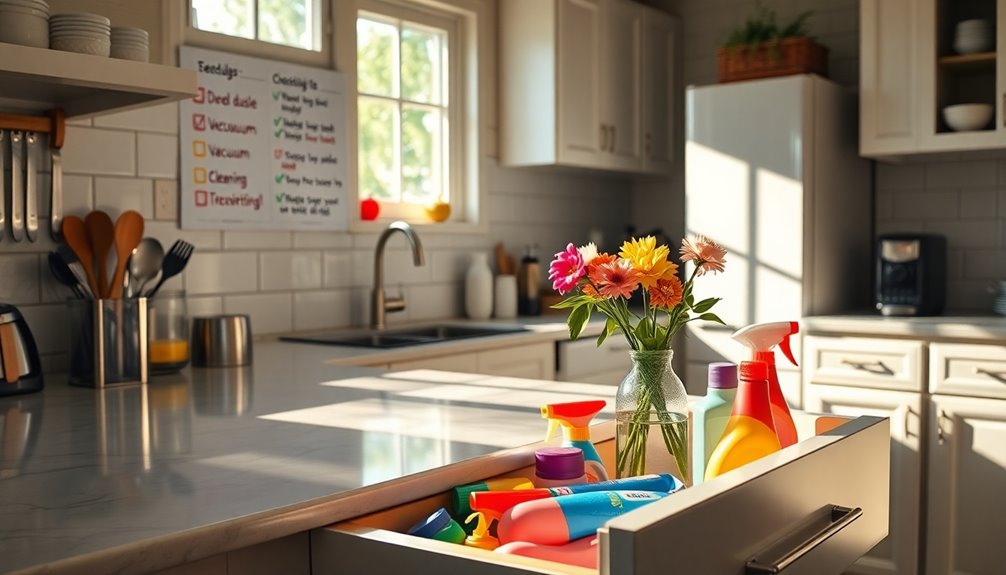
Creating a daily cleaning checklist can simplify your routine and keep your home in top shape. Start by listing essential tasks like making your bed, wiping down surfaces, and doing a quick vacuum. Each morning, use this checklist as your morning motivation to kickstart your day.
Break tasks into manageable chunks to prevent feeling overwhelmed. Additionally, utilizing a wall planner can visually track your daily cleaning tasks and enhance accountability.
In the evening, take a moment for reflection. Review what you’ve accomplished and adjust your checklist for the next day if needed. Celebrate small wins to keep your momentum going.
Weekly Tasks to Maintain a Tidy Space
To keep your home looking its best, you can’t overlook weekly tasks.
Essential chores, like vacuuming and dusting, help maintain a fresh environment.
Plus, incorporating decluttering strategies each week makes a big difference in staying organized. Regular cleaning fosters accountability and consistency in maintaining a tidy home.
Essential Weekly Chores
While keeping your home organized might seem challenging, establishing a few essential weekly chores can make a significant difference.
Start with laundry tips: sort, wash, and fold to stay ahead.
Focus on kitchen organization; clean surfaces and check your pantry for expired items.
Don’t forget pet care—schedule time for grooming and cleaning up.
Incorporate seasonal storage to keep things tidy, rotating items as needed.
Use eco-friendly products for cleaning to guarantee a safe environment.
Prioritize tasks based on urgency and involve your family to share the load, boosting motivation.
Finally, manage your time wisely, dedicating specific blocks for each chore.
With these strategies, you’ll maintain an inviting and organized space effortlessly.
Decluttering Strategies Every Week
Five effective decluttering strategies can transform your space and keep it tidy each week.
First, adopt a minimalist mindset: focus on what truly matters and let go of excess items.
Second, tackle one small area daily—like a drawer or shelf—to avoid feeling overwhelmed.
Third, implement the “one in, one out” rule; whenever you bring in something new, remove something old.
Fourth, schedule a weekly decluttering session, dedicating just 10-15 minutes to sorting through items.
Finally, create designated spaces for everything, ensuring that everything has a home.
By consistently applying these strategies, you’ll foster clutter-free living and maintain an organized environment that enhances your well-being.
Embrace simplicity and enjoy the benefits of a more serene space!
Monthly Deep Cleaning: What to Focus On
As you immerse yourself in your monthly deep cleaning routine, it’s vital to focus on areas that often get overlooked in your regular cleaning.
Start by creating a checklist to guide your deep cleaning efforts, ensuring you cover all your monthly priorities. Use essential supplies like microfiber cloths and effective cleaning products for surface cleaning.
Incorporate time-saving hacks, such as tackling one room at a time to make the process more manageable. Don’t forget to perform thorough inspections of overlooked areas like behind appliances and inside cabinets. Regularly assess cleaning tasks to prepare for the busy holiday season.
By maintaining a consistent maintenance schedule, you’ll keep your home organized and fresh.
With these deep cleaning tips, you’ll transform your space into a haven of cleanliness and order.
Decluttering Techniques to Simplify Your Space
After completing your monthly deep cleaning, it’s the perfect time to tackle decluttering. Embrace a minimalist mindset by focusing on what truly matters to you.
Start with one room or area at a time to avoid feeling overwhelmed. Use clutter-free strategies like the “one in, one out” rule; for every new item you bring in, let go of another.
Consider sorting items into keep, donate, and discard piles. If you haven’t used something in a year, it’s likely time to part ways.
Set a timer for 15-30 minutes and work efficiently. This way, you’ll stay motivated and see progress. Additionally, incorporating a structured daily cleaning schedule can help maintain a decluttered space over time.
The Role of Storage Solutions in Organization
While decluttering sets the foundation for a tidy space, effective storage solutions take organization to the next level. By using storage bins, you can easily categorize items and keep them out of sight.
Closet organizers maximize vertical storage, making the most of your available space. Consider multi-functional furniture, like ottomans with hidden compartments, to enhance both aesthetics and practicality.
Implementing labeling systems helps you quickly find what you need, while seasonal storage keeps off-season items neatly tucked away. Don’t forget about under-bed solutions, which are perfect for stashing extra linens or shoes.
For garage organization, use wall-mounted racks and pegboards to create an efficient system. Additionally, stackable bins can help maximize vertical space in other areas of your home. With these strategies, your home will feel more organized and functional.
Incorporating Family Members Into Your Cleaning Routine
Getting your family involved in cleaning can make the task more manageable and even fun.
Start by assigning age-appropriate tasks that everyone can handle, and create a cleaning schedule to keep things organized. Incorporating a nightly tidy-up routine can help establish consistent habits for everyone.
With everyone pitching in, you’ll find keeping your home tidy becomes a team effort.
Assign Age-Appropriate Tasks
Involving family members in your cleaning routine makes the task more efficient and enjoyable. By assigning age-appropriate tasks, you foster a sense of responsibility and guarantee everyone can contribute meaningfully.
Use chore charts to clarify cleaning expectations, making it easier for kids to understand their roles. This task delegation encourages teamwork benefits, as family members learn to collaborate while sharing responsibilities.
Incorporating routine flexibility allows you to adapt chores based on each person’s skill development, helping them grow. Engage everyone in responsibility sharing, which boosts family engagement and nurtures a supportive home environment.
With age adaptation, you’ll instill valuable life skills while keeping your home organized and promoting a sense of accomplishment for every family member.
Create a Cleaning Schedule
Creating a cleaning schedule can streamline your family’s cleaning efforts and make the process more manageable. Start by determining the cleaning frequency for each task—daily, weekly, or monthly. Discuss this with your family, so everyone understands their responsibilities. Assign age-appropriate tasks, making sure each member knows what’s expected.
Next, gather the necessary cleaning tools and place them in accessible areas. This way, everyone can easily grab what they need when it’s their turn to clean.
Consider using a shared calendar or app to track tasks and progress. By working together, you’ll not only keep your home organized but also teach your family the value of teamwork.
Stick to the schedule, and soon it’ll become a natural part of your routine.
How to Stay Motivated and Consistent?
While it may seem challenging to maintain motivation for your house cleaning routine, finding ways to stay consistent can truly transform the task into a manageable part of your life.
Here are some effective strategies to boost your cleaning motivation:
- Set Clear Goals: Break down tasks into specific, achievable goals to keep you focused.
- Use Visualization Techniques: Picture your clean home regularly to reinforce your desire to clean.
- Establish a Reward System: Treat yourself after completing tasks to build positive associations.
- Find Accountability Partners: Team up with a friend to keep each other on track, sharing your progress.
Additionally, consider cleaning high-traffic areas first to see immediate results, which can further enhance your motivation.
Tips for Adapting Your Routine to Different Seasons
As the seasons change, so should your cleaning routine.
In spring, focus on deep cleaning and rejuvenating your space, while winter calls for organizing and preparing for colder months.
Adapting your approach can make your home feel more comfortable and inviting year-round, especially when you consider seasonal cleaning tasks that ensure your home remains fresh and well-maintained.
Spring Cleaning Essentials
Spring cleaning is more than just a seasonal ritual; it’s an opportunity to refresh your home and adapt your cleaning routine to the changing weather.
To make the most of this time, gather these essential tools to streamline your spring cleaning process:
- Multi-surface cleaner – Effective for various surfaces, reducing the need for multiple products.
- Microfiber cloths – Perfect for dusting and wiping without leaving streaks.
- Broom and dustpan – A must for tackling dirt and debris in corners.
- Vacuum with attachments – Ideal for cleaning carpets, upholstery, and hard-to-reach areas.
Winter Organization Strategies
When the chill of winter sets in, it’s essential to adjust your organization strategies to keep your home cozy and efficient.
Start with winter decluttering; go through your belongings and remove items you no longer need. Consider donating or recycling them to create space for cozy blankets and warm clothing.
Next, focus on seasonal storage. Use clear bins to neatly stow away summer items, like beach gear and outdoor furniture, in a garage or attic.
Label each bin for easy access when the seasons change.
Finally, designate a space for winter essentials, like boots and hats, to keep your entryway tidy.
Conclusion
By embracing a cleaning routine, you’re not just tidying up your space; you’re creating a sanctuary that reflects your life. It’s funny how, when you tidy one room, inspiration strikes in another—maybe that cluttered closet or the neglected garage. As you make this routine a habit, you’ll find that organization seeps into other areas of your life, too. So grab that checklist and get started; your more organized home—and mind—is just a few cleaning sessions away!