To clean your scrub brush the easy way, start by rinsing it under warm water to remove loose debris. Soak it in a solution of vinegar and baking soda for about 30 minutes to tackle tough grime. After soaking, gently scrub the bristles with an old toothbrush for thorough cleaning, then rinse well. Finally, shake off excess water and hang it to dry in a well-ventilated area. You’ll discover even more tips to keep your scrub brush in top shape.
Understanding the Importance of Cleaning Your Scrub Brush
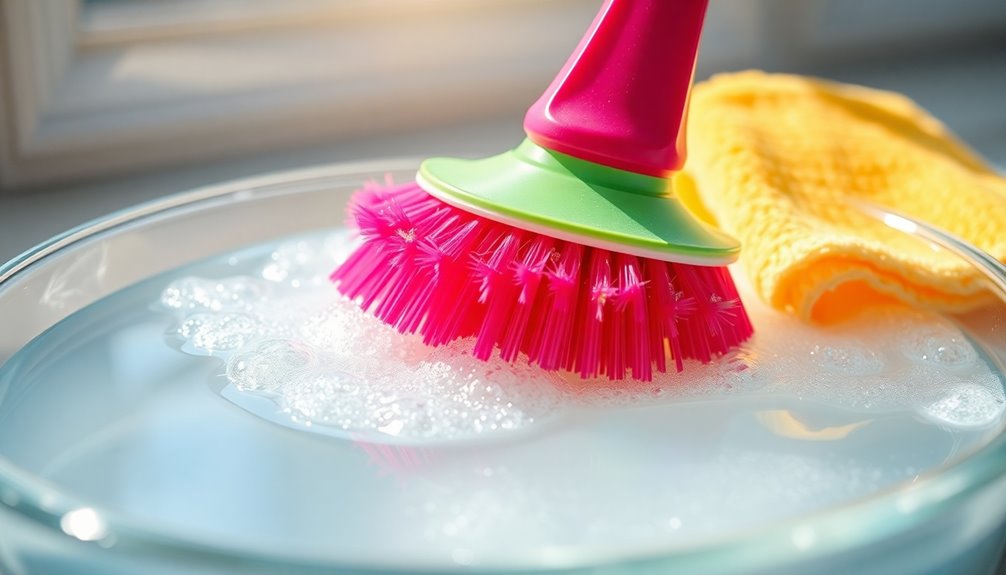
Cleaning your scrub brush might seem like a small task, but it’s essential for maintaining its effectiveness. When you neglect brush hygiene, you allow bacteria buildup to thrive, which can compromise your cleaning efforts.
Think about it: every time you use that brush, it picks up dirt and grime. If you don’t clean it regularly, you’re just spreading those contaminants around during your next cleaning session.
Plus, a dirty brush can cause unpleasant odors and may even damage surfaces over time. By keeping your scrub brush clean, you guarantee it works efficiently and lasts longer. Additionally, using natural cleaning agents can help ensure that your cleaning tools remain free from harmful substances.
Signs Your Scrub Brush Needs a Good Clean
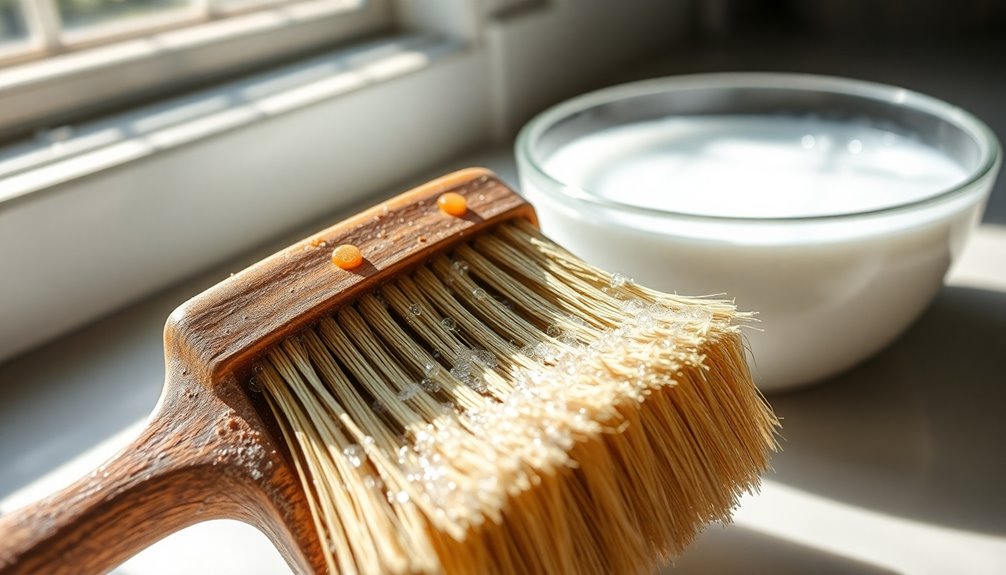
Your scrub brush can easily show signs it’s overdue for a cleaning, and recognizing these cues helps maintain its effectiveness.
If you notice a build-up of grime or residue on the bristles, it’s time to take action. Foul odors are another clear indicator your brush hygiene needs attention.
Noticing grime or foul odors on your scrub brush? It’s time to give it a thorough clean for optimal hygiene.
Additionally, if the bristles appear discolored or frayed, they won’t clean as effectively. Regularly check for dirt trapped between the bristles, as this can hinder performance.
Finally, if your scrub brush feels sticky or tacky to the touch, it’s definitely time for a thorough clean. Regular inspection is vital; studies show 75% of sponges contain coliform bacteria, so similar vigilance with your scrub brush is essential.
Following these maintenance tips will guarantee your brush stays in top shape, ready to tackle any cleaning task.
Essential Supplies for Cleaning Your Scrub Brush
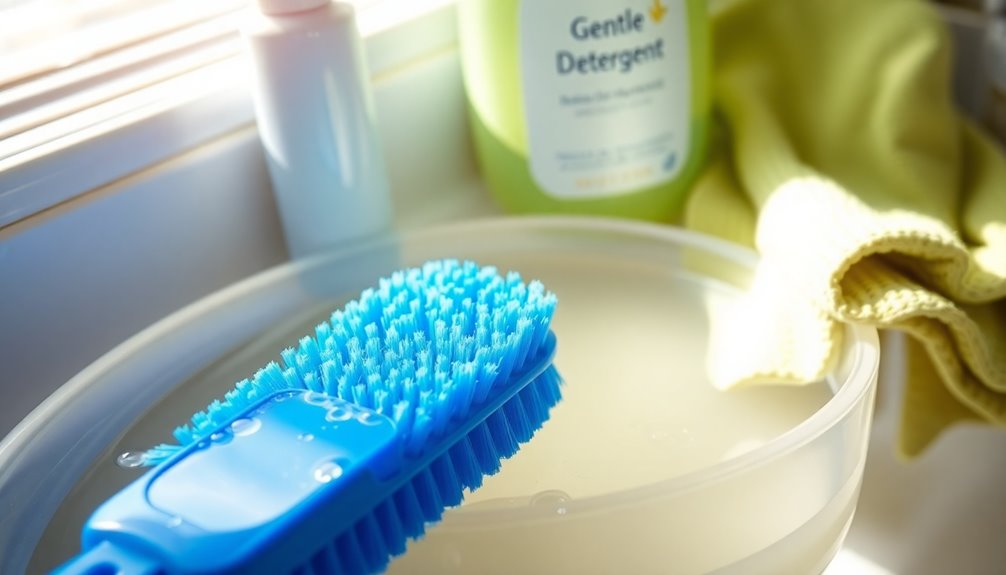
When it’s time to clean your scrub brush, having the right supplies on hand can make the process much easier.
Start by creating a supply checklist to guarantee you have everything you need. You’ll want a bucket to soak the brush, warm water, and a mild detergent that’s safe for the brush materials.
If your brush has tough grime, consider adding some vinegar or baking soda to the mix for extra cleaning power. A pair of rubber gloves can protect your hands, too.
Finally, grab an old toothbrush or another small brush for scrubbing those hard-to-reach areas. Using non-toxic cleaners, such as vinegar and baking soda, can effectively eliminate grime without health risks.
With these essentials, you’ll be well-equipped to tackle the cleaning process and revive your scrub brush effectively.
Quick Rinse: The First Step to Reviving Your Brush
Start by rinsing your scrub brush under warm running water to remove loose debris and grime. This quick rinse is essential for effective brush care and sets the stage for deeper cleaning later.
Make sure to angle the brush bristles downward to let the water flush out dirt trapped between them. As you rinse, gently shake the brush to dislodge stubborn particles.
This step won’t take long, but it’s a vital part of your brush maintenance tips. By removing excess grime, you’ll enhance the brush’s cleaning power and longevity. Additionally, using eco-friendly methods can further protect your health and the environment while maintaining your cleaning tools.
Plus, it prepares the brush for any soaking solutions you might use later. A simple rinse can make a big difference in keeping your scrub brush in top shape.
Soaking Solutions: Which Mixtures Work Best?
When it comes to soaking your scrub brush, a few effective mixtures can make a big difference. Vinegar and baking soda create a powerful solution, while dish soap and water offer a gentle yet effective clean. Additionally, using a DIY disinfecting spray can help eliminate bacteria, ensuring your brush is not only clean but also sanitized. Let’s explore how each of these options can help revive your brush.
Vinegar and Baking Soda
Start by pouring some vinegar into a bowl and adding a few tablespoons of baking soda. You’ll see a fizzy reaction, which helps break down dirt and buildup on your brush.
Soak the brush in this mixture for about 30 minutes, allowing the vinegar benefits to work their magic. After soaking, scrub the bristles gently with your fingers or a clean cloth.
Rinse thoroughly under warm water, ensuring all residue is removed. By using vinegar and baking soda, you’ll restore your scrub brush to its former glory without harsh chemicals.
Give it a try!
Dish Soap and Water
After using vinegar and baking soda, dish soap and water offer another effective method for cleaning your scrub brush. The dish soap benefits include its ability to cut through grease and grime, making it perfect for stubborn stains.
Start by filling a bowl with warm water; the water temperature plays an essential role in loosening dirt. Add a few drops of dish soap and stir to create a soapy solution.
Submerge your scrub brush, ensuring the bristles are fully immersed. Let it soak for about 15–30 minutes, allowing the soap to penetrate the buildup.
After soaking, use your hands to work the bristles gently, then rinse thoroughly under running water. This method leaves your brush clean and ready for its next task!
Scrubbing Techniques: How to Remove Stubborn Grime
Tackling stubborn grime requires the right scrubbing techniques to make the job easier and more effective. Start by choosing a quality scrub brush that suits the surface you’re cleaning.
For tough spots, apply a bit of elbow grease with firm, circular motions; this aids in grime removal without damaging surfaces. If the grime persists, try alternating between horizontal and vertical strokes to loosen it up.
Don’t forget to keep your brush wet to help lift dirt more efficiently. Remember, using the right scrub brush techniques can greatly reduce your effort and time spent.
Finally, rinse the area frequently to see your progress and determine if you need to apply more pressure or cleaner. Additionally, consider using an electric cleaning brush for enhanced scrubbing power and efficiency. Happy scrubbing!
Using Vinegar and Baking Soda for Deep Cleaning
Release the power of vinegar and baking soda for deep cleaning by combining these two household staples.
Start by sprinkling baking soda over your scrub brush, which acts as a gentle abrasive. Next, pour vinegar over the baking soda. You’ll notice fizzing—this reaction helps lift grime and odors.
Let it sit for about 10 minutes to maximize the vinegar benefits, which include breaking down tough stains and disinfecting surfaces. Vinegar contains 4-6% acetic acid, making it effective against bacteria and odors.
After that, scrub the brush under warm water, making sure you rinse away all residue. Finally, let it air dry completely.
This simple method not only revitalizes your scrub brush but also guarantees it’s ready for your next cleaning task!
Disinfecting Your Scrub Brush: Why It Matters
Cleaning your scrub brush goes beyond just removing visible dirt; it’s also about making certain it’s free from harmful bacteria and germs. Regularly disinfecting your brush is essential for maintaining a hygienic cleaning routine.
If you ignore brush bacteria, you risk transferring them to surfaces you clean next.
There are several effective disinfecting methods you can use. Soaking your brush in a solution of bleach and water or using a vinegar solution can kill most bacteria. Additionally, using eco-friendly cleaning products can enhance your disinfection efforts.
Be sure to rinse thoroughly afterward to remove any residue. Additionally, consider using disinfectant sprays specifically designed for cleaning tools.
Drying Your Brush Properly to Prevent Mold
While it might be easy to overlook, properly drying your scrub brush is essential in preventing mold growth. After cleaning, shake off excess water and use effective drying techniques to guarantee your brush is thoroughly dried.
Hang your brush in a well-ventilated area, or place it bristles-up on a drying rack. Avoid storing it in a closed cabinet or damp environment, as this promotes mold development. If you’re in a hurry, a quick towel dry can help, but air drying is your best bet for mold prevention. Regularly inspect your brush for any signs of mold, and if you spot any, clean it again and make sure it dries properly.
For optimal drying, hang your scrub brush in a ventilated area or place it bristles-up on a drying rack.
Your efforts will keep your scrub brush fresh and ready for use! Additionally, regular maintenance of cleaning tools ensures they remain effective and hygienic over time.
How Often Should You Clean Your Scrub Brush?
To maintain a scrub brush’s effectiveness, you should clean it regularly. A good cleaning frequency is after each use, especially if you’ve tackled tough jobs. This helps remove debris and prevents the buildup of bacteria, which can compromise the brush’s performance. Regular maintenance extends lifespan and ensures optimal cleaning results. If you use your brush less frequently, aim for a thorough clean at least once a week.
Tips for Maintaining Your Scrub Brush’s Condition
Maintaining your scrub brush’s condition guarantees it lasts longer and performs better. Here are some essential tips to keep in mind:
- Proper brush storage: Store your brush upright to prevent bristle deformation.
- Bristle care: Rinse thoroughly after each use to remove residue and prevent buildup.
- Cleaning frequency: Clean your brush weekly to keep it in top shape and avoid odors.
- Ergonomic design: Choose brushes with comfortable handles to reduce strain during use.
- Material durability: Opt for brushes made of high-quality materials that withstand frequent use and harsh cleaners.
Alternatives to Traditional Scrub Brushes
If you’re looking for effective ways to clean without a traditional scrub brush, several alternatives can get the job done just as well.
Biodegradable options, like plant-based sponges or brushes made from natural fibers, are great for those who want to be eco-friendly. They’re effective for scrubbing while breaking down naturally after use.
Another option is silicone alternatives, which are durable and resist bacteria growth. These brushes can easily be cleaned and reused, making them a practical choice. Plus, they come in various shapes and sizes, perfect for tackling different cleaning tasks.
Whether you choose biodegradable or silicone options, you’ll find that these alternatives can be just as effective in keeping your surfaces spotless.
Eco-Friendly Cleaning Solutions for Your Brush
Cleaning your scrub brush doesn’t have to involve harsh chemicals. You can effectively clean it using natural alternatives that are safe for both you and the environment.
Opt for biodegradable options that break down easily and won’t harm aquatic life. Here are some eco-friendly cleaning solutions you can try:
- Baking soda: Great for scrubbing and deodorizing.
- Vinegar: Cuts through grime and disinfects.
- Castile soap: A gentle, plant-based cleaner.
- Essential oils: Add a pleasant scent and antibacterial properties.
- Lemon juice: Natural bleach and stain remover.
Troubleshooting Common Scrub Brush Cleaning Issues
When it comes to scrub brushes, a few common cleaning issues can arise that might leave you frustrated. First, if your brush isn’t cleaning effectively, check the brush material types. Some materials, like nylon, can wear down quicker than others, affecting performance.
If you notice stubborn grime, make sure you’re following the cleaning frequency guidelines; brushes used daily may need more frequent deep cleaning.
Another issue is lingering odors. If your brush smells, it might be time to soak it in vinegar or baking soda to neutralize odors.
Ultimately, if bristles are bent or misshapen, try soaking the brush in hot water to restore its shape. By addressing these issues, your scrub brush will perform better and last longer.
Conclusion
To sum up, keeping your scrub brush spotless is simple and satisfying. With a little love and a few lively cleaning solutions, you can maintain its marvelous condition. Remember, a clean brush not only brightens your space but also boosts your cleaning efficiency. So, engage in diligent care, and let your scrub brush shine like new, ready to tackle the toughest grime. Embrace the freshness and feel the joy of a job well done!