To clean your dishwasher filter, start by turning off the appliance and removing the bottom rack. Locate the filter, twist or lift it out, and rinse it under warm water to eliminate debris. Use a soft brush for stubborn grime. Allow it to air dry completely before reinstalling. Confirm it fits snugly and check for leaks by running a short cycle. If odors persist, there are additional tips you can explore for better maintenance and efficiency.
What Is a Dishwasher Filter and Why Does It Matter?
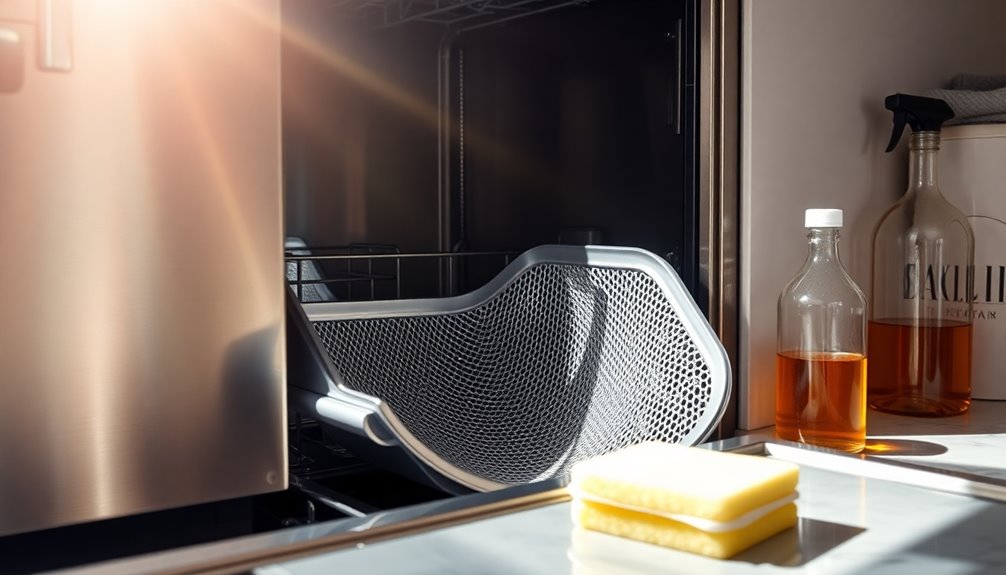
A dishwasher filter acts like a guardian, guaranteeing your machine runs smoothly by catching food particles and debris during cycles.
Understanding filter types is vital; most dishwashers have either a removable or self-cleaning filter. The removable filter allows you to manually clean it, while the self-cleaning type uses the dishwasher’s spray action to flush out debris.
Understanding filter types is essential; dishwashers feature either removable filters for manual cleaning or self-cleaning ones that flush out debris automatically.
Both filter functions are essential for maintaining peak performance, as they prevent clogs and guarantee clean dishes. If you ignore your filter, you risk reduced efficiency and potential damage to your appliance. Regular attention to your dishwasher filter keeps it in top shape, allowing you to enjoy spotless dishes without hassle. Natural deodorizing tips can also help maintain a fresh environment in your kitchen as you clean. So, knowing how your filter works is key to your dishwasher’s longevity.
Signs Your Dishwasher Filter Needs Cleaning

How can you tell if your dishwasher filter needs cleaning? Look for signs of filter blockage, like dirty dishes after a cycle or water pooling at the bottom of the dishwasher.
If you notice a foul odor, it’s likely food particles are stuck in the filter. Pay attention to your cleaning frequency; if you haven’t cleaned the filter in a few months, it’s time to check.
A clogged filter can reduce efficiency, making your dishwasher work harder and use more water. You might also hear unusual sounds during operation, indicating that the filter isn’t doing its job.
Staying on top of these signs will keep your dishwasher running smoothly and extend its lifespan.
Tools You’ll Need to Clean Your Dishwasher Filter
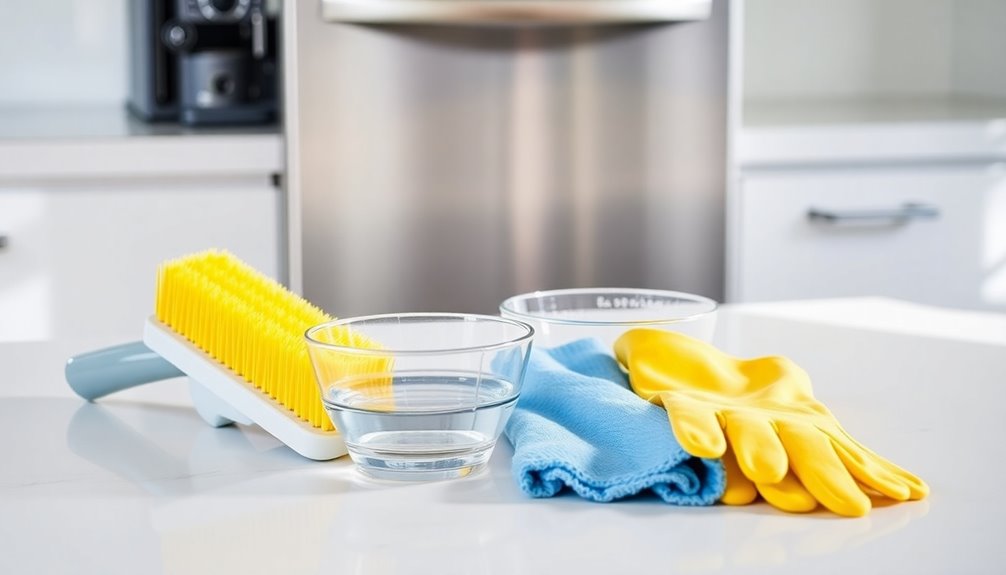
Before you start cleaning your dishwasher filter, you’ll want to gather a few essential tools.
Having the right supplies on hand makes the task quicker and easier. Additionally, ensuring that you regularly clean the filter will help maintain your dishwasher’s performance.
Essential Cleaning Supplies
Cleaning your dishwasher filter effectively requires just a few essential supplies.
First, gather a soft-bristle brush or an old toothbrush to scrub away stubborn debris. You’ll also need a bowl or basin to soak the filter in warm, soapy water, which helps loosen grime.
Dish soap is key, so make sure you have that on hand. A microfiber cloth is great for drying the filter afterward.
If your filter has any hard-to-reach areas, a toothpick or a small, pointed tool can help dislodge trapped particles.
Finally, a pair of gloves protects your hands while you work.
With these cleaning supplies, you’re all set to keep your dishwasher filter in top shape!
Recommended Tools Checklist
To tackle your dishwasher filter effectively, you’ll need a few key tools.
Start with a soft brush or an old toothbrush for scrubbing away stubborn debris. A bowl or sink for rinsing the filter is essential, too.
You might also want a microfiber cloth to wipe down surfaces. If your filter has built-up grease, consider having a gentle dish soap on hand for effective cleaning.
Step-by-Step Guide to Removing the Dishwasher Filter
Removing your dishwasher filter is a straightforward process that only takes a few minutes.
Start by checking your dishwasher’s manual to identify the filter types specific to your model. Most filters are located at the bottom of the dishwasher.
Open the door and pull out the bottom rack to access the filter. Twist or lift the filter, depending on its design, to remove it carefully.
Make sure you do this regularly, at least every month or two, to maintain peak performance. If you notice food debris or buildup, it’s time to remove it. Regular maintenance ensures optimal functioning and longevity of your dishwasher.
Once you’ve got the filter out, you’re ready for the next step in cleaning it thoroughly.
How to Clean the Dishwasher Filter: A Detailed Process
Now that you’ve removed the dishwasher filter, it’s time to get it sparkling clean. You’ll need a few tools and some straightforward steps to make this process easy. Plus, I’ll share some maintenance tips to keep your filter in top shape. Regular cleaning of your dishwasher filter not only enhances efficiency but also promotes a hygienic environment for your kitchen.
Tools You’ll Need
Before diving into the cleaning process, you’ll want to gather a few essential tools that will make your task easier and more efficient.
First, grab a soft brush or toothbrush to gently remove debris from various filter types. You’ll also need a bowl of warm, soapy water for soaking the filter—this helps break down any stubborn grime.
A microfiber cloth is handy for drying and wiping down surfaces. Don’t forget a pair of gloves to keep your hands clean while you work.
Depending on your dishwasher’s maintenance frequency, you might want to invest in a filter cleaning solution for deeper cleans.
With these tools at your side, you’ll be well-prepared to tackle your dishwasher filter cleaning.
Step-By-Step Instructions
Cleaning your dishwasher filter is a simple yet essential task that can greatly enhance its performance.
Start by turning off your dishwasher and removing the bottom rack. Locate the filter, usually at the bottom of the tub, and twist or lift it out carefully.
Rinse the filter under warm water to remove food particles and debris. If it’s particularly dirty, use a soft brush to scrub it gently.
Once clean, let it air dry completely. Check for any signs of damage; if needed, consider a filter replacement.
Finally, return the filter to its original position and replace the bottom rack.
Regular cleaning helps with dishwasher troubleshooting and guarantees your appliance runs efficiently.
Maintenance Tips And Tricks
Regularly maintaining your dishwasher filter not only improves performance but also extends the life of your appliance.
To boost dishwasher efficiency, clean the filter every month. Start by removing the bottom rack and unscrewing the filter. Rinse it under warm water to eliminate food particles and grease. If there’s stubborn residue, use a soft brush for extra scrubbing.
Consider running an empty cycle with a cup of vinegar monthly; this helps in keeping the interior fresh and reduces buildup.
Inspect the filter for cracks or damage, as this can affect filter longevity. Finally, reassemble everything securely, and you’ll guarantee your dishwasher runs smoothly for years to come.
Regular care keeps your appliance in top shape!
Tips for Reinstalling the Dishwasher Filter Properly
Reinstalling the dishwasher filter can seem tricky, but it’s essential for ideal performance. Start by ensuring the filter is clean and free of debris.
When you place the filter back, pay close attention to filter alignment; it should fit snugly into its designated spot. If it’s misaligned, it won’t function correctly, leading to dirty dishes.
Once you’ve aligned the filter, use the securing clips to lock it into place. Make sure these clips are firmly attached, as they hold the filter securely during the wash cycle.
After reinstalling, run a short cycle without dishes to check for any leaks or issues. Proper installation guarantees that your dishwasher works efficiently and effectively. Additionally, regular maintenance, such as cleaning the filter, can help prevent clogs and promote sustainable practices for your kitchen’s plumbing.
How Often Should You Clean Your Dishwasher Filter?
To keep your dishwasher running smoothly, aim to clean the filter monthly. If you notice poor drainage or a lingering odor, it’s time for a clean, even if it’s not yet the month. Staying on top of this task can help extend your dishwasher’s life and improve performance. Regular cleaning preserves appliance functionality and ensures optimal performance for your dishwasher.
Monthly Cleaning Schedule
Cleaning your dishwasher filter once a month is vital for maintaining its efficiency and longevity. By following a monthly checklist, you can easily incorporate this task into your cleaning routine.
First, remove the bottom rack to access the filter. Rinse it under warm water, using a soft brush if necessary to clear away food particles. Be certain to check for any blockages in the drain area as well.
After rinsing, reinstall the filter and run a short cycle without dishes to verify everything’s working smoothly. Sticking to this monthly schedule helps prevent clogs and keeps your dishwasher running effectively.
Signs It’s Time
How often should you clean your dishwasher filter? It’s essential to pay attention to signs that indicate it’s time for a cleaning. If you notice food particles accumulating in your dishes or a foul odor coming from your dishwasher, it’s likely time to check the filter.
Generally, a monthly cleaning frequency is recommended, but your filter lifespan can vary based on usage. If your dishwasher runs daily, you might need to clean it more often.
Additionally, if you hear unusual noises during cycles, it could signal a clogged filter. Regular maintenance not only improves performance but also extends the lifespan of your dishwasher.
Keep an eye out for these signs to guarantee your appliance runs smoothly.
Common Mistakes to Avoid When Cleaning the Filter
While you might think cleaning your dishwasher filter is straightforward, several common mistakes can undermine your efforts.
First, don’t skip removing the filter entirely; many people try to clean it in place, which limits effectiveness.
Also, avoid using harsh chemicals—these can damage the filter and the dishwasher.
Avoid harsh chemicals when cleaning your dishwasher filter, as they can cause damage to both the filter and the appliance.
A common filter misconception is that rinsing is enough; you need to scrub away stubborn debris for proper cleaning.
Additionally, be careful not to use abrasive materials that can scratch the filter.
Finally, make certain you allow the filter to dry completely before reinstalling it; moisture can lead to mold growth. Regular maintenance, like cleaning with vinegar, can help prolong the filter’s life.
What to Do If Your Dishwasher Still Smells After Cleaning?
Even after you’ve cleaned your dishwasher filter, unpleasant odors can linger, leaving you frustrated. To tackle this issue, consider these effective strategies for smell removal and odor prevention:
- Run a vinegar cycle: Place a cup of vinegar in the top rack and run a hot cycle to neutralize odors.
- Baking soda boost: Sprinkle baking soda on the bottom and run a short rinse cycle for freshening.
- Check for debris: Inspect and clean areas like spray arms and door seals for trapped food particles.
- Use citric acid: A citric acid wash can help break down mineral build-up and odors.
- Keep the door ajar: Allowing air circulation helps reduce moisture, minimizing smells.
Additionally, consider utilizing natural ingredients like vinegar and baking soda for effective cleaning solutions.
These steps can help keep your dishwasher fresh and odor-free!
Additional Maintenance Tips for a Healthy Dishwasher
Maintaining a fresh-smelling dishwasher goes hand in hand with regular upkeep to guarantee it operates efficiently. To promote ideal dishwasher hygiene, start by running a hot water cycle with a cup of vinegar every month. This helps eliminate odors and build-up.
Regular maintenance, including a monthly hot water cycle with vinegar, keeps your dishwasher smelling fresh and running efficiently.
Check your maintenance checklist regularly: clean the filters, inspect the spray arms, and wipe down the door seals. Don’t forget to use dishwasher-safe items only to prevent damage.
Additionally, you should run your dishwasher with a specialized cleaner every few months to tackle hard water deposits. Regularly inspecting the dishwasher filter ensures optimal performance and prevents food debris buildup.
Finally, keep the area around your dishwasher dry to avoid mold and mildew. By following these tips, you’ll keep your dishwasher running smoothly and smelling fresh.
When to Seek Professional Help for Dishwasher Issues?
Knowing when to seek professional help for dishwasher issues can save you time and money. If you notice any of the following signs, it’s time to call in an expert:
- Persistent leaks that won’t stop
- Unusual noises during operation
- Dishes coming out dirty after a cycle
- Error codes on the display that you can’t troubleshoot
- Problems that persist despite trying basic diagnostic techniques
Attempting DIY repairs can lead to further damage or costly mistakes. Additionally, if you find that your dishwasher is not effectively cleaning dishes, it may be worth considering non-toxic dishwasher detergents that can enhance performance.
Professionals have access to specialized tools and repair options that can efficiently resolve your dishwasher issues.
Trust your instincts—if you’re unsure, getting professional help is a smart choice that can restore your appliance’s functionality without the hassle.
Conclusion
Cleaning your dishwasher filter is like giving your appliance a refreshing boost—it keeps everything running smoothly. By regularly checking and maintaining it, you’ll not only extend your dishwasher’s lifespan but also guarantee your dishes come out sparkling clean. If you notice lingering odors or persistent issues after cleaning, don’t hesitate to call in a professional. With a little effort, you can keep your dishwasher in tip-top shape, making dish duty a breeze!