Last updated: · By Megan Hart
Safer dishwasher detergents are formulas with fewer harsh ingredients, a label from a recognized third-party program, and a formula that matches your water hardness. No automatic dishwasher detergent is harmless to swallow, though, so safe use also depends on where you store it. This guide explains how to judge a product, how water hardness changes results, and how to keep detergent away from children and pets.
Key Takeaways
- Automatic dishwasher detergents are alkaline cleaners, so they can cause serious harm if a child swallows them, even when they are labeled as plant-based or eco-friendly.
- Single-use dishwasher packets are more concentrated than liquid detergent, and MedlinePlus notes they are more likely to damage the esophagus if swallowed.
- In a 2011 to 2023 Canadian study of about 2 million emergency department records, unintentional ingestion was the most frequent exposure mechanism for detergent packets, at 56.9%.
- In a New Zealand series of 11 children who swallowed dishwasher powder, 45% were admitted to intensive care and needed a breathing tube.
- Your water hardness, not the brand alone, is a major factor in how well a detergent cleans, so test your water before switching products.
What Makes a Dishwasher Detergent Safer?
A safer dishwasher detergent uses fewer harsh chemicals, has clear ingredient disclosure, and carries a credible third-party certification. The word “non-toxic” is not a standardized term, so it should not be the only thing you rely on. Check the ingredient list and look for a recognized label such as EPA Safer Choice.
Format also matters. Liquids, gels, powders, tablets, and pods differ in concentration and in how easily a child can get to the contents. The table below summarizes the trade-offs.
| Format | Typical concentration | Main safety concern | Practical note |
|---|---|---|---|
| Powder | High alkalinity, dusty | Eye and airway irritation if inhaled or spilled; serious injury if swallowed | Keep the lid closed and store high and locked |
| Gel or liquid | Concentrated, but generally less than packets | Serious injury less likely than with packets, according to MedlinePlus, but still a poisoning risk | Use the amount on the label and keep the cap on |
| Tablet or pod (single-use packet) | Highly concentrated in a single dose | Packets are more likely to damage the esophagus if swallowed, per MedlinePlus | Store in the original container, out of sight and reach |
| Plant-based tablet | Varies by brand | Still alkaline and still a poisoning hazard; “plant-based” does not mean safe to swallow | Read the label instructions and warnings the same way as any other detergent |
Are Dishwasher Detergents Dangerous for Children?
Yes, dishwasher detergents can cause serious injury if a child swallows them, and packets carry the highest risk. The Children’s Hospital of Philadelphia (Poison Control Center) lists dishwasher soaps and detergents among household items to keep out of children’s reach, and notes that household cleaning products are involved in about 10% of poisonings in children under 6, according to its Poison Control Home Safety Checklist.
The risk is not limited to one product type. A Canadian analysis published in Injury Epidemiology, covering 2011 to 2023 emergency department records from the Canadian Hospitals Injury Reporting and Prevention Program, found that unintentional ingestion was the most frequent exposure mechanism, at 56.9%. The authors also noted that dishwasher packets have received less research attention than laundry packets, which means the evidence base is still developing. You can read the full study in this PubMed Central report on pediatric detergent packet injuries.
Earlier research points to why alkalinity matters. A New Zealand series published in the Journal of Paediatrics and Child Health described 11 children who swallowed dishwasher powder, and 45% were admitted to intensive care and needed intubation. The authors called for limits on product alkalinity and for child-resistant packaging, as described in this PubMed entry on serious dishwasher powder injuries in small children. Those findings are from a small case series, so they show severity rather than how often injuries happen.
What should you do if a child swallows detergent?
Call Poison Help at 1-800-222-1222 in the United States right away, or call 911 if the child is unconscious, having trouble breathing, or having seizures. Do not make the child vomit unless a medical professional tells you to. Bring the product container with you or have the name and ingredients ready so the care team can respond quickly.
Which Ingredients Should You Look For and Avoid?
Look for detergents that clearly list their ingredients, and avoid products that hide key components under vague terms like “fragrance” without explanation. Sodium carbonate and citric acid are common cleaning ingredients in many non-toxic formulas, and enzymes help break down starches and proteins. These ingredients are not automatically safe to swallow or to get on skin, so the same handling precautions apply.
Chlorine bleach and strong fragrances can irritate skin, eyes, and airways in some people, so choose products without them if you have sensitivities. The ingredient list is more useful than marketing claims on the front of the box. If a product lists an ingredient you cannot identify, check the manufacturer’s safety data sheet or ask a pharmacist or your doctor how it might affect your household.
Are plant-based detergents automatically safer?
Not automatically. Plant-derived ingredients can still be alkaline or irritating, and the packaging of single-use products raises the same ingestion concerns. Judge a plant-based detergent by its full ingredient list, its certification, and its warning label, not by the word “natural” alone.
How Does Water Hardness Affect Performance?
Water hardness changes how well a dishwasher detergent cleans, so the right product for one home may underperform in another. Hard water contains more dissolved minerals, such as calcium and magnesium, which can interfere with cleaning and leave spots or film on glassware. Soft water generally needs less detergent. Matching the formula to your water is often more important than choosing a particular brand.
Many people with hard water find that a detergent sold for hard water, a rinse aid, or a softening step gives better results. Check your water utility’s annual water quality report for hardness, or use an inexpensive test strip. If your dishes look cloudy or spotted after a cycle that seems to clean well, hardness may be the cause.
How do I find my water hardness?
Start with your local water utility’s consumer confidence report, which often lists hardness in grains per gallon or milligrams per liter. If you use well water or the report is unclear, a home test strip or a lab test will give you a reliable number. Retest if you move or if your water source changes.
How to Choose a Safer Dishwasher Detergent
To choose a safer dishwasher detergent, check the format, ingredients, certification, and water match before you buy. The steps below help you compare products without relying on marketing language alone.
- Test or look up your water hardness so you know which formulas are designed for your conditions.
- Read the full ingredient list and avoid products with unclear or missing disclosure.
- Look for a recognized third-party certification, such as EPA Safer Choice, and check its scope on the label.
- Prefer liquid or gel formats over single-use packets if children or pets live in or visit your home, since packets are more concentrated.
- Check the warning label and first-aid instructions, and confirm the product is labeled for automatic dishwashers.
- Compare cost per load, not package price, using the number of loads printed on the label.
Dishwasher detergent checklist
- Water hardness known and matched to the product
- Full ingredient list available
- Third-party certification noted
- Child-resistant packaging or a locking storage spot
- Poison Help number saved in your phone
How Do You Store and Use Detergent Safely?
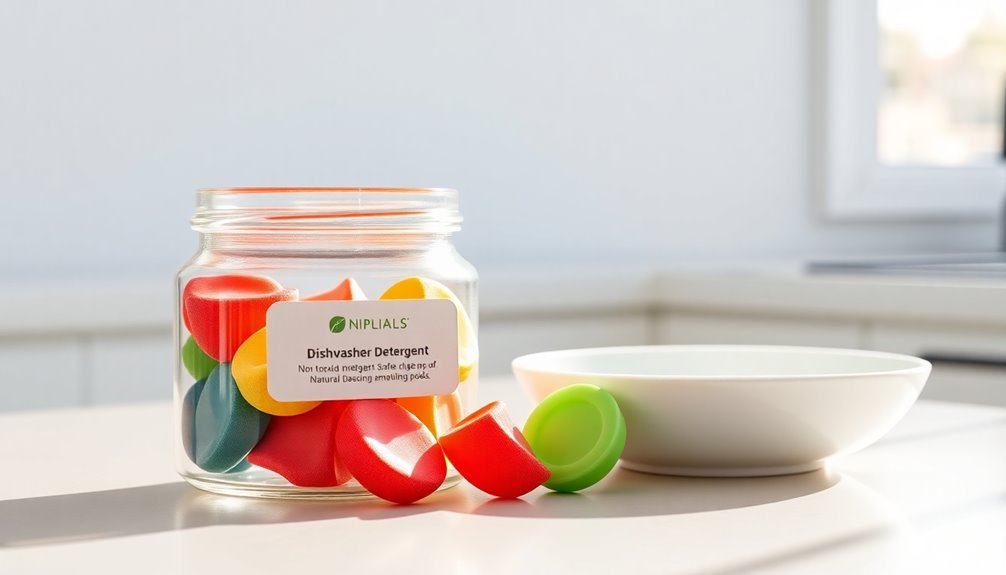
Store dishwasher detergent in its original container, in a locked cabinet or on a high shelf that children cannot reach. Keep it away from food, medicine, and other cleaners. Never transfer detergent into drink bottles or food containers, because someone may mistake it for something else.
Handle packets and pods with dry hands, and load them into the dispenser just before starting the cycle. Store any leftover pods in a sealed container inside a locked cabinet, since humidity can cause them to stick together and open. Do not mix detergents with other cleaning products, and review the list of cleaning products you should never mix before combining any cleaners in your kitchen.
When cleaning up a spill, wear gloves, keep children and pets out of the room, and rinse the area with plenty of water. If skin or eyes are exposed, rinse thoroughly and call Poison Help or your doctor for guidance. Seek emergency care for breathing trouble, swelling of the throat, or persistent pain.
Can Homemade or Natural Mixes Replace Commercial Detergent?
Homemade mixes such as baking soda and vinegar generally do not replace an automatic dishwasher detergent. They are less effective at removing baked-on food and grease, and they can leave residue or cause problems with some dishwasher parts. Vinegar is more useful as a rinse aid or a periodic cleaning step than as a daily detergent.
Maintenance also affects results. A clogged filter can leave food debris on dishes even when you use a good detergent, so cleaning it on a regular schedule helps. Our guide on how to clean a dishwasher filter walks through the process step by step.
Which Detergent Works Best for Hard Water?
The best detergent for hard water is one formulated for hardness, often paired with a rinse aid, and the right choice depends on your local water conditions. Products vary in how they perform in soft, moderate, hard, and very hard water, so the label’s hardness guidance matters more than a general reputation. Test your dishes after a few loads to see whether spots or film are reduced.
For a more detailed comparison focused on mineral-heavy water, see our article on the best automatic dishwasher detergents for hard water. Pair the product choice with the right dose, since using too little detergent in hard water is a common cause of cloudy glassware.
Frequently Asked Questions
Is dishwasher detergent toxic if swallowed?
Yes, automatic dishwasher detergent can cause serious harm if swallowed, and it should be treated as a poisoning hazard. MedlinePlus notes that standard liquid household detergents rarely cause serious injury, but single-use packets are more concentrated and more likely to damage the esophagus. If someone swallows detergent, contact Poison Help at 1-800-222-1222 or emergency services right away.
Are eco-friendly dishwasher pods safe for kids?
Eco-friendly pods are not automatically safe for children. The ingredients may be gentler on the environment, but the concentrated single-dose format still poses an ingestion risk. Store all pods in a locked cabinet, and treat them the same way you would any other dishwasher detergent.
Can I use dish soap in my dishwasher?
No, you should use only detergent labeled for automatic dishwashers. Hand dish soap produces too many suds for a dishwasher, which can overflow and damage the appliance, and it does not clean the same way. Using the right product protects both your dishes and your machine.
How much detergent should I use?
Follow the dose on the product label and adjust for your water hardness and how soiled your dishes are. Using more detergent than recommended does not clean better and can leave residue, and it increases the amount that could be spilled or swallowed. Check your machine’s manual for any specific guidance.
Do dishwasher detergents expire?
Dishwasher detergents can lose effectiveness over time, especially powders and gels exposed to humidity or heat. Check the date on the package if one is printed, and store products in a cool, dry place. Pods that have absorbed moisture may stick together and perform poorly, so discard any that look damaged or clumped.
When should I talk to a doctor about detergent exposure?
Talk to a doctor if you or a family member has ongoing skin irritation, eye pain, coughing, or breathing problems after handling detergent. Bring the product name and ingredient list to the appointment. A doctor or pharmacist can help you judge whether symptoms need further evaluation.
Conclusion
The safest dishwasher detergent is one that matches your water hardness, discloses its ingredients clearly, and is stored where children and pets cannot reach it. Certification and plant-based claims help, but they do not remove the poisoning risk of concentrated detergent. Choose a format with care, follow label instructions, and keep Poison Help’s number handy so you are ready if an accident happens.
More on Dishwasher Detergents
- 18 Dishwasher Cleaning Secrets for Sparkling Dishes Every Time
- 5 Healthy Dishwasher Detergents for a Greener Clean
- Cleaning Burned Pots: The Boiling Water and Tablet Trick
- Dish Soap Demystified: The Truth About Dawn Ingredients and More
- Dishwasher Tablets vs. Gel: Which Cleans Your Machine Better?
- How Do I Clean a Dishwasher Filter?
- How to Clean Mold From Dishwasher Seals
- How to Use Vinegar to Clean Dishwasher Parts
- Seventh Generation Dishwasher Pods – Are They Really Worth It?
- The Best Automatic Dishwasher Detergents for Hard Water
- What Can I Use to Wash Dishes Instead of Dish Soap?
Related guides: Best Washing Machine Cleaner for Deep Cleaning · Top 10 Cleaning Products for Beginners: A Basic Home Cleaning Kit · Top 10 Natural Cleaning Products for a Chemical-Free Home
Free tools: Cleaning Products You Should Never Mix
Always follow the product label, test on a hidden area first, and never mix cleaning products such as bleach and ammonia. Read our safety disclaimer and editorial policy.
One Reply to “Safe Dishwasher Detergents That Actually Work”