To clean your dishwasher parts with vinegar, start by removing the filter and spray arms. Rinse them under warm water, then soak in a vinegar solution for 15-30 minutes. Scrub hard-to-reach areas, and rinse thoroughly. Pour a cup of vinegar into a bowl on the top rack and run a hot cycle to tackle odors and mineral buildup. Don’t forget to check for blockages regularly for peak performance. Discover effective tips for maintaining your dishwasher even longer.
Why Use Vinegar for Dishwasher Cleaning?
When it comes to cleaning your dishwasher, vinegar stands out as a top choice for several reasons.
First, it’s a natural disinfectant that promotes dishwasher hygiene, eliminating bacteria and odors without harsh chemicals.
You’ll appreciate how vinegar efficiency tackles mineral buildup, ensuring your appliance runs smoothly.
By using vinegar, you not only preserve the lifespan of your dishwasher but also enhance its cleaning power.
Simply running a cycle with vinegar can refresh your appliance, leaving it sparkling and smelling fresh.
Plus, it’s cost-effective and environmentally friendly, making it a win-win solution. Additionally, vinegar contains acetic acid, which effectively combats germs and odors in your dishwasher.
Understanding How Vinegar Cleans
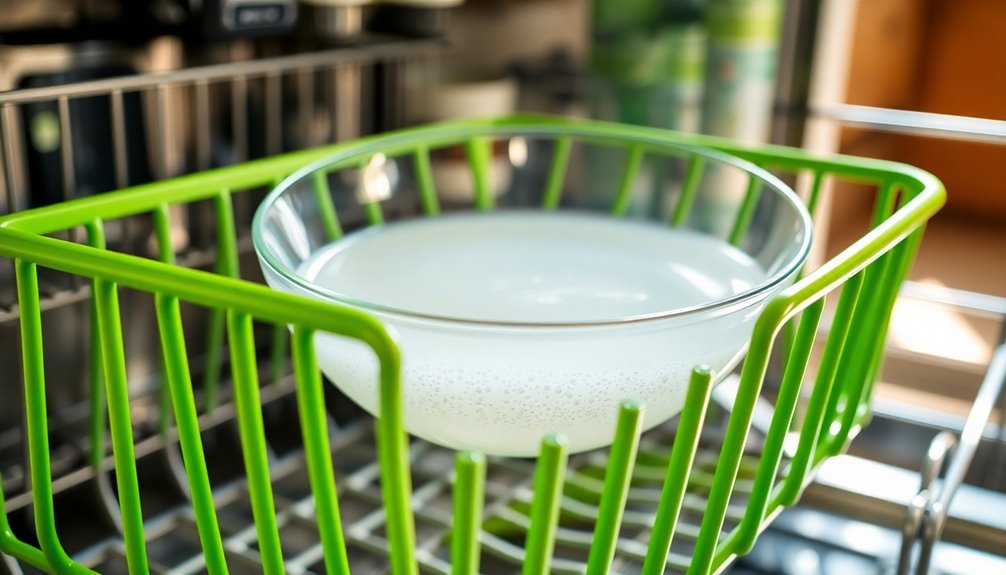
Vinegar’s natural acidic properties make it a powerful agent for cleaning your dishwasher. It effectively breaks down mineral buildup, which can lead to poor performance. Additionally, using vinegar aligns with eco-friendly methods that preserve waterways and aquatic life, ensuring a cleaner environment while maintaining appliance efficiency.
Natural Acidic Properties
The natural acidic properties of vinegar make it an effective cleaner for your dishwasher. When you use vinegar, you tap into its ability to break down grime and grease through acidic reactions. These reactions help dissolve food particles and residues that can accumulate in your dishwasher.
One of the key vinegar benefits is its ability to neutralize odors, leaving your appliance smelling fresh. Additionally, vinegar’s acidity can help to kill bacteria, providing a more hygienic clean.
Mineral Buildup Removal
While you mightn’t notice it immediately, mineral buildup can accumulate in your dishwasher over time, affecting its performance.
This residue can lead to clogs and reduced efficiency, but vinegar is an effective cleaning solution to combat it.
To tackle mineral buildup, follow these steps:
- Pour a cup of vinegar into the bottom of the empty dishwasher.
- Run a hot water cycle to dissolve the deposits.
- Wipe down the interior with a cloth to remove any remaining residue.
- For stubborn spots, soak a cloth in vinegar and apply it directly.
Regularly using vinegar not only clears mineral buildup but also keeps your dishwasher running smoothly, ensuring your dishes come out sparkling clean.
Preparing Your Dishwasher for Cleaning
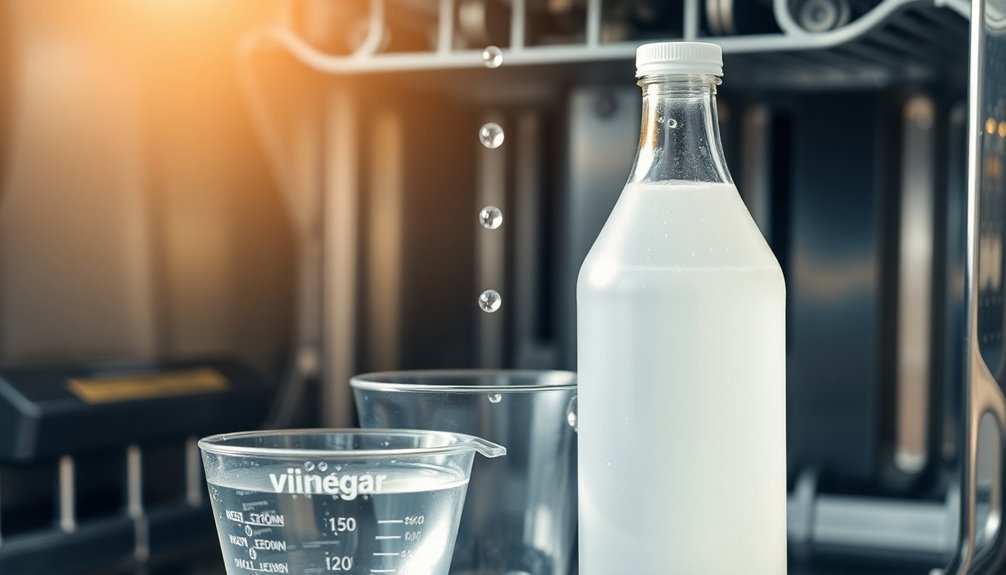
Before you start cleaning your dishwasher with vinegar, you’ll want to gather all the necessary supplies. Next, remove any parts like the filter and utensil basket to guarantee a thorough clean. Finally, check for any blockages that could hinder the washing process. Additionally, using non-toxic cleaners like vinegar ensures a safe and eco-friendly cleaning experience, making it an excellent choice for maintaining a hygienic environment.
Gather Necessary Supplies
Cleaning your dishwasher requires a few essential supplies to guarantee the process is smooth and effective. Before you start, gather these items to make your cleaning session a breeze:
- White vinegar: Your go-to solution for tackling grime and odors.
- Baking soda: A great vinegar alternative for extra scrubbing power.
- Soft cloth or sponge: Ideal for wiping down surfaces without scratching.
- Cleaning tools: A small brush or toothbrush works wonders for hard-to-reach spots.
Having these supplies on hand will help you efficiently clean your dishwasher and keep it running at its best.
With the right tools, you’ll make the most of your cleaning routine and assure your dishwasher stays fresh and functional.
Remove Dishwasher Parts
With your supplies ready, it’s time to prepare your dishwasher for a thorough clean. Start by unplugging the appliance or turning off the circuit breaker for safety.
Next, remove the bottom rack to access the spray arms and filter. This is essential for effective dishwasher maintenance and helps you maintain a regular cleaning frequency.
Check the spray arms for any signs of buildup, as this can affect performance. Don’t forget to take out the filter, which often traps food particles.
Rinse these parts under warm water to eliminate debris before you move on to the deep cleaning process. By removing these components, you’re setting the stage for a cleaner, more efficient dishwasher.
Check for Blockages
Checking for blockages is an essential step in preparing your dishwasher for cleaning.
If your dishwasher isn’t draining properly, it could be due to clogged filters or other obstructions.
Take a moment to inspect these areas:
- Filter: Remove and clean it to guarantee proper water drainage.
- Spray Arms: Check for food particles lodged in the holes.
- Drain Hose: Look for kinks or blockages that could hinder flow.
- Base: Clear any debris that might be trapped at the bottom.
Step 1: Cleaning the Filter With Vinegar
To tackle the buildup in your dishwasher, start by removing the filter. Check your user manual for specific instructions on how to do this safely.
Once it’s out, give it a thorough rinse under warm water to remove loose debris. For deeper cleaning, soak the filter in a mixture of vinegar and warm water for about 15-30 minutes. This harnesses vinegar’s effectiveness in breaking down grease and grime.
After soaking, gently scrub it with a soft brush to eliminate any stubborn residue. Rinse it again thoroughly before reassembling.
Regular filter maintenance not only enhances your dishwasher’s performance but also prolongs its lifespan. Keeping the filter clean guarantees your dishes come out sparkling every time! Additionally, maintaining a sanitary environment in your kitchen is essential for preventing harmful bacteria growth.
Step 2: Dealing With Spray Arms and Nozzles
After you’ve cleaned the filter, it’s important to turn your attention to the spray arms and nozzles, as they play a crucial role in distributing water throughout the dishwasher.
Proper spray arm maintenance guarantees your dishes come out sparkling. Start by removing the spray arms and inspecting them for clogs. Use a toothpick or small brush for nozzle cleaning to clear any debris. Rinse everything under warm water, then soak the parts in a vinegar solution for about 30 minutes.
Here’s what to focus on:
- Check for blockages in the spray arm holes
- Remove any food particles or residue
- Confirm the arms spin freely
- Reattach and test for proper function
This simple upkeep can make a big difference! Additionally, using eco-friendly ingredients like vinegar can enhance the cleaning process while promoting a healthier environment.
Step 3: Descaling the Interior With Vinegar
Descale the interior of your dishwasher with vinegar to keep it running efficiently. Start by selecting a vinegar concentration of at least 5%, which is effective for descaling techniques.
Pour two cups of white vinegar into a dishwasher-safe bowl and place it on the top rack. Run a hot water cycle without any dishes inside. This process helps dissolve mineral buildup and grime, ensuring peak performance. Regular cleaning with a damp microfiber cloth will also help maintain the appliance’s effectiveness.
If your dishwasher has heavy scaling, consider repeating this step or using a more concentrated vinegar solution. After descaling, wipe down the interior with a soft cloth to remove any remaining residue.
Regularly incorporating this vinegar cleaning method will keep your dishwasher in top shape and extend its lifespan.
Step 4: Freshening Up the Dishwasher Door and Seals
Once you’ve descaled the interior of your dishwasher, it’s time to freshen up the door and seals. Proper door maintenance and seal care are essential for a clean, efficient appliance.
After descaling your dishwasher, don’t forget to maintain the door and seals for optimal performance and cleanliness.
Grab a soft cloth and a mixture of equal parts vinegar and water. Wipe down the door and the rubber seals, focusing on these areas:
- Gasket edges: Remove grime and buildup.
- Handle: Make sure it’s free of sticky residues.
- Inner door panel: Eliminate any lingering stains.
- Exterior surface: Give it a polished look.
Pay special attention to the seals; they’re critical for maintaining your dishwasher’s efficiency. Regular maintenance will keep everything fresh and functional, prolonging your appliance’s lifespan. Additionally, using eco-friendly solutions like vinegar helps maintain a healthier kitchen environment.
How to Tackle Stubborn Odors?
How can you effectively tackle stubborn odors in your dishwasher? Start by using vinegar as an odor elimination technique. Pour a cup of white vinegar into a dishwasher-safe bowl and place it on the top rack. Run a hot water cycle to neutralize bad smells and break down grease.
If odors persist, consider adding baking soda for extra freshness. However, if you’re dealing with lingering scents, vinegar scent maskers can help. You can soak a sponge in a mixture of water and vinegar and place it in the dishwasher overnight. This will absorb unwanted odors. Regularly employing these strategies will keep your dishwasher smelling clean and fresh, ensuring your dishes come out without any unpleasant surprises. Additionally, using eco-friendly products can further enhance the overall cleanliness and sustainability of your kitchen.
Using Vinegar for Routine Maintenance
Routine maintenance of your dishwasher is essential, and using vinegar can make it simple and effective. This natural cleaner not only helps eliminate buildup but also keeps your appliance running smoothly. Additionally, regular maintenance can prevent performance issues and prolong the lifespan of your dishwasher. Let’s explore the benefits of vinegar cleaning and the steps for regular use.
Benefits of Vinegar Cleaning
Cleaning your dishwasher with vinegar offers several key benefits that make it a go-to choice for routine maintenance. Not only is it an effective cleaner, but it also supports eco-friendly cleaning practices.
Here are some vinegar benefits to take into account:
- Deodorizes: Say goodbye to lingering odors that can build up over time.
- Removes Grease: Breaks down stubborn grease and grime effortlessly.
- Eliminates Hard Water Stains: Helps prevent mineral buildup, keeping your dishwasher running smoothly.
- Non-Toxic: Safe for you and the environment, making it a healthier choice for your home.
Incorporating vinegar into your cleaning routine keeps your dishwasher fresh, efficient, and eco-friendly without harsh chemicals.
Steps for Regular Use
To keep your dishwasher in top shape, using vinegar regularly can be a game changer. Start by incorporating vinegar into your cleaning routine once a month. This aligns with general cleaning frequency guidelines for appliances.
Simply place a cup of white vinegar on the top rack of your empty dishwasher and run a hot cycle. This helps eliminate odors and break down mineral buildup.
For added effectiveness, combine this with other dishwasher maintenance tips, like checking and cleaning the filter regularly.
Remember to wipe down the exterior and door seals with vinegar as well. By sticking to this schedule, you’ll guarantee your dishwasher runs efficiently and lasts longer, making your kitchen cleanup a breeze.
Common Mistakes to Avoid When Cleaning With Vinegar
Have you ever wondered what mistakes could sabotage your efforts when using vinegar to clean your dishwasher?
Have you considered how common mistakes might hinder your vinegar cleaning efforts for your dishwasher?
It’s easy to fall for vinegar myths and cleaning misconceptions that can undermine your results. Here are some common mistakes to avoid:
- Using undiluted vinegar: This can damage rubber seals and gaskets.
- Cleaning too frequently: Overdoing it can lead to buildup of residue.
- Ignoring the filter: Vinegar won’t clean the filter; you need to remove and rinse it separately.
- Not checking manufacturer guidelines: Some dishwashers may not recommend vinegar use.
- Not using the right attachments: Using the appropriate crevice tool attachment can help you reach and clean hidden areas effectively.
Alternatives to Vinegar for Dishwasher Cleaning
While vinegar is a popular choice for cleaning dishwashers, several effective alternatives can get the job done just as well.
Baking soda is a fantastic option; sprinkle it in the bottom of your dishwasher and run a hot cycle to eliminate odors and grime.
Lemon juice not only freshens up your appliance but also helps break down grease and limescale. You can add a cup of lemon juice to your empty dishwasher for a deep clean.
Essential oils, like tea tree or lavender, can be mixed with water and used to wipe down surfaces, providing both cleaning power and a pleasant scent.
Finally, citric acid is excellent for tackling hard water stains; simply sprinkle it where needed and run a cycle.
How Often Should You Clean Your Dishwasher?
- Monthly: Wipe down the door seals and control panel to prevent grime buildup.
- Every 3-6 months: Run a vinegar cycle to eliminate odors and mineral deposits.
- Annually: Deep clean filters and spray arms to guarantee no food particles are stuck.
- As needed: If you notice odors or poor cleaning results, it’s time for a clean.
Tips for Keeping Your Dishwasher in Top Condition
To keep your dishwasher running smoothly, regular maintenance is crucial. Start by checking and cleaning the filter monthly to prevent clogs.
Make it a habit to wipe down the door and seals every week; this helps keep mold and debris at bay. Using vinegar periodically can break down mineral deposits, guaranteeing peak performance.
Incorporate preventative measures like running a hot water cycle with vinegar every few months. This not only cleans but also freshens up the interior.
Additionally, make sure you load dishes correctly to avoid blocking spray arms.
Finally, always check for leaks or unusual noises, as these can indicate larger issues.
With these simple tips, you’ll extend your dishwasher’s lifespan and maintain its efficiency.
Conclusion
To sum up, using vinegar to clean your dishwasher is like giving it a spa day—it’ll come out sparkling and rejuvenated! Just a splash of this magical elixir can banish grime and odors, making your dishwasher feel brand new. So, embrace the power of vinegar and watch as your dishes bask in the glory of cleanliness! Remember, a happy dishwasher means happier dishes. Immerse yourself in this cleaning adventure and let vinegar work its wonders!