To clean pet stains from mattresses and soft surfaces, act quickly. Blot the stain with a clean cloth to absorb moisture. Use a pet-safe enzymatic cleaner or a vinegar-water mix to treat the area. Rinse with cold water and blot again. For deeper cleaning, lightly spray the affected area with a vinegar solution and let it sit. Regular maintenance and prevention tips can keep your home fresh. You’ll find more helpful strategies in the following sections.
Understanding the Importance of Quick Pet Stain Cleanup
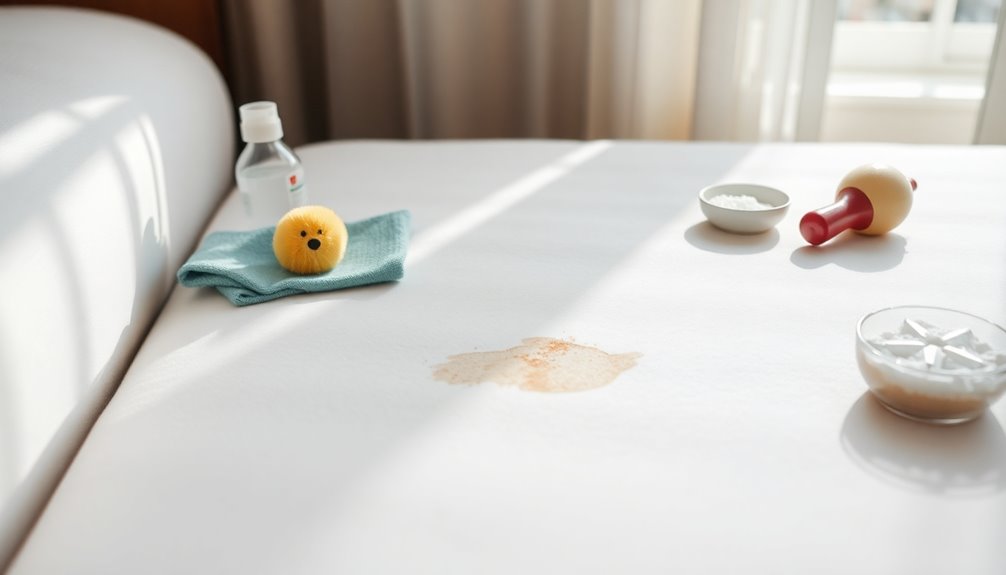
When you have a pet, you know accidents are bound to happen, so it’s crucial to act fast when stains occur. A quick response can make all the difference in maintaining your home’s cleanliness and your pet’s hygiene. Leaving stains untreated can lead to lingering odors and attract bacteria, which can compromise your pet’s health. By prioritizing pet hygiene, you not only protect your living space but also guarantee your furry friend stays healthy and happy. Additionally, maintaining indoor air quality is essential to reduce allergens that may affect both you and your pet.
Identifying Different Types of Pet Stains
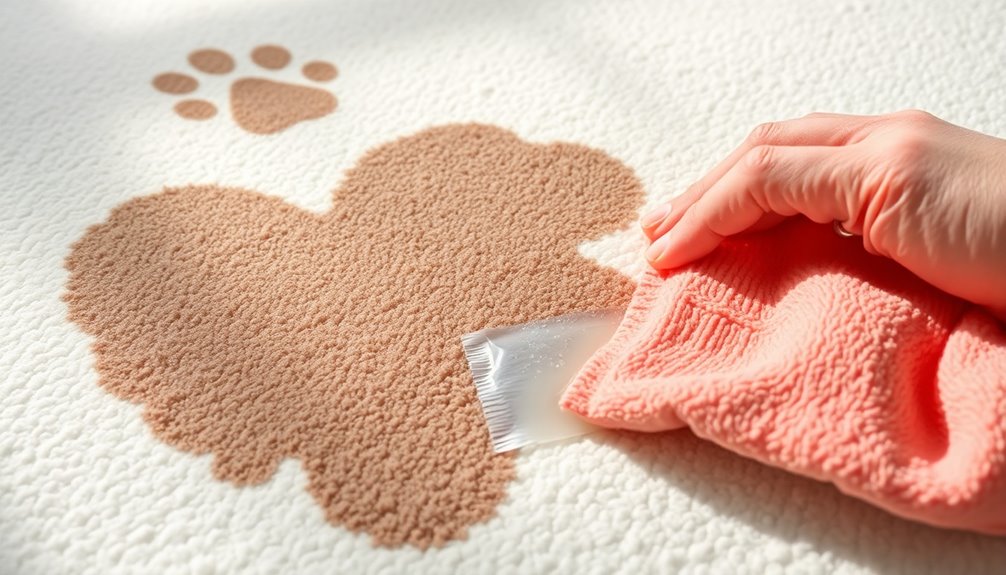
When it comes to cleaning pet stains, identifying the type of stain is essential.
You’ll find that urine stains often have a distinct yellow color and ammonia-like smell, while vomit stains can vary in appearance and odor, depending on what your pet ate. Recognizing these differences helps you choose the right cleaning method for effective removal. For instance, using an effective disinfectant will help eliminate any residual bacteria or odors left behind by the stain.
Urine Stains Identification
How can you tell if a stain is from pet urine? First, look for a yellowish discoloration on your mattress or soft surfaces. This often indicates urine, but you can also use a black light for better urine detection; it’ll reveal any hidden stains that mightn’t be visible to the naked eye.
If the stain has been there for a while, its longevity can lead to an unpleasant odor, making it easier to identify. You might notice a lingering smell even after cleaning, which can signal that the stain hasn’t been fully removed.
Pay attention to these signs to guarantee you tackle pet urine stains effectively and prevent further damage to your surfaces.
Vomit Stains Recognition
Although pet vomit stains can be tricky to identify, there are key signs you can look for.
Recognizing vomit types and their stain characteristics helps you tackle the mess effectively. Here are four signs to help you identify pet vomit stains:
- Color: Look for yellow, brown, or green hues; these often indicate the type of food or substance your pet consumed.
- Texture: Vomit can be chunky or liquid, which impacts how you clean it.
- Odor: A strong, sour smell usually accompanies vomit, making it easier to pinpoint the source.
- Residue: Stains may leave a greasy or slimy residue, differentiating them from other pet stains.
Essential Supplies for Effective Pet Stain Removal
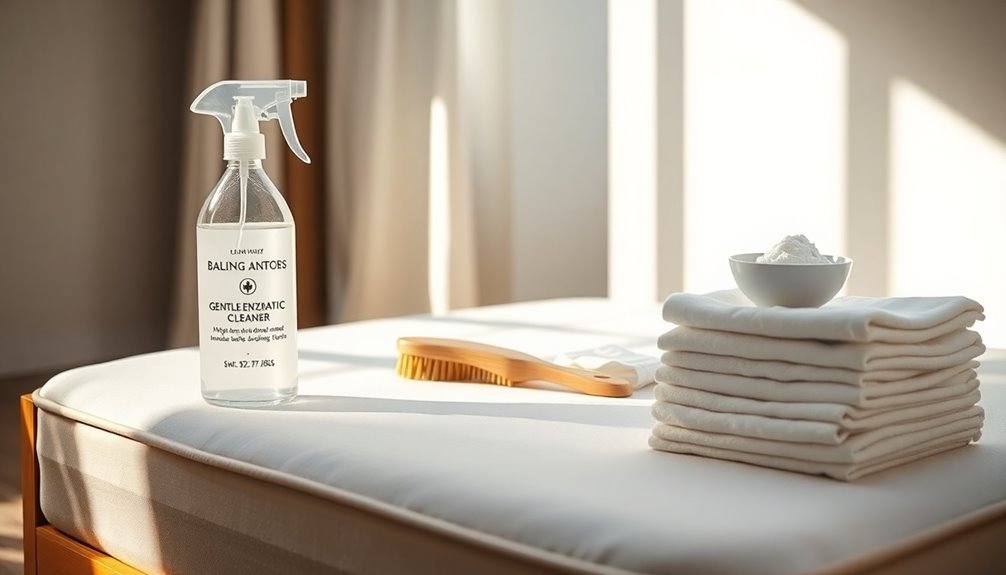
Having the right supplies is essential for tackling pet stains effectively. Start with essential cleaning tools like paper towels, a spray bottle, and a vacuum.
You’ll also want a sturdy scrub brush for deeper cleaning. Consider using a pet-safe enzymatic cleaner, which breaks down stains and odors, making it a key part of your effective stain strategies. Regular grooming of pets minimizes dander and odors, which can help in preventing future stains.
Baking soda is another great option; it absorbs odors and can lift stains when mixed with water. Don’t forget a microfiber cloth for blotting and drying surfaces.
With these supplies on hand, you’ll be well-equipped to combat any pet mess, ensuring your mattress and soft surfaces stay fresh and clean.
How to Blot and Treat Fresh Stains
When you notice a fresh pet stain, acting quickly is essential to prevent lasting damage. Use effective blotting techniques to absorb as much liquid as possible. Here’s how to tackle it:
- Grab a clean cloth or paper towel: Blot the stain gently, starting from the outer edges and working your way in.
- Press firmly but don’t rub: Rubbing can spread the stain and push it deeper.
- Continue blotting: Switch to a dry area of the cloth as it absorbs moisture. Repeat until the stain is no longer transferring.
- Apply a stain treatment: Follow the manufacturer’s instructions on your chosen product, ensuring it’s safe for your mattress or soft surface. Additionally, consider using non-toxic cleaners to effectively treat stains without harmful chemicals.
Best Homemade Solutions for Pet Stains
When it comes to tackling pet stains, homemade solutions can be incredibly effective and easy to make. You’ll find that ingredients like vinegar, baking soda, and hydrogen peroxide can work wonders. Additionally, these cleaners are eco-friendly alternatives to conventional products that can help neutralize odors and maintain freshness. Let’s explore some of the best mixtures you can whip up right in your kitchen.
Vinegar And Baking Soda
Vinegar and baking soda are two powerful ingredients that can tackle pet stains effectively and naturally. They not only help in stain removal but also neutralize odors, showcasing the vinegar benefits.
Here’s how to create a simple cleaning solution:
- Mix equal parts of vinegar and water in a spray bottle.
- Spray the solution directly on the stained area.
- Sprinkle baking soda over the damp stain for extra cleaning power.
- Let it sit for 15-30 minutes, then vacuum up the residue.
This combination works wonders on mattresses and soft surfaces, making it a go-to for pet owners.
With these homemade solutions, you can keep your space fresh and clean without harsh chemicals.
Hydrogen Peroxide Solution
For tougher pet stains, a hydrogen peroxide solution can be a game changer.
Mix equal parts of hydrogen peroxide and water in a spray bottle. Before applying, test it on a small, inconspicuous area to verify it won’t discolor your mattress or fabric.
Once you’re ready, spray the solution directly onto the stain and let it sit for about 10-15 minutes. This powerful stain removal method works by breaking down the stain’s components.
After the time’s up, blot the area with a clean cloth to absorb the liquid. You may need to repeat the process for stubborn stains.
Finally, allow the area to air dry completely, and you’ll notice a significant improvement in your mattress or soft surface!
Dish Soap Mixture
One effective homemade solution for tackling pet stains is a simple dish soap mixture.
Dish soap benefits include its ability to break down oils and dirt, making it an excellent choice for effective cleaning.
Here’s how to create your mixture:
- 1 cup warm water – Helps dissolve the soap and lift the stain.
- 2 tablespoons dish soap – Choose a mild, non-toxic variety for safety.
- 1 tablespoon white vinegar – Acts as a natural deodorizer and stain remover.
- A clean cloth – For blotting and applying the solution.
Mix these ingredients in a bowl.
Apply the mixture to the stained area, blot gently with a cloth, and rinse with a bit of water.
This method can leave your mattress looking fresh and clean!
When to Use Commercial Stain Removers
While natural remedies can work wonders for some pet stains, there are times when you might need the extra power of commercial stain removers.
If you’re dealing with tough, set-in stains or strong odors, commercial products often provide superior stain effectiveness compared to DIY solutions. These specialized cleaners are formulated to break down proteins and eliminate odors that regular cleaners might leave behind.
When your pet’s accidents have left your mattress or upholstery looking and smelling less than fresh, it’s time to evaluate these powerful options. Just be sure to read the labels and choose a product that’s safe for your specific fabric. Sometimes, the investment in a quality commercial cleaner can save you time and frustration in the long run. Additionally, using enzyme cleaners can be an effective way to target and digest organic matter, similar to the action of some commercial products.
Techniques for Cleaning Urine Stains From Mattresses
When you notice a urine stain on your mattress, acting quickly is key to preventing lasting damage. You’ll want to use the right cleaning solutions to tackle the odor and discoloration effectively. Consider using eco-friendly methods that not only clean but also protect your home environment. Let’s go over the immediate steps you should take and the best products to use.
Immediate Action Steps
As soon as you discover a urine stain on your mattress, it’s essential to act quickly to minimize damage and odors. Ignoring the stain can lead to lingering smells and encourage bad pet behavior.
Follow these immediate action steps:
- Blot the Area: Use a clean cloth to absorb as much urine as possible. Don’t rub, as it can spread the stain.
- Sprinkle Baking Soda: Cover the damp area with baking soda to help neutralize odors and absorb moisture.
- Create a Cleaning Schedule: Incorporate regular checks on your mattress to spot any potential stains early.
- Ventilate the Room: Open windows to allow fresh air to circulate, helping to reduce any odors while you clean.
Cleaning Solutions to Use
To effectively tackle urine stains on your mattress, try one of several cleaning solutions that can break down the odor and remove the stain.
Enzymatic cleaners are a top choice because they contain natural enzymes that target and eliminate urine components. Simply spray the cleaner onto the stained area, let it sit for the recommended time, then blot it up with a clean cloth.
If you prefer eco-friendly options, you can mix equal parts white vinegar and water. Spray this solution on the stain, let it sit for a few minutes, then blot it dry.
Always test any cleaner on a small, hidden area first to verify it won’t damage your mattress.
How to Remove Vomit and Hairball Stains Safely
Cleaning up vomit and hairball stains can be an intimidating task, but tackling them promptly makes all the difference.
Promptly addressing vomit and hairball stains can transform an intimidating cleanup into a manageable task.
For effective vomit removal and hairball cleanup, follow these steps:
- Remove solids: Use a paper towel or plastic bag to pick up any solid remnants carefully.
- Blot the area: Dampen a clean cloth with cold water and blot the stain, avoiding rubbing to prevent spreading.
- Apply a cleaning solution: Use a pet-safe enzymatic cleaner or a mixture of vinegar and water to break down the stain.
- Rinse and dry: Blot with clean water to remove any residue, then dry the area completely with a towel. Additionally, using a soft bristle brush attachment can help agitate and loosen any remaining debris from the fabric surfaces, ensuring a thorough clean.
Deep Cleaning Methods for Mattresses and Soft Furnishings
While pet stains on mattresses and soft furnishings can be challenging, deep cleaning them is essential for maintaining a fresh and hygienic home.
Start by removing any bedding and vacuuming the surface to eliminate loose debris.
For tougher stains, mix equal parts white vinegar and water in a spray bottle. Lightly spray the affected area, let it sit for 10-15 minutes, and blot it with a clean cloth.
For deeper cleaning, consider using a steam cleaner, as it can penetrate soft surfaces effectively. Regular inspection of your cleaning tools, like sponges, is vital to ensure they remain effective and hygienic, as sponges can harbor millions of germs.
Don’t forget to invest in mattress protection to prevent future stains.
Regular soft surface maintenance will keep your home smelling fresh and help prolong the life of your furnishings.
Preventing Future Accidents on Your Mattress
Maintaining a clean mattress is just one part of ensuring a healthy sleeping environment for you and your pets.
Maintaining a clean mattress is essential for a healthy sleeping environment for both you and your pets.
To prevent future accidents, consider these strategies:
- Puppy Training: Focus on consistent potty training to teach your puppy where it’s appropriate to relieve themselves.
- Limit Access: Keep pets off the bed until they’re fully trained, using gates or separate beds.
- Protective Covers: Invest in waterproof mattress protectors to shield against any accidents.
- Regular Cleaning: Clean the mattress regularly to maintain freshness and odor prevention, making it less appealing for your pets to mark their territory. Additionally, creating a structured daily cleaning schedule can help ensure your mattress stays clean and free from pet stains.
Tips for Maintaining a Fresh-Smelling Home With Pets
To keep your home smelling fresh with pets around, it’s essential to establish a routine that tackles odors before they become embedded in your living space.
Start with regular cleaning, vacuuming carpets and upholstery to remove pet hair and dander. Use pet-safe deodorizing sprays or baking soda to neutralize lingering smells.
For pet odor prevention, wash their bedding and toys frequently to keep odors at bay. You can also incorporate freshening techniques like essential oil diffusers or air purifiers to maintain a pleasant atmosphere.
Don’t forget to open windows for ventilation, allowing fresh air to circulate.
With these steps, you’ll create a welcoming environment that minimizes pet odors and keeps your home smelling fresh.
Conclusion
To sum up, promptly addressing pet stains not only protects your mattress and soft surfaces but also contributes to a healthier home environment. While some believe that all stains can be eradicated with commercial cleaners, many homemade solutions can be just as effective, often outperforming store-bought options. By understanding the type of stain and using the right techniques, you can maintain a fresh-smelling home while keeping your furry friends happy and your surfaces spotless.