To remove hard water stains from stainless steel, you can use a simple vinegar and baking soda method. Spray the affected area with white vinegar and let it sit for a few minutes. Sprinkle baking soda on top, and scrub gently with a microfiber cloth in circular motions. Rinse well and dry with a clean cloth to prevent new stains. For ongoing maintenance and additional techniques, there’s more you can try to keep your stainless steel shining bright.
Understanding Hard Water Stains on Stainless Steel
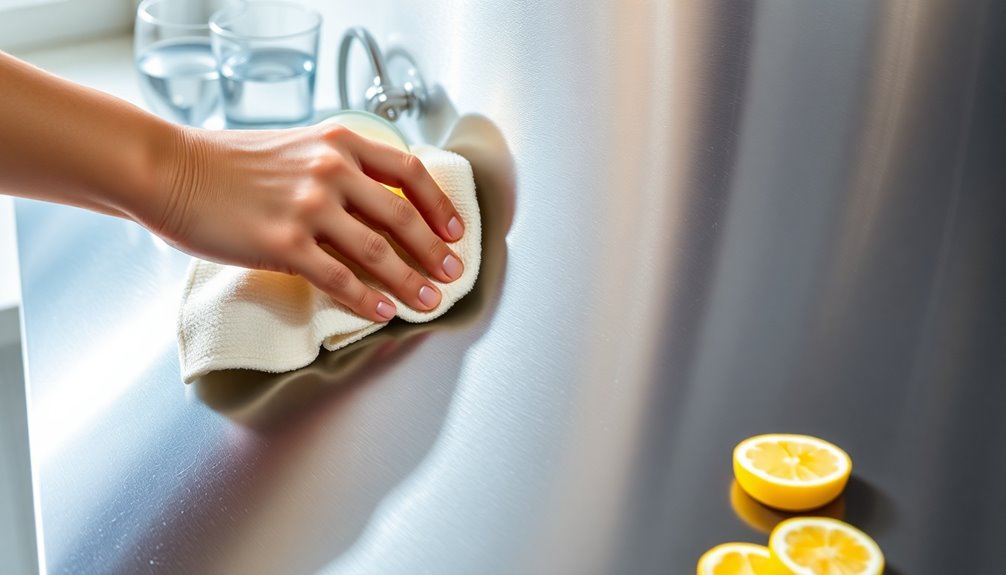
When you notice hard water stains on your stainless steel surfaces, it’s essential to understand what’s causing them. Hard water contains minerals like calcium and magnesium that leave behind residue when the water evaporates.
This mineral build-up leads to stain formation, leaving your stainless steel looking dull and tarnished. Cleaning challenges arise because traditional cleaners often don’t effectively remove these stubborn stains.
You might find that scrubbing hard doesn’t yield the desired results, and using the wrong tools can scratch your surfaces. Recognizing these factors can help you choose the right cleaning methods and products, ensuring your stainless steel stays shiny and free of hard water stains. Regular maintenance with warm, soapy water can also help prevent further stains.
Understanding the problem is the first step toward a solution.
Why Are Hard Water Stains Detrimental?
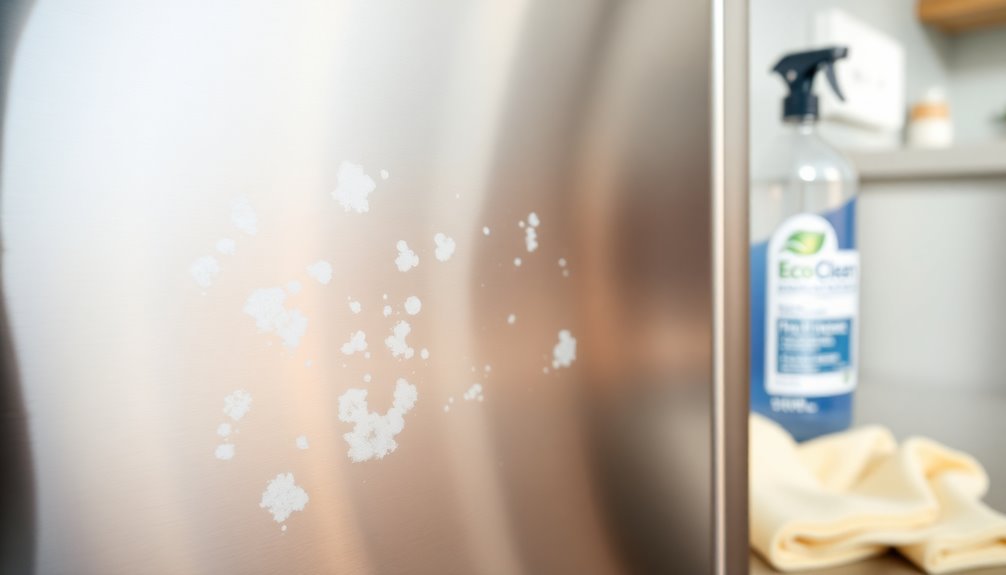
Although hard water stains might seem like a minor annoyance, they can greatly impact the appearance and longevity of your stainless steel surfaces.
These stains are caused by mineral buildup from hard water, which can lead to a dull, cloudy finish. Over time, this buildup can become more challenging to remove, making your cleaning efforts less effective.
If left untreated, hard water stains can eventually cause corrosion or pitting, damaging the surface beyond repair. Not only do these stains detract from the sleek look of your stainless steel, but they can also lower its resale value. Regular maintenance enhances both the longevity and aesthetic appeal of your appliances.
Essential Tools and Materials for Cleaning
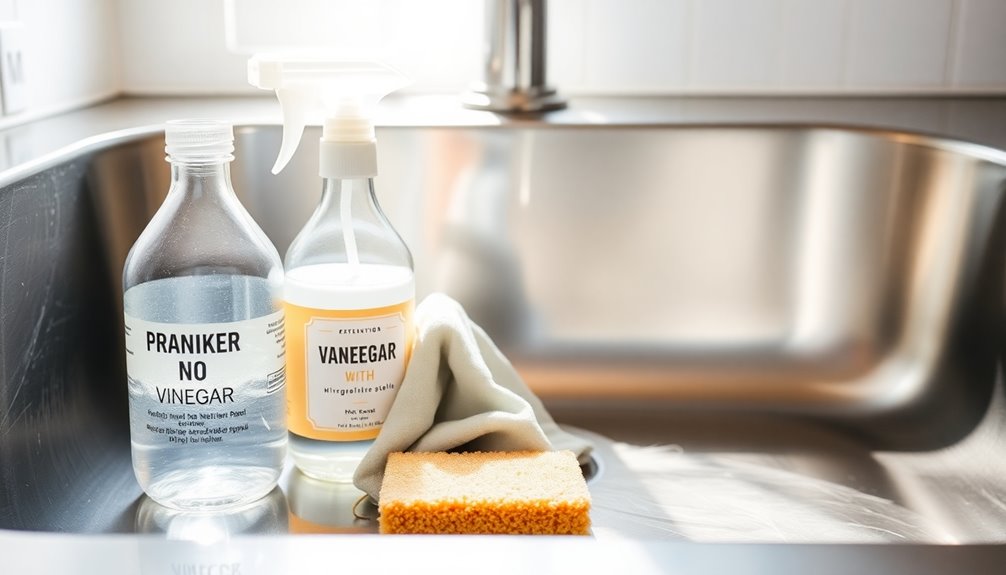
To effectively tackle hard water stains, you’ll need a few essential tools and materials that make the cleaning process simpler and more efficient.
Start with microfiber cloths; they’re gentle yet effective for wiping away stains without scratching your stainless steel. You’ll also want a spray bottle for your cleaning solution, which can include vinegar or a commercial cleaner.
A soft-bristle brush can help with stubborn spots, while rubber gloves protect your hands during cleaning. For stain prevention, consider a stainless steel polish after cleaning to create a barrier against future stains. Regular cleaning with a damp microfiber cloth helps maintain your stainless steel’s shine and longevity.
Having these tools on hand won’t only streamline your cleaning techniques but also guarantee you maintain your stainless steel’s shine and longevity.
Step-by-Step: Vinegar and Baking Soda Method
To tackle hard water stains effectively, you’ll need to gather some simple supplies like vinegar and baking soda. Regular use of both vinegar and baking soda helps prevent future buildup and maintains a clean sink. Once you have everything ready, you can apply the mixture and scrub away those stubborn marks. Let’s break down the steps to make the process easy and effective.
Gather Necessary Supplies
Before you start tackling those stubborn hard water stains, gather your supplies for the vinegar and baking soda method.
You’ll need white vinegar, baking soda, a spray bottle, a soft cloth or sponge, and a small bowl for mixing. These items are essential for effective cleaning techniques that break down those tough stains.
Vinegar’s acidity helps dissolve mineral deposits, while baking soda acts as a gentle abrasive. Having everything on hand makes the process smoother and guarantees you’re prepared.
Additionally, consider having a sealant or stainless steel polish for stain prevention after the cleaning.
With your supplies ready, you’ll be set to restore your stainless steel surfaces to their original shine!
Apply and Scrub Method
Start by spraying the affected areas with white vinegar, letting it sit for a few minutes to break down the hard water stains.
Next, sprinkle baking soda over the vinegar-treated spots. This combination creates a fizzing action that helps lift stubborn stains. Use a soft cloth or sponge to gently scrub, utilizing effective scrub techniques.
Here are some application tips to enhance your results:
- Focus on small sections at a time for thorough cleaning.
- Use circular motions to effectively lift stains.
- Rinse frequently to avoid residue buildup.
- Dry the surface with a microfiber cloth to prevent new stains.
Using Lemon Juice for Stain Removal
When life hands you hard water stains, lemon juice can be your rejuvenating ally. Its natural acidity breaks down those stubborn deposits, making it easy to restore your stainless steel surfaces.
Start by squeezing fresh lemon juice onto a soft cloth or sponge, then gently rub the stained area. The lemon juice benefits don’t stop there; it also leaves a fresh scent behind! Regular use of lemon can help maintain appliance performance, ensuring your kitchen stays fresh and clean.
For tougher stains, let the juice sit for a few minutes to maximize its cleaning power. Rinse with warm water and wipe dry with a clean cloth to prevent new spots from forming.
You’ll be amazed at how effectively this simple, natural solution tackles hard water stains, bringing back the shine to your stainless steel.
The Effectiveness of Commercial Cleaners
When tackling hard water stains, commercial cleaners can be a game changer. You’ll find various types, each with unique application techniques and safety considerations. Knowing how to use them effectively can make all the difference in your cleaning routine. For instance, using a cleaner with plant-derived cleaning agents can ensure safety for both kids and pets while effectively removing stains.
Types Of Commercial Cleaners
While you might be tempted to reach for the nearest bottle of cleaner, not all commercial products tackle hard water stains equally. Choosing the right type can make a big difference.
Here are some popular options you might consider:
- Enzyme Cleaners: These break down stains using natural enzymes, making them effective yet gentle on surfaces.
- Citric Acid Cleaners: They dissolve mineral deposits and are great for combating hard water stains.
- Vinegar-Based Cleaners: Their acidity effectively cuts through grime and stains, though they may require more scrubbing.
- Commercial Spray Cleaners: Formulated specifically for stainless steel, these can quickly eliminate stains but may contain harsher chemicals.
Experiment with these options to find what works best for your stainless steel surfaces!
Application Techniques Explained
Effective application techniques can greatly enhance the performance of commercial cleaners on hard water stains.
Start by choosing the right cleaner for your stainless steel surface. Apply the cleaner evenly using a microfiber cloth, which helps lift stains without scratching.
For stubborn stains, let the cleaner sit for a few minutes to penetrate effectively. Use gentle, circular motions during application, as this maximizes stain removal techniques.
Rinse thoroughly with water afterward to prevent residue buildup. Regular cleaning frequency also plays a key role; tackling stains promptly can reduce the need for harsh chemicals later.
Safety Considerations To Note
Although commercial cleaners can be highly effective against hard water stains, it’s crucial to prioritize safety during their use. These cleaners often contain strong chemicals that can pose risks if not handled properly.
Here are some safety considerations to keep in mind:
- Wear personal protective equipment: Use gloves and goggles to shield your skin and eyes.
- Read labels carefully: Understand the chemical hazards and follow instructions for safe usage.
- Ensure good ventilation: Open windows or use fans to disperse fumes and reduce inhalation risks.
- Store products safely: Keep cleaners out of reach of children and pets to prevent accidental exposure.
Preventive Measures to Avoid Future Stains
To prevent hard water stains from becoming a recurring issue, you need to take proactive measures in your daily routine.
Start with preventive cleaning; wipe down surfaces regularly to remove any water spots before they set in. Consider installing water softeners to reduce mineral content in your water, which can help minimize stains.
Incorporate regular maintenance checks to identify any issues early on. Applying protective coatings can shield your stainless steel from harsh minerals.
After using any fixtures, make sure to dry them properly to prevent water from lingering.
Finally, look for stain-resistant finishes that can provide an extra layer of defense against hard water stains, keeping your stainless steel looking pristine for longer. Additionally, using non-toxic cleaners can help maintain the shine and integrity of your surfaces without introducing harsh chemicals.
Best Practices for Regular Maintenance
Here are some preventative tips to follow:
- Wipe down surfaces with a microfiber cloth after each use to remove water spots.
- Use a mixture of vinegar and water weekly to prevent mineral deposits.
- Always dry stainless steel appliances with a soft towel to avoid drying marks.
- Consider applying a stainless steel cleaner every month to create a protective barrier.
- Incorporating regular cleaning into your routine can significantly reduce the occurrence of hard water stains.
How to Restore Shine After Cleaning
After you’ve cleaned away hard water stains, it’s time to bring back that shine. You can use a baking soda paste, apply a vinegar solution, or polish with a microfiber cloth. Each method can help restore your surfaces to a sparkling finish. Additionally, using a non-abrasive cleaning pad will prevent scratches while enhancing the shine.
Use Baking Soda Paste
While cleaning hard water stains can be a chore, using a baking soda paste can help restore the shine to your surfaces. This simple mixture offers numerous baking soda benefits, making it an effective solution for stainless steel.
To create the right paste consistency, combine baking soda with a small amount of water until it thickens.
Here’s how to use it:
- Apply the paste to the stained areas.
- Let it sit for 10-15 minutes to penetrate the stains.
- Gently scrub with a soft cloth or sponge.
- Rinse thoroughly with water and dry with a clean towel.
This method not only cleans but also brings back that brilliant shine, leaving your stainless steel looking as good as new!
Apply Vinegar Solution
To enhance the shine of your surfaces after using baking soda paste, applying a vinegar solution is a great next step.
Vinegar benefits your stainless steel by cutting through any remaining residue and boosting its luster. Mix equal parts of white vinegar and water in a spray bottle. Lightly spray the solution onto the cleaned area, then let it sit for a few minutes.
The acetic acid in vinegar acts as a powerful cleaning solution, breaking down stubborn minerals. After the wait, wipe the surface with a clean cloth to reveal the shine.
This simple method not only removes any lingering stains but also helps prevent future buildup, leaving your stainless steel looking sleek and polished.
Polish With Microfiber Cloth
Once you’ve cleaned your surfaces, polishing with a microfiber cloth can make all the difference in restoring their shine.
Microfiber benefits include its ability to trap dust and debris without scratching, making it ideal for stainless steel.
Here are some effective polishing techniques to follow:
- Use a clean, dry microfiber cloth to avoid any residue.
- Wipe in circular motions to evenly distribute oils and minimize streaks.
- For extra shine, lightly spritz the cloth with a stainless steel cleaner before polishing.
- Buff the surface until you achieve the desired luster.
Troubleshooting Stubborn Stains
When you encounter stubborn hard water stains, it’s essential to assess the situation before diving into removal methods.
Check the stain persistence; some stains may require more effort than others. If you notice that the stains remain despite regular cleaning, it might indicate that you need to adjust your cleaning frequency. Stains often set in when not addressed promptly, so a proactive approach can save you time and frustration.
Try using a stronger cleaner or a gentle abrasive pad, but always test in a small area first. If the stains still won’t budge, consider letting your cleaner sit for a bit longer. Patience is key, as some stains take time to lift completely. Additionally, regular maintenance using natural cleaners like vinegar can help prevent future stains from forming.
Eco-Friendly Alternatives for Stain Removal
If stubborn stains persist despite your efforts, exploring eco-friendly alternatives can be a game changer. You don’t need harsh chemicals; natural solutions like these can effectively tackle hard water stains:
- Vinegar: Its acidity offers amazing vinegar benefits, breaking down mineral deposits.
- Baking soda: This gentle abrasive works wonders when mixed with water, scrubbing away stains without scratching your stainless steel.
- Lemon: The lemon properties, like citric acid, not only clean but also leave a fresh scent.
- Olive oil: This can provide a protective layer, aiding in stain prevention after cleaning.
Using these eco cleaning methods not only keeps your surfaces shiny but also supports a healthier environment.
Give them a try and enjoy the results!
Conclusion
You’ve tackled those hard water stains like a pro! Just when you thought your stainless steel was doomed, a little vinegar and baking soda worked wonders. Coincidentally, keeping it shiny and clean can be as easy as a quick wipe after each use. Now, your appliances not only look great but also last longer. Remember, a bit of regular maintenance goes a long way. Who knew that keeping things sparkling could be this satisfying? Happy cleaning!