To remove pet hair from blankets, throws, and pillows, start by dampening a rubber glove and gliding it over the fabric. A lint roller is also handy for a quick fix. For tougher cases, toss items in the dryer on low for about 10 minutes to loosen hair. Regular grooming of your pets can drastically cut down on shedding, too. There are even more effective techniques and tools to explore for a hair-free home.
Why Pet Hair Sticks to Blankets and Pillows
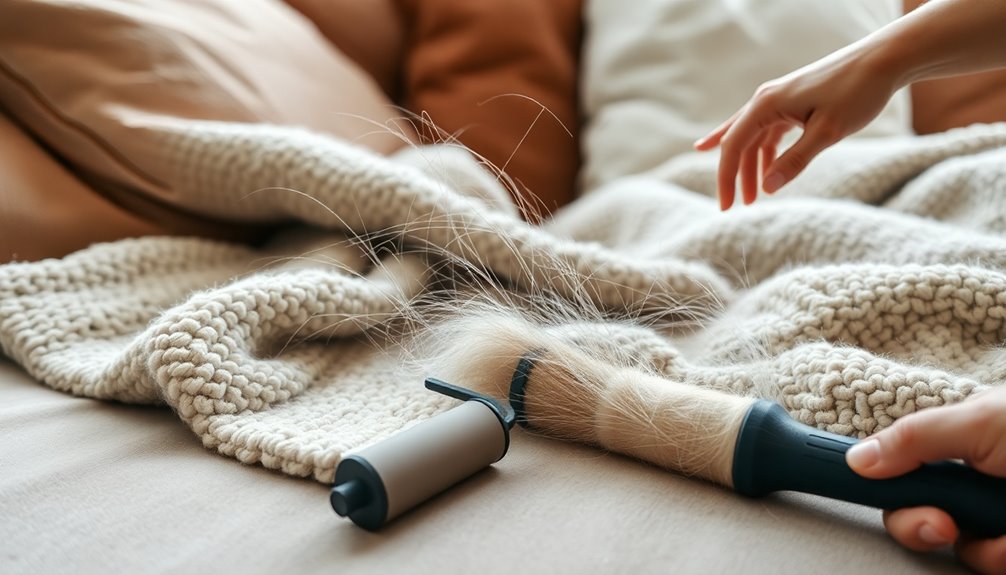
When you cuddle up with your favorite blanket or pillow, you mightn’t realize why pet hair clings so stubbornly to those surfaces. It all comes down to the nature of pet fur and how it interacts with fabric.
Pet hair is made up of tiny, lightweight fibers that easily become airborne and settle into the fibers of your blankets and pillows. The process of fabric adhesion occurs when these tiny strands latch onto the fabric’s threads, creating a bond that makes them difficult to remove. Additionally, the static electricity generated by movement can intensify this adherence. Understanding these factors can help you better tackle the pet hair problem, making your cozy spot a little less furry without resorting to drastic measures. Using eco-friendly products can also help reduce the static cling that makes pet hair stick more firmly.
Quick Fixes: Removing Pet Hair With Household Items
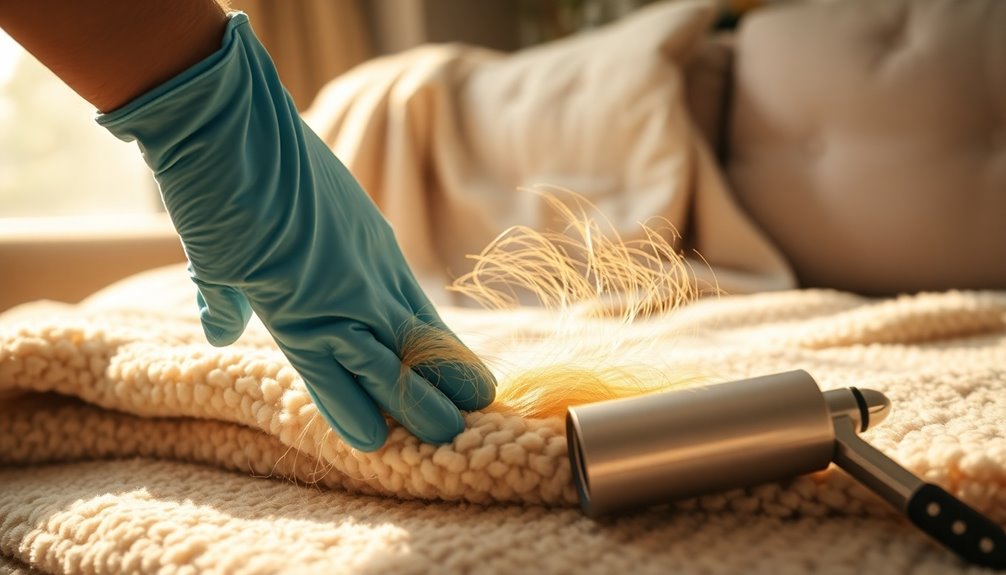
If you’re tired of battling pet hair on your blankets, there are several quick fixes you can try using common household items.
One effective household hack is to dampen a rubber glove and run your hand over the fabric. The pet hair will cling to the glove, making it easy to wipe away. Additionally, using a squeegee can enhance hair collection from your blankets, much like it does on car seats.
Dampen a rubber glove and glide it over your fabric to effortlessly remove pet hair.
Another option is to use a lint roller; just roll it over your blankets to pick up the hair quickly. If you don’t have one, a piece of tape can work in a pinch—wrap it around your fingers sticky side out and dab it on the affected areas.
Finally, tossing your blankets in the dryer on a low setting for 10 minutes can help loosen stubborn pet hair.
The Best Tools for Pet Hair Removal
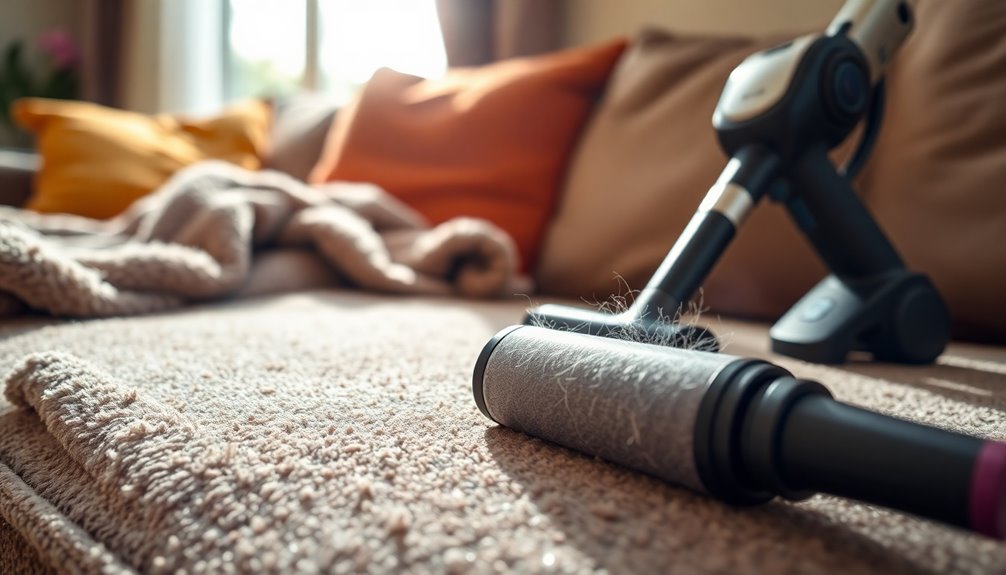
While tackling pet hair can be a challenging task, having the right tools can make all the difference.
For effective pet hair vacuuming, look for vacuums specifically designed for pet owners. These often have specialized attachments that grab hair from fabrics and upholstery.
Additionally, pet hair brushes are essential for keeping your blankets and throws fur-free. Choose a rubber or silicone brush, as these materials work wonders in attracting and collecting hair.
You might also consider a handheld vacuum for quick clean-ups. Regularly cleaning your wool dryer balls can also help maintain a hair-free environment by improving moisture absorption and reducing drying times.
With these tools in your arsenal, you’ll find it much easier to maintain a hair-free home. So gear up and make pet hair removal a breeze!
How to Use a Lint Roller Effectively
Using a lint roller can make removing pet hair from your blankets a breeze, but picking the right one is key.
Make sure to roll in one direction for the best results, and don’t forget to replace the sheets regularly to keep them fresh. Incorporating frequent cleaning into your routine can further help minimize pet hair accumulation on your blankets.
Let’s explore how to maximize your lint rolling technique!
Choose The Right Lint Roller
Choosing the right lint roller can make all the difference when tackling pet hair on your blankets. First, consider the different lint roller types available. For heavy shedding, opt for a larger roller with sticky sheets that can cover more area quickly. If you’re dealing with delicate fabrics, choose a gentler roller designed for sensitive materials.
Next, focus on choosing materials. Some lint rollers use paper sheets, which are effective but can tear easily. Others feature reusable, washable sheets, saving you money and waste.
Make sure to pick a lint roller that suits your specific needs and fabric types. This way, you’ll efficiently remove pet hair without damaging your beloved blankets.
Roll In One Direction
Once you’ve picked the right lint roller for your blankets, it’s time to put it to good use.
When using your lint roller, focus on rolling in one direction. This technique is essential for effective pet hair removal, as it prevents the hair from getting pushed around and allows for better adhesion to the sticky sheets.
Start at one end of the blanket and work your way to the other, ensuring you don’t backtrack. This method not only enhances the efficiency of your removal techniques but also mimics some pet grooming practices that help manage shedding.
Replace Sheets Regularly
While it’s easy to let pet hair accumulate on your blankets, regularly replacing sheets can greatly reduce the amount of fur that clings to them.
Aim to change your sheets at least once a week, or more frequently if your pets sleep with you. This sheets frequency helps keep pet hair from embedding into the fabric.
Choose bedding materials that are less prone to attracting pet hair, like microfiber or satin, which can make cleanup easier.
When you do replace your sheets, use a lint roller on both the old and new sets before putting them on the bed. This simple step can considerably decrease the presence of pet hair, making your sleeping space more comfortable and clean.
The Role of Fabric Types in Pet Hair Accumulation
When it comes to pet hair accumulation, the fabric type of your blankets plays an essential role.
Softer textures tend to attract and hold onto hair more than smoother ones, while static electricity can make hair cling stubbornly to various fabrics. Understanding these factors can help you choose the right blankets and tackle pet hair more effectively. Regular cleaning prevents lingering food scraps and unpleasant odors, making it easier to maintain a pet-friendly environment.
Fabric Texture Impact
The type of fabric your blankets are made from considerably influences how much pet hair they attract and hold. Softer fabrics, like fleece or velour, tend to trap more pet hair due to their texture variety, making it stick more easily.
On the other hand, smoother fabrics, such as cotton or silk, usually repel pet hair better and can be easier to clean. If you’ve got pets, consider choosing blankets with tighter weaves or less plush texture to minimize hair accumulation.
Static Electricity Effects
Static electricity plays a significant role in how much pet hair clings to your blankets, especially depending on the fabric type. Fabrics like polyester or fleece tend to generate more static cling due to their ability to hold an electric charge. This charge attracts pet hair, making it difficult to remove.
In contrast, natural fibers like cotton or wool are less likely to create static, resulting in less hair accumulation. To combat static cling, you can use dryer sheets or fabric softeners, which help neutralize the electric charge on your blankets.
Washing Your Blankets and Throws: Tips for Hair-Free Results
If you want to enjoy cozy blankets without the annoyance of pet hair, washing them properly is essential.
Start by checking the care labels for different blanket types, as they may require specific washing temperatures. For most machine-washable blankets, cold or warm water works well to lift pet hair while preventing damage.
If your blanket can handle it, consider using a gentle cycle to minimize wear. Before washing, shake out the blanket outdoors to dislodge loose hair.
Adding a cup of white vinegar to your rinse cycle can also help break down hair and reduce static cling. Regular washing not only keeps your blankets fresh but also reduces allergens and maintains a healthy sleeping environment.
Once you’ve washed your blankets, they’ll be fresh and ready to snuggle up with—hair-free!
How to Use the Dryer to Remove Pet Hair
After washing your blankets, the dryer can be a powerful ally in the battle against pet hair.
Start by tossing your clean blankets into the dryer on a low heat setting. The tumbling motion helps dislodge pet hair, sending it into the lint trap.
If you want even better results, consider adding a dryer sheet or a fabric softener ball. These can help reduce static cling, making it easier for hair to come off.
Run the dryer for about 10-15 minutes, then check the lint trap. You’ll likely find a good amount of hair collected there.
Finally, give your blankets a good shake before removing them to guarantee any remaining hair falls off. This method is not only effective but also aligns with eco-friendly methods to keep your home clean without harsh chemicals.
Enjoy your fur-free blankets!
Preventative Measures: Keeping Pet Hair Off Soft Furnishings
To keep pet hair off your soft furnishings, start with regular grooming sessions for your furry friend. Choosing pet-safe fabrics can also make a big difference in reducing hair cling. Finally, creating designated pet areas helps contain the mess and keeps your living space cleaner. Additionally, using non-toxic cleaners for regular cleaning ensures that you maintain a hygienic environment while keeping your pets safe from harmful chemicals.
Regular Grooming Sessions
Regular grooming sessions can greatly reduce the amount of pet hair that ends up on your blankets and other soft furnishings. By establishing a consistent pet grooming routine, you keep loose fur at bay.
Choose effective grooming tools, like brushes or combs suited for your pet’s coat type, to make the process easier. Not only does regular grooming help manage shedding, but it also strengthens the bond between you and your pet.
Aim for at least once a week, or more often for pets that shed heavily. Incorporating this practice into your schedule can markedly lessen the amount of hair that transfers to your soft furnishings, keeping your home cleaner and more comfortable for everyone.
Use Pet-Safe Fabrics
Choosing pet-safe fabrics for your blankets and furnishings can make a significant difference in managing pet hair.
Opt for pet friendly materials that resist cling, like microfiber or tightly woven fabrics. These choices not only help keep hair at bay but also make cleaning easier.
Additionally, consider hypoallergenic fabrics that minimize allergens in your home, ensuring a healthier environment for both you and your pets.
Look for options that are durable and easy to clean, as they’ll withstand the wear and tear of pet life.
By selecting the right materials, you’ll create a cozy space while effectively reducing pet hair accumulation, making your living area more pleasant and inviting.
It’s a win-win for you and your furry friends!
Designated Pet Areas
Creating designated pet areas in your home can markedly reduce the amount of pet hair that ends up on your soft furnishings.
By establishing specific zones for your pets, you’re not only creating pet-friendly spaces but also protecting your blankets and pillows.
Here are some tips to set up those designated pet zones:
- Choose a cozy spot: Select a comfortable area with soft bedding for your pet to relax.
- Use washable blankets: Place easy-to-clean blankets in their space to catch loose hair.
- Provide toys: Keep their favorite toys nearby to encourage them to stay in their zone.
- Set boundaries: Use baby gates or furniture to limit access to other areas in your home.
Implement these strategies to enjoy a cleaner, hair-free living space!
When to Seek Professional Cleaning Services?
When should you consider calling in the pros for your blanket cleaning? If your blankets are heavily soiled with pet hair or other stains that just won’t budge, it might be time for professional cleaning.
When you notice persistent odors or allergens that regular washing can’t eliminate, that’s another sign to seek help.
Additionally, if your blankets are made of delicate fabrics that could be damaged by DIY methods, professionals have the right tools and expertise to handle them safely.
If you’ve tried various methods and still can’t get rid of the pet hair, don’t hesitate to reach out.
Professional cleaning can save you time and effort, ensuring your blankets come back fresh and clean. Trust in staff is crucial, especially in sensitive environments where your belongings are handled.
Eco-Friendly Solutions for Pet Hair Removal
Eco-friendly solutions for removing pet hair from blankets can be both effective and sustainable. You don’t have to rely on harsh chemicals or disposable products. Here are some great options to take into account:
Discover eco-friendly methods to effortlessly remove pet hair from blankets without harsh chemicals or wasteful products.
- Biodegradable lint rollers: These are perfect for quick touch-ups and won’t harm the environment.
- Natural fabric softeners: Adding a bit to your wash can help loosen pet hair from fibers.
- Rubber gloves: Dampen a pair and wipe your blankets; the hair clings to the rubber easily.
- Vinegar rinse: Add vinegar during the rinse cycle to help release pet hair from fabric. Additionally, using distilled white vinegar can combat bacteria while aiding in the removal of pet hair.
Conclusion
So, you’ve finally conquered the pet hair battle on your blankets, throws, and pillows—only to find your furry friend shedding again! Isn’t it ironic how you clean one minute, and the next, it feels like you’re living in a fur factory? But don’t fret! With the right tools, techniques, and a sprinkle of humor, you can keep your home cozy and hair-free. After all, what’s a little pet hair among friends, right?