Vinegar isn’t the best choice for cleaning hardwood floors. Its acidity can strip the protective finish, leading to dullness and potential damage. While diluted vinegar might seem harmless, it can still affect the wood over time. Instead, consider safer alternatives to keep your floors looking their best. Maintaining proper cleaning routines is essential too. If you want tips on how to clean effectively and maintain your hardwood floors, there’s more to explore.
Is Vinegar Effective for Cleaning Hardwood Floors?
When it comes to cleaning hardwood floors, you might wonder if vinegar really gets the job done. Vinegar acts as a natural disinfectant, breaking down grime and bacteria effectively.
When you mix it with water, you create a gentle solution that won’t harm your wood finish. Using this mixture, you can easily wipe away dirt and restore your floors’ hardwood shine.
Just make sure to mop with a damp cloth instead of soaking the wood, as excess moisture can warp the planks. Plus, vinegar’s acidity helps cut through stubborn stains without harsh chemicals. Additionally, vinegar contains acetic acid, which is effective against bacteria and odors.
What Are the Risks of Using Vinegar on Wood?
While vinegar is often praised for its cleaning effectiveness, there are risks to contemplate when using it on hardwood floors. One major concern is wood damage. The acidity in vinegar can strip away the protective finish on your floors, leading to dullness and potential water absorption.
Over time, this can result in warping or staining, which is costly to repair. Additionally, many cleaning myths suggest vinegar is a universal solution, but it may not be suitable for all wood types. You might think you’re saving money, but the long-term effects could outweigh the benefits. Instead, consider using products specifically designed for hardwood to preserve their beauty and longevity. Incorporating natural cleaning products can help you maintain a safe and effective cleaning routine. Avoiding vinegar can save you from unnecessary headaches down the road.
Understanding the pH Level of Vinegar and Its Effects
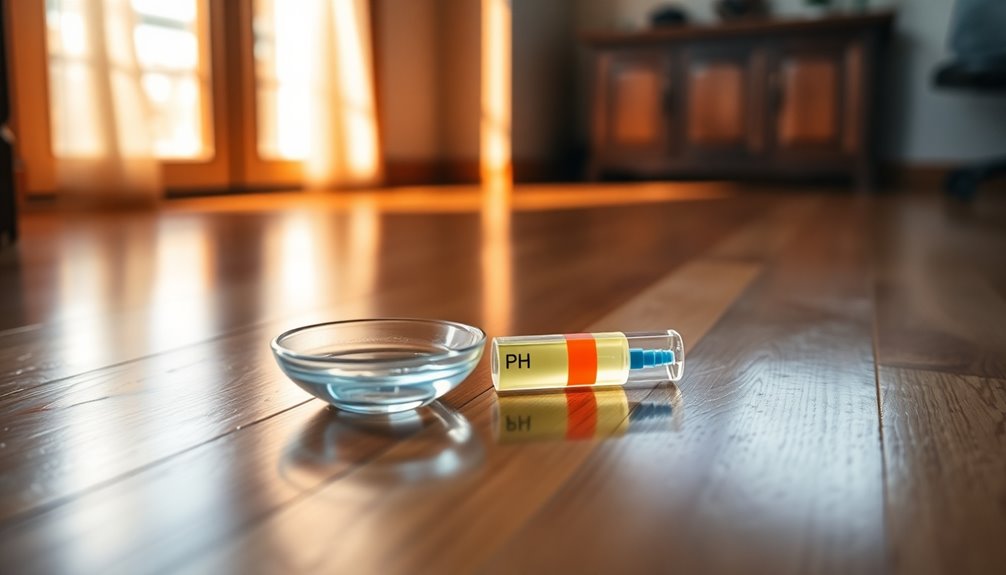
Understanding the pH level of vinegar is vital for recognizing its effects on hardwood floors. Vinegar has a low pH, making it acidic. This acidity can disrupt the pH balance of your hardwood, affecting its finish and overall integrity.
When vinegar comes into contact with wood, it can lead to increased wood absorption, potentially causing swelling or warping over time. You might find that regular use of vinegar for cleaning can dull the floor’s shine and damage the protective layer. Additionally, using eco-friendly products can provide a safer alternative for cleaning without compromising your hardwood’s integrity.
To maintain your hardwood’s beauty, it’s critical to take these effects into account. Knowing how vinegar interacts with wood helps you make informed decisions about your cleaning methods, ensuring your floors remain in great condition for years to come.
How to Safely Use Vinegar for Hardwood Cleaning
When using vinegar to clean your hardwood floors, it’s essential to get the dilution ratio right to avoid damage. You can also explore alternative cleaning solutions if you’re concerned about vinegar’s effects. Additionally, testing vinegar on inconspicuous areas is recommended before applying it broadly to ensure it won’t harm your wood surfaces. Let’s look at how to safely incorporate vinegar into your cleaning routine.
Vinegar Dilution Ratio
To safely clean your hardwood floors with vinegar, it’s essential to use the right dilution ratio. A common recommendation is mixing one cup of vinegar with a gallon of warm water.
This dilution maximizes vinegar benefits, like its ability to cut through grime and eliminate odors, without risking damage to your floors.
Remember, while vinegar’s acidity can be effective, it also has drawbacks; too much vinegar can dull the finish over time.
Always test your solution on a small, inconspicuous area first. If you notice any adverse effects, adjust the ratio or reconsider your cleaning method.
Sticking to the right dilution will help you enjoy the benefits of vinegar while protecting your hardwood investment.
Alternative Cleaning Solutions
While vinegar can be a handy cleaning agent for hardwood floors, it’s wise to explore alternative solutions that might be gentler yet equally effective. You can consider using eco-friendly products specifically formulated for hardwood. These cleaners often contain natural ingredients that won’t harm your floors or the environment.
Another great option is to make your own homemade cleaners. A simple mixture of warm water and a few drops of dish soap can work wonders. Just dampen a microfiber cloth and wipe down your floors, avoiding excess moisture.
Additionally, adding a few drops of essential oils can provide a pleasant scent while cleaning. These alternatives can keep your hardwood looking great without risking damage.
Are There Alternatives to Vinegar for Cleaning?
If you’re looking for alternatives to vinegar for cleaning your hardwood floors, you’ve got options.
Natural cleaning solutions, like soap and water or essential oils, can be effective without the risks. You might also consider commercial hardwood cleaners specifically designed to protect your floors while keeping them clean. Additionally, using pH neutral cleaners can help ensure that your floors remain undamaged while effectively removing dirt and grime.
Natural Cleaning Solutions
Although vinegar is a popular natural cleaning option, there are several effective alternatives that can keep your hardwood floors looking pristine.
You can try these eco-friendly cleaners and homemade solutions:
- Olive Oil and Lemon Juice: Mix for a natural shine and fresh scent.
- Castile Soap: This gentle soap cleans without harsh chemicals.
- Baking Soda Paste: Great for tough stains, just mix with water.
- Tea: Brewed black tea can help clean and add luster to your floors.
These options not only clean effectively but also guarantee your home stays safe and healthy.
Commercial Hardwood Cleaners
When it comes to keeping your hardwood floors spotless, commercial hardwood cleaners offer a reliable alternative to vinegar. These specially formulated products are designed for effective hardwood maintenance, ensuring your floors remain shiny and protected.
Unlike vinegar, which can damage finishes over time, commercial cleaners use safe ingredients that won’t strip your floors of their natural beauty.
You’ll find various cleaning techniques tailored to different hardwood types, making it easy to choose the right product for your needs. Many of these cleaners also come with added benefits, like conditioning agents that help maintain the wood’s integrity.
What Do Experts Say About Vinegar on Hardwood Floors?
While many homeowners swear by vinegar for cleaning, experts often caution against using it on hardwood floors. They emphasize that vinegar’s acidity can damage the finish, leading to costly repairs.
Here’s what expert opinions highlight about hardwood care:
- Finish Deterioration: Vinegar can strip away protective layers, making your floors vulnerable.
- Water Damage: Excess moisture from vinegar solutions can seep into seams, causing warping.
- Staining: Over time, vinegar can leave unsightly marks on your beautiful hardwood.
- Decreased Lifespan: Using vinegar regularly can shorten the life of your floors, resulting in premature replacement. Additionally, improper cleaning methods can damage the stainless steel finish of other appliances in your home.
For the best results, stick to products specifically designed for hardwood care and keep your floors looking stunning for years to come.
How Often Should You Clean Hardwood Floors?
To keep your hardwood floors looking great, you’ll want to establish a cleaning routine that fits your lifestyle. Daily quick clean-ups can help manage dirt and dust, while a monthly deep cleaning guarantees a thorough refresh. Incorporating a chore chart can help distribute cleaning responsibilities among family members for a more efficient routine. Let’s explore how often you should tackle each task for the best results.
Daily Quick Clean Tips
Cleaning hardwood floors regularly is essential for maintaining their beauty and longevity. To keep your floors looking their best, follow these daily quick clean tips:
- Sweep or Vacuum: Remove dust and dirt daily to prevent scratches.
- Damp Mop: Use a microfiber mop with a gentle cleaner for a quick shine.
- Wipe Spills Immediately: Prevent stains by tackling spills right away.
- Use Rugs: Place rugs in high-traffic areas to minimize wear.
With these simple maintenance tips, you can enhance your cleaning frequency and guarantee your hardwood floors remain stunning for years to come.
Monthly Deep Cleaning Schedule
A monthly deep cleaning schedule is essential for keeping your hardwood floors in top shape. This routine guarantees that dirt and grime don’t build up, preserving the beauty and integrity of your floors.
Start by sweeping or vacuuming to remove loose debris. Then, use a damp mop with a hardwood-safe cleaner to tackle stains and spills. Be careful not to oversaturate the wood, as excess moisture can cause damage.
For deeper cleaning, consider using specialized products designed for hardwood. As part of your monthly maintenance, inspect for scratches and consider applying a protective finish if needed.
Following this schedule not only enhances the look of your floors but also prolongs their lifespan.
What Are the Best Practices for Maintaining Hardwood?
Here are the best practices for hardwood care that you should follow:
- Regular Dusting: Use a microfiber mop or cloth to trap dust and dirt, preventing scratches.
- Spot Cleaning: Address spills immediately with a damp cloth and a gentle cleaner, avoiding harsh chemicals.
- Avoid Water: Limit water exposure, as excessive moisture can warp your floors.
- Use Rugs: Place rugs at entryways to minimize dirt and wear, and consider using felt pads under furniture.
- Implement a consistent cleaning routine to ensure the longevity of your floors, similar to how regular maintenance is essential for stainless steel appliances.
Can Vinegar Affect the Finish of Hardwood Floors?
Maintaining the beauty of your hardwood floors requires careful attention to the products you use. While vinegar can be a tempting cleaning solution, you should be cautious. High vinegar concentration may dull the finish on your hardwood, leading to a lackluster appearance over time.
Even diluted vinegar can affect the protective layer, especially with frequent use. For proper hardwood maintenance, it’s best to stick with pH-balanced cleaners specifically designed for wood. These products clean effectively without compromising your floor’s finish. Regular maintenance enhances both longevity and aesthetic appeal, ensuring your floors remain beautiful for years to come.
If you choose to use vinegar, do so sparingly and always test it in a small, inconspicuous area first. Protecting your investment means being mindful of what you apply to those gorgeous floors.
What Are Common Mistakes When Cleaning With Vinegar?
Using vinegar to clean hardwood floors can lead to some common mistakes that might harm your investment.
Many people fall for vinegar misconceptions, thinking it’s a miracle cleaner. Here are four mistakes to avoid:
Many believe vinegar is a miracle cleaner, but it’s essential to avoid common pitfalls for your hardwood floors.
- Using undiluted vinegar: It’s too harsh and can strip your finish.
- Ignoring the floor type: Not all hardwoods react the same way to vinegar, so know your surface.
- Overusing vinegar: Frequent cleaning can lead to build-up, causing more damage than good.
- Neglecting proper drying: Leaving floors wet can warp the wood.
Additionally, it’s important to choose appropriate cleaning products based on your hardwood’s specific requirements to maintain its longevity.
How to Identify Damage Caused by Vinegar on Wood?
Even with the best intentions, vinegar can wreak havoc on hardwood floors if misused. To identify damage caused by vinegar on your wood surface, look for specific damage signs.
First, check for dullness or a cloudy appearance, which indicates that the vinegar may have stripped away the finish.
Next, inspect for discoloration; if the wood looks faded or uneven, vinegar could be the culprit.
Scratches or rough textures may also appear, showing that the acidic nature of vinegar has compromised the wood.
Finally, pay attention to any warping or swelling; this can occur if moisture is trapped underneath.
Addressing these issues promptly can help you restore your hardwood floors and maintain their beauty.
Conclusion
While vinegar can be a tempting cleaning ally, think of it like a double-edged sword. It might shine up your floors like sunlight breaking through the clouds, but it can also dull their beauty over time. To keep your hardwoods looking their best, consider safer alternatives and follow best practices for maintenance. Your floors deserve the care that preserves their natural elegance, ensuring they stand strong against the test of time, much like a well-loved family heirloom.