To clean your couch cushions the right way, start by identifying the fabric type and checking for care labels. Vacuum thoroughly, focusing on crevices. For removable covers, pre-treat stains and wash according to the label. For non-removable upholstery, spot test cleaners and use a fabric-safe solution. Don’t forget to deodorize with baking soda and maintain by rotating cushions and regular vacuuming. Discover more tips to keep your cushions fresh and extend their lifespan.
Why Cleaning Couch Cushions Is Important
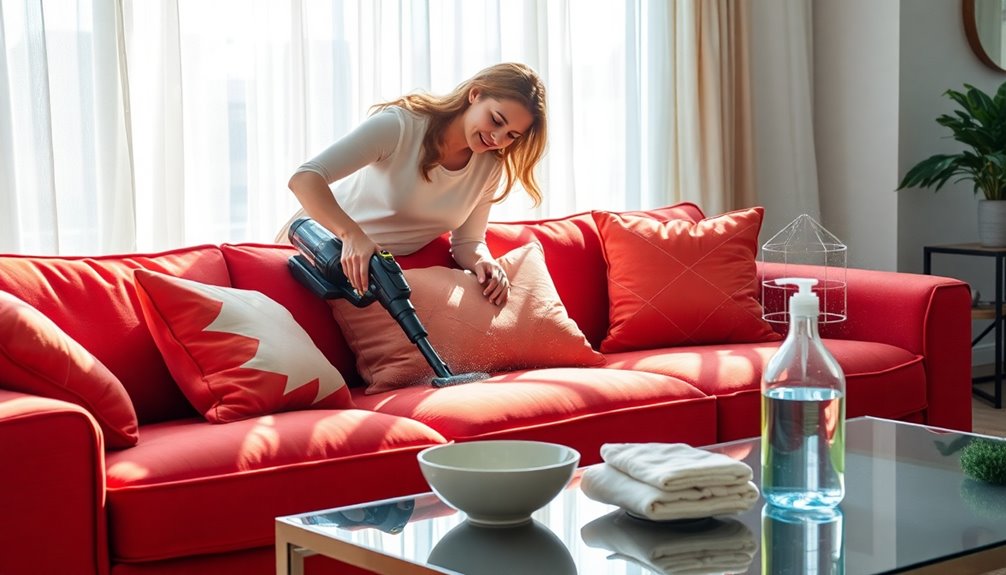
Cleaning couch cushions is important not just for aesthetics but also for your health. Regularly maintaining your cushions brings significant couch hygiene benefits. Dust, pet dander, and other allergens can accumulate, leading to discomfort and respiratory issues.
By cleaning your cushions, you’re actively reducing allergens in your living space, making it safer and more enjoyable for everyone. Moreover, a clean couch enhances your home’s overall appearance, creating a welcoming environment. When you sit on fresh, clean cushions, you instantly feel more relaxed. Additionally, regular inspection of your cleaning tools, like sponges, can help maintain a germ-free environment.
Identifying the Material of Your Couch Cushions
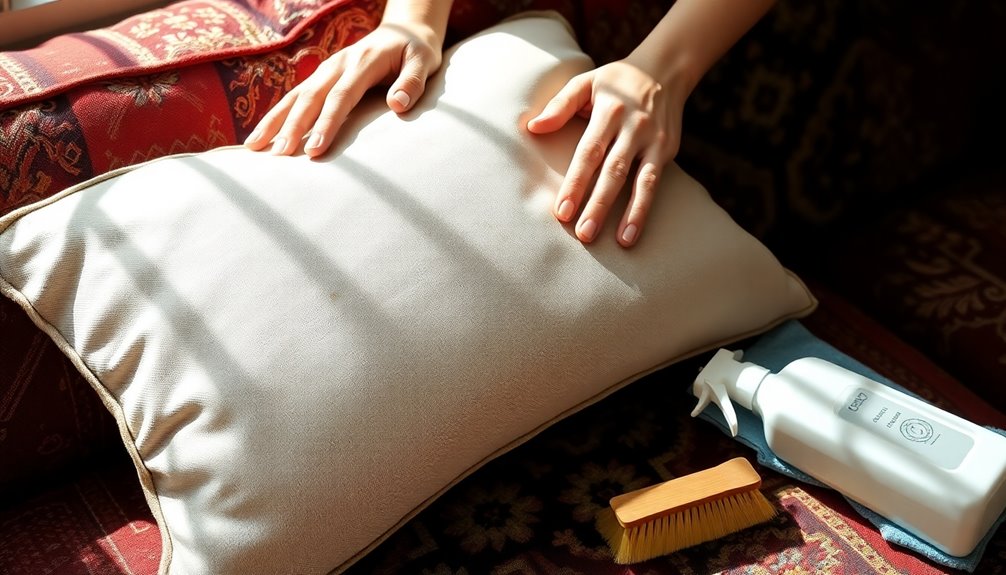
Before you start cleaning, you need to identify the material of your couch cushions.
Understanding whether they’re made of natural fibers or synthetic materials will help you choose the right cleaning method. Additionally, knowing the fabric type can guide you in selecting the right cleaner that will not damage your cushions. Let’s explore the different fabric types and how to test them effectively.
Fabric Types Overview
Identifying the fabric of your couch cushions is essential for effective cleaning. Different materials require different care methods, so knowing what you’re dealing with can save you time and effort.
Cotton blends are popular for their softness and durability, making them easy to clean but prone to stains. Microfiber options, on the other hand, are known for their resistance to spills and dirt, often requiring just a simple wipe-down.
To determine your fabric type, check for tags or perform a touch test; this helps you choose the right cleaning solutions. Understanding these fabrics allows you to maintain your cushions effectively and prolong their lifespan, ensuring your couch stays fresh and inviting.
Testing For Natural Fibers
How can you tell if your couch cushions are made from natural fibers? Start with a simple fiber testing method. Grab a small thread from your cushion and light it. If it burns quickly and smells like burning paper or leaves, you’re likely dealing with natural fibers like cotton or linen.
If it melts and smells like plastic, you’ve got synthetic materials instead.
Another test involves water: natural fibers usually absorb moisture, while synthetics repel it. Just sprinkle a few drops on the fabric and watch how it behaves.
Identifying Synthetic Materials
You might notice that your couch cushions feel different compared to natural fibers. If they’re made from synthetic fibers like polyester or nylon, they often have a slick, smooth texture.
To identify these materials, look for labels or tags that specify the fabric. Synthetic cushions are generally more durable and resistant to stains, making them easier to clean with various cleaning methods.
For example, you can use mild detergent and water for spot cleaning, or even a fabric-safe cleaner for deeper stains. Always check the care instructions to avoid damaging your cushions.
Understanding whether your cushions are synthetic helps you choose the right cleaning methods, ensuring they stay fresh and vibrant for longer.
Tools You Need for Effective Cleaning
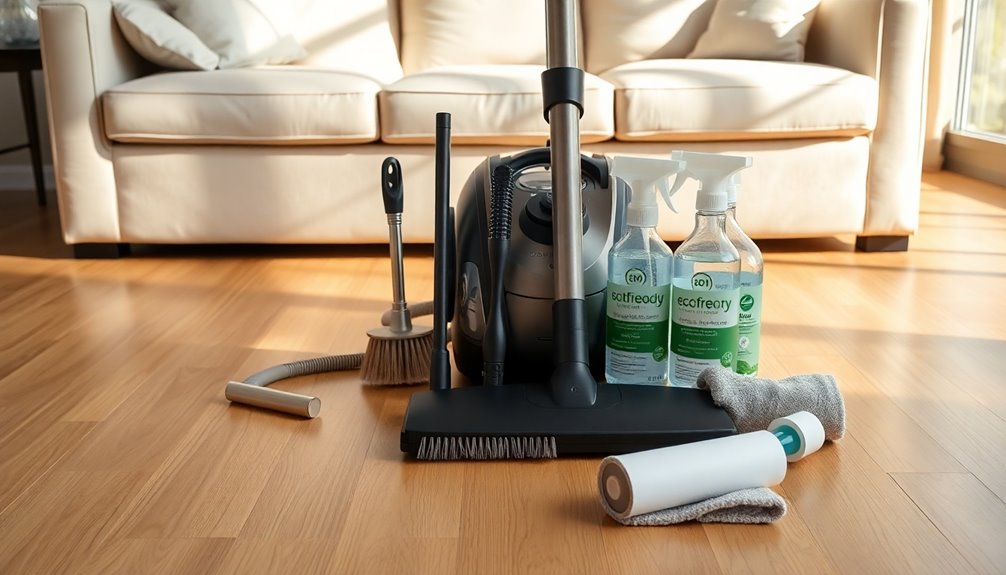
Cleaning couch cushions effectively requires the right tools at your disposal.
First, grab some reliable cleaning tools like a vacuum with an upholstery attachment to remove dust and debris. A lint roller can help pick up pet hair or crumbs easily.
Start with essential cleaning tools like a vacuum with an upholstery attachment and a lint roller to tackle dust and pet hair.
You’ll also need soft brushes to gently scrub away stains without damaging the fabric. For deeper cleaning, maintenance supplies such as fabric-safe cleaners or mild detergents are essential. Don’t forget microfiber cloths for wiping down surfaces after cleaning. If your cushions have removable covers, a washing machine can be a game-changer.
Additionally, checking the fabric care tag ensures you use appropriate cleaning methods for your specific upholstery.
With these tools in hand, you’ll be well-prepared to tackle dirt and refresh your couch cushions, ensuring they look their best.
How to Prepare Your Couch for Cleaning
Before diving into the cleaning process, it’s essential to prepare your couch properly. Start by removing any throw pillows and blankets to clear the area. This not only makes cleaning easier but also allows you to check for hidden debris.
Next, vacuum the couch thoroughly, paying special attention to crevices where dirt tends to accumulate. This step is vital in following couch maintenance tips, ensuring you tackle any allergens or dust.
Also, check the cleaning frequency guidelines for your specific couch material; some fabrics may need more regular attention than others. Additionally, remember to vacuum the chair regularly to help prevent dirt buildup and prolong the lifespan of the fabric.
Finally, spot-test any cleaning products on a hidden area to avoid damage before you proceed with the full cleaning process.
Cleaning Removable Couch Covers: Step-by-Step
Before you start cleaning your removable couch covers, check the care labels for specific instructions.
If you spot any stains, pre-treat them effectively to guarantee a thorough clean.
Finally, follow the washing and drying guidelines to keep your covers looking fresh and vibrant. Additionally, consider using gentle, water-based cleaners to preserve the integrity of natural fibers.
Check Care Labels First
Since you want to keep your couch looking its best, checking the care labels on your removable couch covers is vital.
These labels provide essential information about cleaning techniques and fabric care specific to your couch’s material. Pay attention to symbols indicating whether the covers are machine washable, hand washable, or require dry cleaning.
Following these instructions helps prevent damage and guarantees your covers stay vibrant and fresh. If the label suggests a particular detergent or cleaning method, be sure to use it.
Pre-Treat Stains Efficiently
Stains on your couch can be a real eyesore, but tackling them doesn’t have to be intimidating. Start by identifying the type of stain you’re dealing with.
For food, use a gentle stain removal technique like blotting instead of rubbing, which can spread the stain. Grab pre-treatment products that target specific stains—enzymatic cleaners work wonders on protein-based spills, while vinegar and baking soda can handle tough grease.
Apply the product directly to the stain, letting it sit for a few minutes to penetrate. Always test a small, inconspicuous area first to verify your fabric isn’t damaged.
This step not only prepares your cushions for washing but also increases the chances of completely removing those pesky stains.
Wash and Dry Properly
Once you’ve pre-treated the stains, it’s time to wash your removable couch covers for a fresh look. Start by checking the care label for specific fabric care instructions.
Use a gentle cycle with cold water to protect the fabric. Add a mild detergent—avoid harsh chemicals that could damage the fibers. After washing, don’t wring or twist the covers; instead, gently shake them out to maintain their shape.
For drying, opt for air drying whenever possible to prevent shrinkage. If you must use a dryer, choose a low heat setting and add dryer balls to help fluff them up.
Cleaning Non-Removable Upholstery: Best Practices
Cleaning non-removable upholstery can feel challenging, but with the right approach, it doesn’t have to be. To guarantee your fabric’s longevity and maintain its appearance, follow these best practices:
- Regular vacuuming: This helps prevent dirt buildup and prolongs fabric life.
- Spot test: Always check for colorfastness before using any cleaner.
- Seasonal cleaning: Aim for thorough cleaning at least twice a year to keep your upholstery fresh.
- Fabric protection: Consider applying a fabric protector to help with stain prevention.
Utilizing a crevice tool attachment during your vacuuming can help reach tight spaces and ensure all dirt is effectively removed.
Avoid common cleaning myths that can damage your upholstery.
Stick to gentle cleaners and stay consistent with your cleaning frequency.
With these maintenance tips, you’ll enjoy your upholstery’s beauty for years to come.
Tackling Stains: Spot Treatments for Common Issues
Stains can be a real headache, but you don’t have to stress. Whether it’s coffee spills, wine mishaps, or pet accidents, there are effective spot treatments for each issue. Let’s get you equipped with the right methods to tackle these common challenges. Remember to address stains promptly to prevent deep-set marks.
Coffee and Wine Stains
While enjoying a cozy evening on your couch, it’s all too easy to accidentally spill coffee or wine, leaving unsightly marks on your cushions. Don’t worry; you can tackle these stains effectively!
- Blot the stain: Use a clean cloth to absorb excess liquid; never rub!
- Coffee grounds: Mix coffee grounds with water to create a paste, apply it to the stain, and let it sit for 5-10 minutes before wiping clean.
- Wine vinegar: Combine equal parts wine vinegar and water, dab with a cloth, and rinse with plain water.
- Dry properly: Make sure your cushions dry completely to prevent mold or mildew.
With these steps, your couch can stay looking fresh and inviting!
Grease and Oil Spots
Avoid rubbing, as this can spread the stain. Next, apply a small amount of cornstarch or baking soda directly onto the spot. These powders excel at oil absorption, drawing out the grease effectively.
Let it sit for about 15 minutes, then vacuum up the residue. For stubborn stains, a mixture of dish soap and warm water can help with grease removal.
Dab this solution on the spot, then rinse with a damp cloth. Your cushions will look fresh again in no time!
Pet Urine Accidents
Accidents happen, and pet urine can leave behind unsightly stains and odors on your couch cushions.
To tackle pet odor and guarantee effective stain removal, follow these steps:
- Blot the area with a clean cloth to soak up as much urine as possible.
- Mix a solution of equal parts white vinegar and water, then apply it to the stain.
- Sprinkle baking soda over the treated area to neutralize odors and absorb moisture.
- Vacuum after drying to remove any leftover baking soda.
Deodorizing Your Couch Cushions Naturally
If you want your couch cushions to smell fresh without relying on harsh chemicals, natural deodorizing methods can be incredibly effective.
Start by sprinkling a generous amount of baking soda over the cushions. This powerful odor absorber will work its magic, drawing out unwanted smells. Let it sit for at least 15 minutes, or longer if possible, to maximize its effectiveness. Regularly incorporating white vinegar into your cleaning routine can also help maintain freshness and neutralize odors.
For an extra boost of fragrance, you can mix a few drops of your favorite essential oils with the baking soda before applying it. Think lavender for relaxation or lemon for a clean, citrusy scent.
After the baking soda has settled, simply vacuum it up, and you’ll be left with fresh-smelling cushions that are safe and natural!
Tips for Maintaining Clean Couch Cushions Regularly
Keeping your couch cushions clean doesn’t stop at deodorizing. To guarantee effective cushion maintenance, incorporate these simple habits into your routine:
- Regular vacuuming: Use a vacuum with an upholstery attachment to remove dust and crumbs weekly.
- Rotate cushions: Flip and rotate your cushions every few weeks to prevent uneven wear.
- Spot clean spills immediately: Address any stains right away with a damp cloth and mild cleaner to avoid permanent marks.
- Use throw blankets: Drape a throw over your couch to protect cushions from pet hair and daily wear.
- Establish a routine for laundry room upkeep to create a consistent cleaning habit for your home.
When to Call in Professional Cleaners?
While regular maintenance can keep your couch cushions looking fresh, there are times when professional help is essential. If you notice stubborn stains that won’t budge or persistent odors, it’s time to contemplate professional services.
Additionally, if you have pets or allergies, the cleaning frequency should increase, making expert cleaning necessary to guarantee a thorough job. When your cushions start to look dingy despite your efforts, don’t hesitate to call in the pros.
They’ve the right tools and knowledge to tackle deep-set dirt and allergens effectively. Investing in professional cleaning not only revives your cushions but also extends their lifespan, keeping your couch looking great for years to come. Regular disinfection methods can help prevent issues before they require professional intervention.
Eco-Friendly Cleaning Solutions for Couch Cushions
When you’re ready to tackle your couch cushions yourself, eco-friendly cleaning solutions offer a safe and effective way to refresh them. You don’t need harsh chemicals to achieve a clean look.
Instead, try these natural cleaning DIY solutions:
- Baking Soda: Sprinkle it on the cushions, let it sit for 15 minutes, then vacuum. It absorbs odors and refreshes fabric.
- Vinegar and Water: Mix equal parts in a spray bottle and lightly spritz the fabric. Wipe with a cloth to remove stains.
- Castile Soap: Dilute in water for a gentle cleaner. Use a soft cloth to scrub away dirt.
- Essential Oils: Add a few drops to your cleaning mixtures for a pleasant scent.
These options aren’t only effective but also environmentally friendly!
Troubleshooting Common Cleaning Challenges
Cleaning couch cushions can sometimes present unexpected challenges, but don’t worry—most issues have simple solutions.
If you encounter stubborn stains, remember that some cleaning myths suggest using harsh chemicals. Instead, always check the fabric care label and opt for gentle, fabric-safe cleaners.
For lingering odors, try sprinkling baking soda on the cushions, letting it sit for a few hours, then vacuuming it up.
If your cushions are still looking dingy after cleaning, a second pass with a mild soap solution can work wonders.
Finally, if your cushions have wrinkled or misshapen, a quick fluffing and reshaping can restore their form.
Conclusion
So, after all that effort to clean your couch cushions, you might just find they look brand new—only to realize your kids have already spilled juice on them again. Isn’t it ironic how a spotless couch can be just a moment away from chaos? But don’t let that discourage you! With regular maintenance and a bit of humor, you can keep your cushions looking fresh, even in the face of inevitable messes. Embrace the journey!