To deep clean your couch cushions, start by checking the fabric type and gather your supplies, like a vacuum, microfiber cloths, and a soft brush. Remove cushions and vacuum thoroughly to eliminate dust and debris. If covers are removable, wash them according to the care label. For stains, spot clean using appropriate methods. Finally, consider deodorizing with baking soda. If your cushions need extra care, there’s plenty more to explore on maintaining their freshness and longevity.
Why Deep Cleaning Couch Cushions Is Essential

While you might think regular vacuuming is enough, deep cleaning your couch cushions is essential for maintaining a healthy home environment. Dust, allergens, and bacteria can accumulate in those cushions, aggravating dust allergies and impacting your overall well-being.
By deep cleaning, you’re not just revitalizing your living space; you’re also reaping significant health benefits. Removing trapped dust and allergens reduces your exposure to irritants, making it easier to breathe and feel comfortable at home. Additionally, using the right cleaning method tailored to your couch’s fabric ensures effective results without causing damage.
Plus, it helps prolong the life of your couch, saving you money in the long run. So, don’t skip this crucial task; it’s a key step towards creating a cleaner, healthier living area for you and your family.
Identifying Your Couch Cushion Material
Before you start cleaning, it’s important to identify your couch cushion material.
Different fabrics require specific care, and knowing what you’re working with can save you time and effort. For example, fabric cleaning codes indicate the appropriate cleaning methods for various materials, ensuring you choose the right approach for your cushions.
Let’s explore some common materials and their care guidelines.
Common Couch Cushion Fabrics
Identifying your couch cushion material is essential for effective cleaning and maintenance. Common upholstery types include cotton blends, which are soft and breathable but may require more frequent cleaning.
Synthetic fibers, like polyester, offer durability and stain resistance, making them easier to maintain. Microfiber materials are popular for their plush feel and ease of cleaning, though they can attract dust.
Understanding each fabric’s durability helps you determine the best cleaning frequency. For instance, cotton blends might need cleaning every few months, while synthetic fibers can often go longer between cleans.
Knowing your couch’s material lets you tailor your cleaning routine, ensuring it stays fresh and lasts longer.
Material Care Guidelines
Knowing how to care for your couch cushions starts with understanding their material. Different fabric types, like cotton, polyester, or leather, require unique cleaning approaches.
For cotton and polyester, regular vacuuming and occasional spot cleaning should suffice. You might want to deep clean them every six months, depending on usage.
Leather, on the other hand, needs a gentle cleaner and can benefit from conditioning to prevent cracking.
Always check care labels for specific instructions, as some fabrics might be more delicate than others.
Gathering the Right Cleaning Supplies
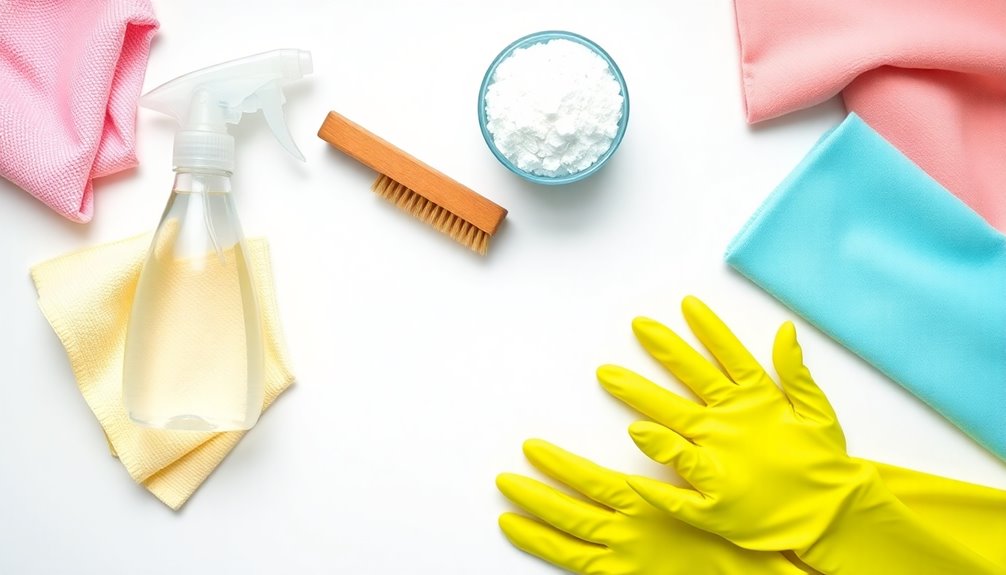
Before you start cleaning your couch cushions, you’ll need to gather the right supplies.
Make sure you have essential tools like a vacuum and microfiber cloth, along with recommended cleaning solutions suited for your cushion material. Having everything ready will make the process smoother and more effective. Additionally, be sure to check the fabric care tag for specific cleaning instructions to avoid damaging the material.
Essential Cleaning Tools
To tackle the task of deep cleaning your couch cushions, you’ll need the right tools at your disposal. Having the essential supplies will make the job easier and more effective.
Start by gathering these cleaning tools:
- Vacuum Cleaner: Use a vacuum with an upholstery attachment to remove dust and debris.
- Microfiber Cloths: These are perfect for wiping down surfaces without scratching.
- Soft-Bristled Brush: A brush helps lift dirt from fabric fibers without damaging them.
Once you’ve collected these items, you’ll be well-equipped to give your couch cushions the thorough cleaning they deserve.
Recommended Cleaning Solutions
When it comes to deep cleaning your couch cushions, having the right cleaning solutions is just as important as your tools. You’ll want to take into account eco-friendly solutions that are safe for your family and pets.
A simple blend of vinegar and water can work wonders as a homemade cleaner, effectively tackling stains and odors. For tougher grime, mix baking soda with water to create a paste, applying it directly to the affected areas.
If you prefer something store-bought, look for natural upholstery cleaners without harsh chemicals. Always test any solution on a hidden spot to make sure it won’t damage your fabric.
With these options, you’ll be well-equipped to refresh your couch cushions effectively.
Preparing Your Couch for Cleaning
Getting your couch ready for a deep clean involves a few simple steps that make a big difference. First, remove any items from the couch, like cushions or throws, to give yourself clear access.
Next, vacuum the entire couch to eliminate dust, pet hair, and crumbs—this is one of the best couch maintenance tips. Consider using cushion protection methods, like fabric protectors, to keep your upholstery safe from future stains.
- Check for any loose threads or damage that needs attention.
- Treat stains before deep cleaning to guarantee they lift completely.
- Identify the fabric type to choose the right cleaning solutions. It’s important to check the care tag for specific cleaning instructions to avoid damaging the fabric.
How to Remove Couch Cushion Covers
Before you start removing your couch cushion covers, check the manufacturer’s instructions for any specific guidelines. This guarantees you won’t damage the fabric or the cushions themselves. Once you’re clear on the steps, you can prepare for the removal process with confidence. Additionally, understanding cabinet materials can help inform your cleaning techniques for other furniture like couches.
Check Manufacturer Instructions
One of the most important steps in deep cleaning your couch cushions is to check the manufacturer instructions for removing the covers. This guarantees you don’t damage the fabric or structure of your couch during the cleaning process.
Remember, proper couch care starts with knowing what’s safe for your specific cushions.
Here are a few things to look for:
- Cleaning Frequency: Some fabrics require more frequent cleaning than others.
- Washing Instructions: Know whether the covers are machine washable or need to be dry cleaned.
- Temperature Settings: Check if there are specific water temperature guidelines to follow.
Prepare For Removal Process
To effectively prepare for the removal process, start by clearing the couch of any items, like throw pillows and blankets, that could obstruct your access to the cushions.
Once you’ve cleared the area, check if your cushions have zippers or Velcro. If they do, find the best way to open them without damaging the fabric.
Consider integrating this into your cleaning schedule to maintain freshness over time. Additionally, think about cushion rotation; rotating your cushions regularly can help them wear evenly and reduce stains.
Before diving in, gather your cleaning supplies so everything’s on hand.
With a little preparation, the removal process will be smooth and efficient, making deep cleaning a breeze!
Spot Cleaning Stains: Techniques That Work
Spills and stains on couch cushions can be a homeowner’s nightmare, but effective spot cleaning techniques can restore your furniture’s appearance. Start by identifying the type of stain to choose the right cleaning solution. For most stains, a mixture of mild dish soap and water works wonders.
Spills and stains on couch cushions can be daunting, but with effective spot cleaning, you can easily restore your furniture’s beauty.
Gently dab the stain with a clean cloth, avoiding harsh scrubbing which can damage the fabric.
Here are some handy tips for successful stain removal:
- Blot, don’t rub—this helps lift the stain without spreading it.
- Test any cleaning solution on a hidden area first to verify it won’t discolor your fabric.
- Use a white cloth to avoid color transfer while cleaning.
Additionally, consider using a vinegar and water solution for effective cleaning on fabric stains, just as it does for burnt pots.
With these methods, you’ll keep your couch looking fresh and clean!
Deep Cleaning Fabric Couch Cushions
To deep clean your fabric couch cushions, you’ll want to start by removing the cushion covers for a thorough wash. Next, vacuum the cushions to pick up any debris and dust lurking in the fibers. Finally, tackle any remaining stains with effective spot cleaning techniques to restore their freshness, and consider professional cleaning for heavily soiled cushions to ensure optimal results.
Remove Couch Cushion Covers
Start by carefully unzipping and removing the couch cushion covers. This step is essential for effective cushion care, allowing you to clean them properly.
Depending on your cleaning frequency, you may want to wash these covers more often; regular maintenance keeps your cushions looking fresh.
- Check the care label for washing instructions.
- Use a gentle detergent to avoid damaging the fabric.
- Consider air drying to prevent shrinkage.
Once the covers are off, you can tackle any stains or odors, ensuring your couch feels as good as it looks.
Vacuum Thoroughly For Debris
Vacuuming your couch cushions is an essential step in deep cleaning, ensuring you remove dust, crumbs, and allergens that accumulate over time.
Start by using a vacuum with a brush attachment to effectively lift debris from the fabric. Employ various vacuum techniques, like using short, firm strokes to get into crevices where dirt hides.
Don’t forget to vacuum the sides and back of the cushions—these areas often collect a surprising amount of dust. For delicate upholstery care, adjust your vacuum’s suction power to avoid damaging the fabric.
Regular vacuuming not only keeps your couch looking fresh but also contributes to a healthier living environment. Make this a routine part of your cleaning schedule to keep your cushions in top shape.
Spot Clean Stains Effectively
Stains on your couch cushions can be a real eyesore, but tackling them promptly can make all the difference. Use effective stain removal techniques to keep your cushions looking fresh.
Start by identifying the type of stain; this helps you choose the right fabric treatment options. Blot, don’t rub, to lift the stain without spreading it.
- Use a mild detergent mixed with water for general stains.
- Try white vinegar or baking soda for tougher spots.
- Always test your cleaning solution on a hidden area first to avoid damage.
Deep Cleaning Leather Couch Cushions
Although leather couch cushions are known for their durability, they still require regular deep cleaning to maintain their appearance and longevity.
Start by vacuuming the cushions to remove dust and debris. Next, mix a solution of mild soap and warm water—test it on a hidden area first to check for any adverse reactions.
Use a soft cloth to gently wipe down the surfaces, following the grain of the leather. After cleaning, apply a leather conditioner to nourish the material and prevent cracking, as regular conditioning every six months is essential for proper leather care.
Finally, let the cushions air dry away from direct sunlight. By using these effective cleaning techniques, you’ll keep your leather couch cushions looking fresh and inviting for years to come.
Deodorizing Your Couch Cushions Naturally
After revitalizing your leather couch cushions, it’s time to tackle any lingering odors. You can easily deodorize your cushions naturally using simple techniques and natural odor eliminators. Here’s how you can freshen things up:
- Baking Soda: Sprinkle baking soda on the cushions, let it sit for a few hours, then vacuum it up. It absorbs odors effectively.
- Vinegar Spray: Mix equal parts water and white vinegar in a spray bottle. Lightly mist your cushions, then allow them to air dry. The vinegar scent dissipates, taking odors with it.
- Essential Oils: Add a few drops of your favorite essential oil to a cotton ball, and place it inside the cushions. This adds a pleasant fragrance while neutralizing odors.
These methods will keep your couch smelling fresh and inviting! Additionally, consider using natural cleaning agents like vinegar and baking soda for eco-friendly practices in your home.
Drying Methods for Couch Cushions
Once you’ve cleaned your couch cushions, knowing how to dry them properly is essential to maintain their shape and comfort.
Air drying is often the best choice; simply lay your cushions flat in a well-ventilated area. For quicker results, consider sun drying, which not only speeds up the process but also helps eliminate bacteria.
If you’re short on time, machine drying can be effective, but use a low heat setting to prevent damage. Heat drying is another option, but be cautious—excessive heat can warp the cushions. A clean dishwasher ensures sparkling and hygienic items, so consider this when choosing cleaning supplies for your cushions.
Whichever method you choose, make certain your cushions are completely dry before putting them back on the couch to avoid mold or mildew.
Taking these steps will keep your cushions looking and feeling great!
How to Fluff and Reshape Your Couch Cushions
Now that your couch cushions are clean and dry, it’s time to fluff and reshape them for ideal comfort and appearance.
Proper cushion maintenance guarantees they stay inviting and supportive. Use these fluffing techniques to bring them back to life:
- Shake: Grab each cushion and give it a good shake to loosen the filling.
- Knead: Massage the edges and corners with your hands, redistributing the filling evenly.
- Rotate: Flip and rotate cushions regularly to prevent uneven wear.
Preventing Future Stains and Odors
To keep your couch cushions looking fresh and odor-free, it’s essential to take proactive measures.
Start with stain prevention by using a fabric protector spray. This creates a barrier against spills and makes cleanup easier.
Regularly vacuum your cushions to remove dust and crumbs, which can lead to odors over time. If you have pets, consider using washable slipcovers to protect against fur and accidents.
For odor control, sprinkle baking soda on the cushions and let it sit for a few hours before vacuuming; this absorbs unwanted smells.
Finally, encourage family and guests to eat and drink away from the couch, minimizing potential stains.
When to Seek Professional Cleaning Help?
How can you tell when it’s time to call in the professionals for your couch cushions? If your attempts at cleaning haven’t worked, it might be time to evaluate professional cleaning options.
Here are a few signs that indicate you should seek help:
- Stubborn Stains: If you’re dealing with persistent stains that just won’t budge, professionals have the tools and expertise to tackle them effectively.
- Odors: Lingering smells can indicate deeper issues; experts can eliminate the source and refresh your cushions.
- Allergies: If you or your family members suffer from allergies, professional cleaning can help remove dust mites and allergens, improving your home’s air quality.
The benefits of hiring professionals often outweigh the costs, giving you a cleaner, healthier couch.
Tips for Maintaining Clean Couch Cushions
Maintaining clean couch cushions is easier than you might think, especially when you adopt a few simple habits.
Start with regular cushion upkeep by vacuuming them weekly to remove dust and debris. This not only keeps them fresh but also prevents dirt from settling into the fabric.
For stain prevention, be proactive—use coasters and avoid eating on the couch whenever possible. If spills do happen, blot them immediately with a clean cloth to minimize damage.
Rotate your cushions occasionally to guarantee even wear.
Finally, consider using a fabric protector spray for extra defense against stains.
Common Mistakes to Avoid When Cleaning Couch Cushions
While cleaning couch cushions might seem straightforward, many people make common mistakes that can actually do more harm than good. Understanding your cushion types is essential; using the wrong cleaning method can damage fabrics.
Another mistake is neglecting cleaning frequency; regular maintenance prevents deep stains and odors.
- Ignoring care labels: Always check manufacturer instructions to avoid damaging your cushions.
- Over-saturating: Using too much water or cleaner can lead to mold and mildew.
- Skipping vacuuming: Failing to vacuum before cleaning can push dirt deeper into the fabric.
Conclusion
Deep cleaning your couch cushions isn’t just about looks; it’s essential for your health, too. Did you know that a typical couch can harbor over 100,000 dust mites? By regularly deep cleaning your cushions, you can reduce allergens and keep your living space fresh. So, make it a habit to clean your couch cushions every few months. With the right approach, you’ll enjoy a cleaner, healthier home environment and extend the life of your furniture.