Last updated: · By Megan Hart
Washing machine cleaning means removing detergent residue, mineral buildup, lint, and microbial film from the drum, detergent drawer, door seal, and drain filter. The most practical routine is to run an empty, hot cleaning cycle with a washer-specific cleaner or a vinegar and baking soda method every one to three months, then wipe the seal and drawer by hand. This guide explains what the research shows, how the main cleaner types compare, and how to clean your machine safely.
Key Takeaways
- A 2025 study in Frontiers in Microbiology found significant microbial loads in household washing machines.
- That same study reported that front-load machines carry a higher bioburden than top-load machines.
- A common practical routine is an empty hot cleaning cycle every one to three months, plus monthly wiping of the door seal and detergent drawer.
- Never mix vinegar, bleach, or other cleaners in the same cycle, and follow your product label and machine manual.
- Persistent odor, mold that returns after cleaning, or leaks should prompt a closer inspection, and a repair technician should check any mechanical fault.
What Is Washing Machine Cleaning and Why Does It Matter?
Washing machine cleaning is the process of removing soap scum, detergent residue, and biofilm from the parts of the machine that stay wet. A biofilm is a thin layer of microorganisms that clings to damp surfaces. Over time, these layers can produce odors and transfer residue to your clothes.
Research supports the idea that washers are a real microbial habitat. A review indexed in PubMed Central, from the National Library of Medicine, notes that household washing machines can host diverse microbial communities that may include opportunistic pathogens, which can affect laundry hygiene and human health. Another study in PubMed Central swabbed 16 domestic washing machines in three areas: the detergent drawer, the door seal, and the sump. Researchers compared bacterial communities in odorous and non-odorous machines using 16S rRNA sequencing and qPCR.
These findings show that microbes are present and linked to odor, but they do not prove that a typical machine makes healthy people sick. The studies are observational and involve limited sample sizes. Cleaning your washer is still a sensible way to reduce odors and residue. If you have a weakened immune system, asthma, or a skin condition, talk with your doctor about laundry and hygiene practices.
What Are the Signs Your Washing Machine Needs a Deep Clean?
Your washer needs a deep clean when it smells musty, shows visible mold on the door seal or drawer, leaves residue on clothes, or holds water after a cycle. These signs point to buildup in places a normal rinse does not reach. Check for them at least once a month.
- A sour or musty smell when you open the door or drawer
- Black or pink spots on the rubber door gasket or in the folds
- Detergent clumps or slime in the dispenser drawer
- Gray or white residue on dark clothes or on the drum surface
- Water standing in the drum or drain after a cycle ends
- Lint buildup in the filter or drain area
How Often Should You Clean Your Washing Machine?
For most households, a full cleaning cycle every one to three months is a sensible starting point. Wipe the door seal and detergent drawer at least monthly. Households that run many loads, use cold washes often, or notice odors may need to clean more frequently.
A 2023 study is not the basis for this advice. The guideline comes from common practice and manufacturer maintenance recommendations, so check your owner’s manual for specific intervals. A German study of 21 in-use machines from households is useful because it looked at real machines rather than lab setups, and it recorded whether each owner cleaned the machine regularly. That design gives a realistic picture of how washers are used. If you are planning a wider reset of your home, our room-by-room guide to deep cleaning your home covers the rest of the house in a logical order.
Do Front-Load and Top-Load Machines Need Different Cleaning?
Front-load and top-load machines both need regular cleaning, but front-loaders need extra attention to the door gasket. A 2025 study in Frontiers in Microbiology reported that front-load machines carry a higher bioburden than top-load machines. Bioburden refers to the total number of living microorganisms on a surface.
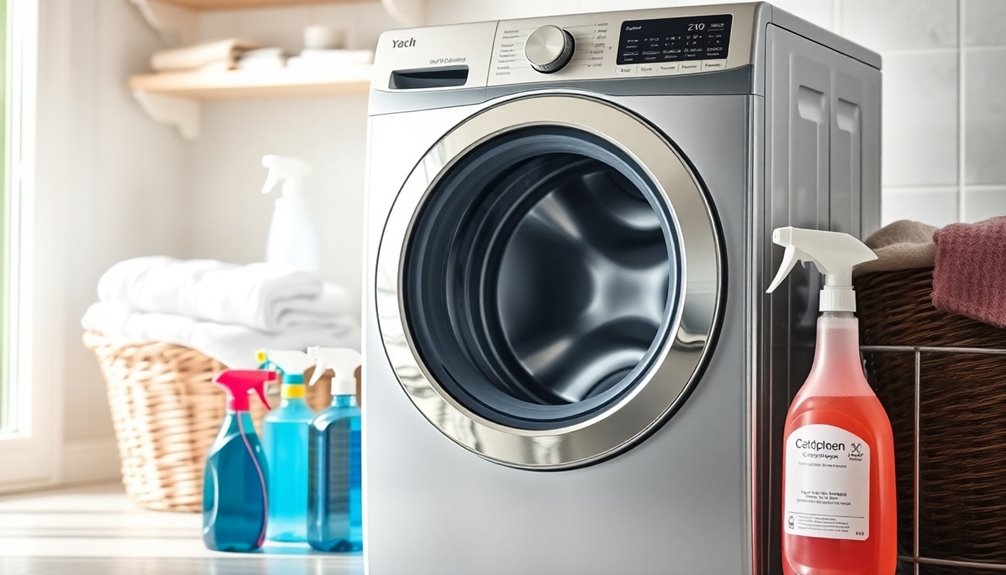
Start by identifying your design. If you are not sure whether your machine has an agitator or an impeller, our guide to agitator vs. impeller washing machines explains the difference. For top-loaders, see the detailed steps for cleaning a top-open washing machine, which covers the parts that differ from front-loaders. Always check your manual for the location of the drain filter and any specific cleaning cycle your model supports.
What Are the Main Types of Washer Cleaners?
The three most common options are commercial washer cleaner tablets or liquids, oxygen-bleach cleaners, and the DIY vinegar and baking soda method. Each works by running a strong cleaning step through an empty hot cycle. The table below summarizes how they differ.
| Option | Typical examples | How it works | What to watch for |
|---|---|---|---|
| Commercial washer cleaner (tablet or liquid) | Affresh-style tablets and similar products | Formulated to dissolve residue and buildup during an empty hot cycle | Follow the label exactly; check that the product suits your machine type |
| Oxygen-bleach washer cleaner | OxiClean Washing Machine Cleaner | Uses an oxygen-based cleaning agent in a hot cycle to lift stains and residue | Never combine with other cleaners; confirm compatibility with your machine |
| Vinegar and baking soda | Household white vinegar and baking soda | Vinegar is mildly acidic and baking soda adds mild scrubbing action | Do not mix vinegar with bleach; check your manual before frequent use |
Brands such as Affresh, Tide, and OxiClean all sell washer-specific cleaners, but the ingredient list and label directions matter more than the brand name. The sources available for this guide do not include independent head-to-head tests of these products, so this article does not rank brands by performance. Choose a product that matches your machine’s instructions and your odor problem. For guidance on cleaning products to keep apart, see our article on cleaning products you should never mix.
How Do You Clean a Washing Machine Step by Step?
To deep clean a washer, empty it, add the cleaner as directed, run the hottest and longest cycle with no laundry, and then wipe the drum, seal, and drawer. The steps below apply to most machines, but your manual takes priority if it gives different instructions.
- Remove all laundry, coins, and loose items from the drum and pockets.
- Read your owner’s manual for cleaning cycle recommendations and any products the manufacturer does not allow.
- Pull out the detergent drawer and rinse it under warm water. Scrub it with an old toothbrush to remove residue.
- Add the washer cleaner to the drum or dispenser as the label directs. If you are using the vinegar method, pour white vinegar into the drum. A common guideline is about two cups, but adjust to your manual’s advice.
- Run the hottest, longest cycle available with no laundry. If you used baking soda, sprinkle about one cup into the drum before the cycle starts, as a common home method suggests.
- When the cycle finishes, wipe the drum, door glass, and rubber gasket with a microfiber cloth. Pay attention to the folds of the seal.
- Clean the drain filter according to your manual. Place a towel and shallow pan beneath it, since water will spill.
- Leave the door and drawer open so the drum can dry and prevent new odors from forming.
Vinegar and Baking Soda: When Does the DIY Method Work?
Vinegar and baking soda are inexpensive options for routine maintenance and light odor control. The method is best for a monthly or occasional refresh rather than heavy, long-standing residue. Pair it with a hot cycle and a regular wipe-down for the best results.
Are Essential Oils Effective in Washing Machines?
Essential oils add fragrance but are not a proven substitute for a hot cleaning cycle. The sources available for this guide do not test essential oils as washer cleaners, so you should not rely on them for odor control or disinfection. Some oils can irritate skin or eyes, and oily residue may build up in the drawer. If you want a scent, add a small amount to a laundry product or a cloth, not directly into the drum, and continue with a proven cleaning method.
Can You Combine Vinegar and Bleach?
No. Mixing vinegar and bleach can release chlorine gas, which is hazardous to breathe. Run separate cycles with a full rinse between them, and never store both products together where they could be mixed by accident.
What Safety Steps Should You Take When Cleaning Your Washer?
Wear gloves and eye protection, keep the room ventilated, and never combine cleaners. These steps protect you from skin irritation and inhaled fumes, especially in small laundry rooms. Read the label before opening any container.
- Wear nitrile or rubber gloves and eye protection when pouring or scrubbing.
- Open a window or run an exhaust fan during the cycle.
- Keep children and pets away from the machine while the cycle runs.
- Never combine cleaners in the drum or drawer, and rinse the drawer before adding new product.
- Run a rinse cycle after cleaning if the label recommends it, so no residue reaches your laundry.
If you or someone in your home feels dizzy, has trouble breathing, or develops eye or throat irritation after using a cleaner, move to fresh air and call Poison Help at 1-800-222-1222 in the United States. Seek urgent care if symptoms are severe.
When Should You Call a Professional?
Call an appliance technician if your washer leaks, will not drain, makes unusual noises, or has mold that returns within days of cleaning. These symptoms can point to mechanical or drainage problems that cleaning alone will not fix. A professional can also check hoses and seals for wear.
Frequently Asked Questions
Can I use bleach to clean my washing machine?
Some manufacturers allow chlorine bleach in a hot cleaning cycle, but many do not, so check your owner’s manual first. Never add bleach to the same cycle as vinegar or any other cleaner. If you use bleach, rinse the drawer and run a full rinse cycle afterward.
Is vinegar safe for all washing machines?
Vinegar is widely used for occasional cleaning, but manufacturers differ in what they recommend for rubber and plastic parts. Check your manual before using vinegar on a regular schedule. If your machine has specific warnings, follow those instructions rather than general home advice.
How do I get rid of a musty smell in my washer?
Start by cleaning the drum, door seal, and detergent drawer, then run an empty hot cycle with a washer cleaner or vinegar. Leave the door open after each load so the drum can dry. If the smell returns quickly, check the drain filter and the door gasket for trapped water and residue.
Does cleaning my washer make my clothes cleaner?
A clean machine is less likely to leave residue or odor on your laundry, which can make clothes look and smell fresher. Cleaning does not replace good laundry habits, such as using the correct amount of detergent and avoiding overloading. Keep the drawer and seal clean to get the most benefit.
Can a dirty washer make me sick?
Research shows that household washing machines can contain microorganisms, including some that may be opportunistic pathogens. The evidence does not show that a typical machine causes illness in healthy people. If you have a weakened immune system or a respiratory condition, or if you have symptoms you are concerned about, talk with your doctor.
Conclusion
Effective washing machine cleaning combines a regular hot cleaning cycle, monthly wipe-downs of the seal and drawer, and careful product choice. Washer-specific cleaners and the vinegar and baking soda method can both work for routine maintenance when you follow the label and your manual. Clean machines help keep odors and residue down, and a professional should check any leak or mechanical problem.
More on Washing Machine Cleaning
- 14 Laundry Hamper and Basket Cleaning Tips to Reduce Odors
- Agitator vs. Impeller: Choosing the Best Washing Machine for Your Laundry Needs
- Can You Wash Removable Couch Cushion Covers?
- Fabric Softener Ball: What It Is & How to Use It
- GE Washer Self-Clean: How to Use It Properly
- How to Clean Couch Cushions Without a Washing Machine
- How to Clean Couch Cushions the Right Way
- How to Clean Top Open Washing Machine
- How to Deep Clean Couch Cushions
- How to Wash Your Pillows and Duvets (The Right Way)
- The Secret to Fresh Laundry: Where to Put Fabric Softener (Even Without a Dispenser!)
- Top Washer Without Agitator – Pros & Cons of Agitator-Free Machines
- Washing Couch Cushions in a Washing Machine: What to Know
Related guides: Safe Dishwasher Detergents That Actually Work · Top 10 Cleaning Products for Beginners: A Basic Home Cleaning Kit · 10 Best Storage Solutions for Small Bedrooms
Free tools: Cleaning Products You Should Never Mix
Always follow the product label, test on a hidden area first, and never mix cleaning products such as bleach and ammonia. Read our safety disclaimer and editorial policy.
One Reply to “Best Washing Machine Cleaner for Deep Cleaning”