To clean your dishwasher with vinegar, start by emptying it and inspecting for debris. Remove the filter at the bottom, rinse it, and scrub any stubborn buildup. Next, place a cup of white vinegar on the top rack and run a hot cycle. Wipe down the interior after it finishes. For extra freshness, consider using baking soda or lemon peels in future cycles. There’s more you can do to maintain your dishwasher’s cleanliness and efficiency.
Why Clean Your Dishwasher With Vinegar?
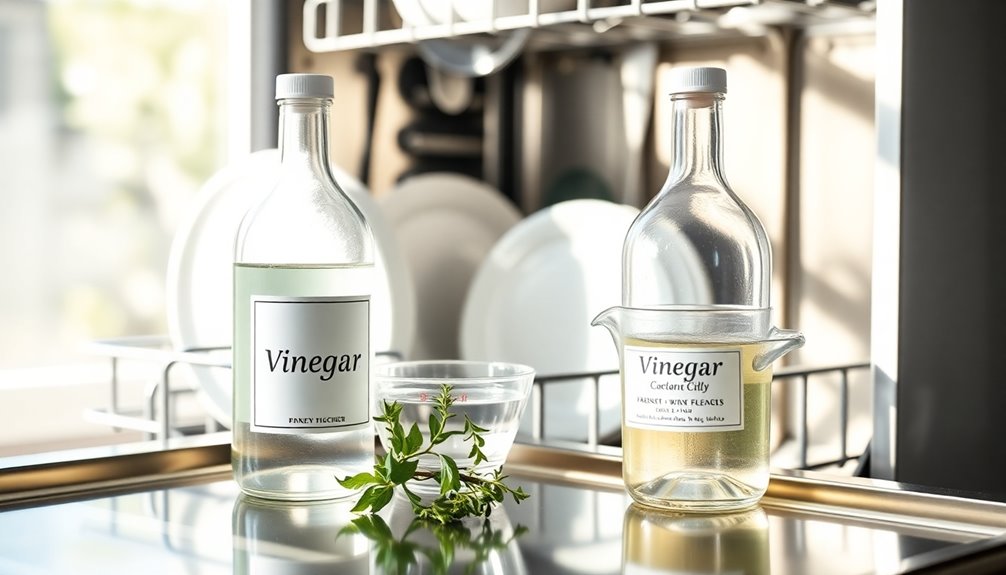
When you want to keep your dishwasher running efficiently, cleaning it with vinegar is a smart choice. Vinegar offers numerous benefits that enhance your dishwasher’s performance. It naturally breaks down grease, grime, and mineral buildup, which helps prevent clogs and odors.
By incorporating this simple ingredient into your dishwasher maintenance tips, you’ll not only extend the lifespan of your appliance but also guarantee your dishes come out sparkling clean. Regular cleaning with vinegar can also help eliminate hard water stains, making your dishwasher look and smell fresh. Plus, it’s an eco-friendly option that’s safe for your family and the environment. Additionally, consistent cleaning minimizes germ accumulation, enhancing overall kitchen hygiene.
What You’ll Need for the Cleaning Process
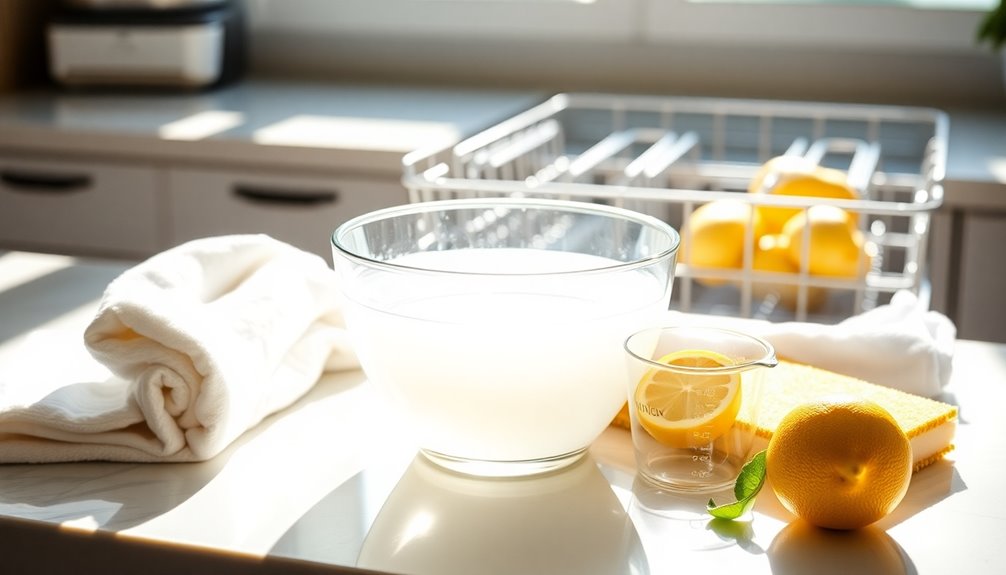
Cleaning your dishwasher requires just a few essential items to make the process smooth and effective.
First, grab a bottle of white vinegar, as its benefits include breaking down grease and eliminating odors. You’ll also need some cleaning tools like a soft sponge or cloth to wipe down surfaces and a toothbrush for those hard-to-reach areas.
To effectively clean your dishwasher, use white vinegar to break down grease and eliminate odors, along with a soft sponge and toothbrush for detailed cleaning.
A measuring cup can help you pour the right amount of vinegar into your dishwasher. Additionally, consider having baking soda on hand for an extra boost of cleaning power. Using eco-friendly methods ensures that your cleaning routine is safe for the environment and your home.
These items will guarantee you tackle grime efficiently and enjoy a fresher, cleaner dishwasher.
With everything ready, you’ll be set to begin your cleaning journey!
Preparing Your Dishwasher for Cleaning
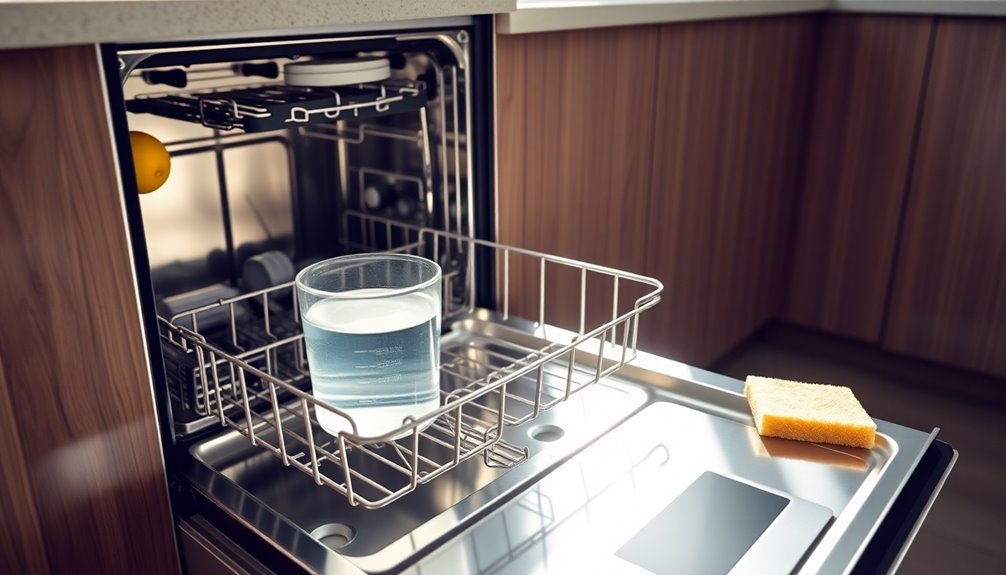
Start by emptying your dishwasher completely. This step is essential for effective cleaning and overall dishwasher maintenance. Remove all dishes, utensils, and any items that might be blocking the spray arms.
Once it’s empty, take a moment to inspect the interior for any debris or residue. If you notice any buildup, it’s a good sign you should increase your cleaning frequency. Regular checks and cleanings can prevent long-term issues and keep your appliance running smoothly.
Don’t forget to wipe down the door seals and the exterior while you’re at it. This preparation sets the stage for a thorough clean, ensuring you get the most out of your vinegar cleaning process. Using non-toxic cleaners ensures a safer environment for your family and pets.
How to Remove and Clean the Filter
To keep your dishwasher running efficiently, removing and cleaning the filter is essential.
Regular filter maintenance helps prevent clogs and guarantees your dishwasher performs at its best. Here’s how to do it:
Regularly maintaining your dishwasher filter prevents clogs and ensures optimal performance.
- Locate the filter: Check your manual for the filter’s location, usually found at the bottom of the dishwasher.
- Remove the filter: Twist or pull it out gently, being careful not to damage any surrounding components.
- Clean the filter: Rinse it under warm water to remove debris. Use a soft brush for stubborn buildup.
- Reinstall or replace: If the filter shows signs of wear, consider a filter replacement. Otherwise, put it back in securely.
Regularly cleaning and maintaining your filter can greatly enhance your dishwasher’s efficiency. Additionally, regular maintenance of your appliances, like washing machines, ensures optimal performance and longevity.
Using Vinegar to Eliminate Limescale Buildup
While limescale buildup can hinder your dishwasher’s performance, using vinegar offers a simple and effective solution.
Start by filling a dishwasher-safe bowl with white vinegar and placing it on the top rack. Run a hot water cycle without any dishes. This helps dissolve limescale and leaves your dishwasher fresh.
For ongoing limescale prevention tips, consider using vinegar monthly to keep buildup at bay. If you’re looking for vinegar alternatives, citric acid works wonders, too. Just sprinkle a cup into the bottom of your empty dishwasher and run a cycle.
Additionally, vinegar contains acetic acid, which effectively combats mineral deposits.
With these methods, you can easily maintain your dishwasher’s efficiency and prolong its lifespan. Regular cleaning will make a noticeable difference in performance.
Cleaning the Spray Arms With Vinegar
Keeping your spray arms clean is essential for ensuring your dishwasher runs efficiently. A buildup can block the jets, affecting water distribution and cleaning performance. Regular disinfection helps prevent bacterial growth, ensuring your appliances remain in top condition.
Importance of Clean Spray Arms
Clean spray arms are vital for ensuring your dishwasher effectively cleans your dishes. When they’re clogged or dirty, water can’t reach every corner, leaving behind grime and residue.
Regular spray arm maintenance is important for peak performance, and you should be mindful of your cleaning frequency. Here’s why clean spray arms matter:
- Improved Cleaning: They distribute water evenly, ensuring all dishes are thoroughly cleaned.
- Preventing Clogs: Regular maintenance helps avoid blockages that can damage your dishwasher.
- Longevity: Well-maintained spray arms can extend the life of your appliance.
- Energy Efficiency: A clean system runs more efficiently, saving you on utility bills.
Keep your spray arms clean, and your dishwasher will reward you with sparkling dishes!
Steps for Effective Cleaning
To guarantee your dishwasher runs at its best, cleaning the spray arms with vinegar is a simple yet effective solution.
Start by removing the spray arms according to your dishwasher’s manual. Rinse them under warm water to remove any loose debris.
Next, soak the spray arms in a mixture of equal parts vinegar and water for about 30 minutes. This allows the vinegar cleaning benefits to dissolve any stubborn grime.
After soaking, use a soft brush to scrub any remaining residue, focusing on the spray holes. Rinse thoroughly and reattach the spray arms.
Regularly following these dishwasher maintenance tips will keep your appliance in top shape, ensuring clean dishes every time.
Enjoy a sparkling clean dishwasher and efficient performance!
How to Deodorize Your Dishwasher Naturally
If you notice unpleasant odors wafting from your dishwasher, don’t fret; natural solutions can help eliminate those smells effectively.
You can easily deodorize your dishwasher using these simple methods:
- Baking Soda: Sprinkle a cup of baking soda on the bottom and run a short cycle. It absorbs lingering dishwasher scents.
- White Vinegar: Place a cup of white vinegar in a dishwasher-safe bowl on the top rack and run a hot cycle to neutralize odors.
- Lemon: Cut a lemon in half and place it in the utensil basket. Its natural oils act as fresh natural deodorants.
- Essential Oils: Add a few drops of your favorite essential oil to a cotton ball and place it in the dishwasher for a rejuvenating scent.
- Non-Toxic Detergents: Consider using eco-friendly options to help prevent future odors and maintain a clean dishwasher.
Implement these tips to keep your dishwasher smelling fresh!
The Best Way to Clean the Interior Walls
After deodorizing your dishwasher, tackling the interior walls is the next important step. Start by gathering your supplies: white vinegar, a soft cloth, and a sponge.
Dampen the cloth with vinegar and wipe down the interior surfaces, focusing on any stains or buildup. For tougher spots, use a sponge soaked in vinegar and apply gentle pressure. This cleaning technique not only removes grime but also helps prevent future odors.
Don’t forget to clean the door seals and corners, where dirt often accumulates. Rinse the cloth frequently to guarantee you’re not just spreading dirt around.
Once you’ve finished, let the interior air dry completely before running your next load. This will keep your dishwasher fresh and clean!
Running a Vinegar Cycle: Step-by-Step
To run a vinegar cycle, you’ll first need to gather your supplies, including white vinegar and a measuring cup.
Once you have everything ready, set your dishwasher to the appropriate cycle for cleaning. This simple process can help eliminate odors and buildup, leaving your appliance fresh, as vinegar’s acetic acid helps dissolve minerals that accumulate over time.
Gather Your Supplies
Before you start the vinegar cycle in your dishwasher, gather a few essential supplies for the job. This step is vital to guarantee effective cleaning and proper dishwasher maintenance.
Using natural cleaning alternatives like vinegar can help keep your appliance in top shape.
Here’s what you’ll need:
- White vinegar – the star of your cleaning process.
- Measuring cup – for accurate pouring.
- Microfiber cloth – to wipe down the exterior.
- Baking soda (optional) – for an extra boost in deodorizing.
Having these items on hand will make your cleaning process smoother and more effective.
Set Dishwasher Settings
Once you’ve gathered your supplies, you’re ready to set your dishwasher for the vinegar cycle.
First, open your dishwasher and remove any dishes or utensils.
Next, locate the cycle options on your control panel. Choose a hot water setting, as this helps the vinegar work more effectively. If your dishwasher has a heavy-duty or sanitize option, select that for a deeper clean.
Now, place a cup filled with white vinegar on the top rack. This allows the vinegar to disperse evenly throughout the wash.
Close the door and start the cycle. Let it run through completely, as this will help eliminate odors and buildup.
Once finished, wipe down the interior for a sparkling clean finish!
Adding Baking Soda for Extra Cleaning Power
Boost your dishwasher’s cleaning power by adding baking soda during your next cycle. This simple step enhances the vinegar combination, giving your dishwasher an extra boost.
Here are some baking soda benefits to reflect on:
- Odor Neutralization: It tackles unpleasant smells that may linger in your dishwasher.
- Stain Removal: Baking soda gently scrubs away stubborn stains on dishes and the interior.
- Deodorizing Action: It helps eliminate food particles and residues, leaving your dishwasher fresh.
- Enhanced Cleaning: When paired with vinegar, it creates a powerful reaction that breaks down tough grime, similar to how baking soda paste can absorb and lift grease in kitchen cleaning.
How Often Should You Clean Your Dishwasher?
Ideally, you should clean your dishwasher every month. This includes running a cycle with vinegar and checking the filter for food particles. If you use your dishwasher daily, consider increasing your cleaning frequency to twice a month.
Pay attention to any buildup that might develop, especially if you notice any changes in wash quality. A clean dishwasher not only guarantees your dishes come out spotless but also extends the appliance’s lifespan. Additionally, implementing a cleaning routine can significantly enhance your dishwasher’s efficiency and longevity.
Troubleshooting Common Dishwasher Odors
Have you ever opened your dishwasher only to be greeted by an unpleasant odor? This can be frustrating, but identifying the odor sources can help you tackle the problem effectively.
Here are four common sources of dishwasher odors and some preventative measures:
- Food Residue: Scrape plates before loading to minimize leftovers.
- Dirty Filters: Clean your filter regularly to prevent buildup.
- Standing Water: Check for clogs in the drain to guarantee proper drainage.
- Mold and Mildew: Leave the door ajar after cycles to promote airflow.
What to Avoid When Cleaning With Vinegar?
While vinegar is often hailed as a natural cleaning powerhouse, there are some important things to avoid when using it in your dishwasher.
First, steer clear of using vinegar on certain metal parts, like aluminum, as it can cause metal corrosion over time.
Additionally, don’t mix vinegar with bleach or other harsh chemicals; the vinegar reactions can create harmful gases that could be dangerous.
Avoid using vinegar too frequently as well; while it’s effective, overuse can lead to issues with your dishwasher’s seals and gaskets.
Instead, reserve vinegar for occasional deep cleaning sessions to guarantee your appliance remains in good condition without compromising its components.
Stick to these tips, and you’ll keep your dishwasher running smoothly.
How Vinegar Compares to Other Cleaning Agents
Ever wondered how vinegar stacks up against other cleaning agents for your dishwasher? While vinegar is a popular choice, it’s essential to compare its cleaning effectiveness with other options. Here’s how it measures up:
Vinegar is a popular dishwasher cleaner, but exploring its effectiveness alongside other options is key for optimal results.
- Baking Soda: Another natural alternative, it deodorizes and enhances vinegar’s cleaning power.
- Lemon Juice: Offers a fresh scent and natural acidity, but may not cut through heavy grease.
- Commercial Cleaners: Often more potent, they can tackle tough stains but may contain harsh chemicals.
- Hydrogen Peroxide: A strong disinfectant that’s effective but lacks the deodorizing qualities of vinegar.
Maintaining a Fresh-Smelling Dishwasher Long-Term
To keep your dishwasher smelling fresh, regular maintenance is key. Start by running a cycle with a cup of vinegar placed on the top rack once a month. This helps eliminate odor-causing buildup.
After each use, wipe down the door seals and remove any food particles from the filter to promote long-lasting cleanliness. You can also sprinkle baking soda at the bottom and run a short cycle for an added fresh scent.
Additionally, leave the door slightly ajar between uses to allow airflow and prevent moisture buildup. By incorporating these simple habits, you’ll guarantee your dishwasher stays fresh and clean, giving you peace of mind every time you load it up.
Conclusion
Cleaning your dishwasher with vinegar is like giving your appliance a rejuvenating spa day. Just as we feel revitalized after a good cleanse, your dishwasher will run more efficiently and smell fresher. By regularly using vinegar, you can prevent buildup and keep odors at bay, ensuring your dishes come out sparkling clean. So, embrace this natural solution and enjoy the long-lasting benefits of a well-maintained dishwasher, making every meal feel like a special occasion.