To disinfect without harming pets, always choose cleaners that are pet-safe, avoiding harsh chemicals like bleach and ammonia. Opt for natural alternatives like vinegar or baking soda, and guarantee you ventilate the area while cleaning. Maintain a pet-free zone during disinfection and monitor for any signs of distress in your furry friends, like drooling or vomiting. Following these simple rules helps keep your home clean and your pets safe. Discover more effective techniques for a pet-friendly cleaning routine.
Understanding the Risks of Disinfectants for Pets
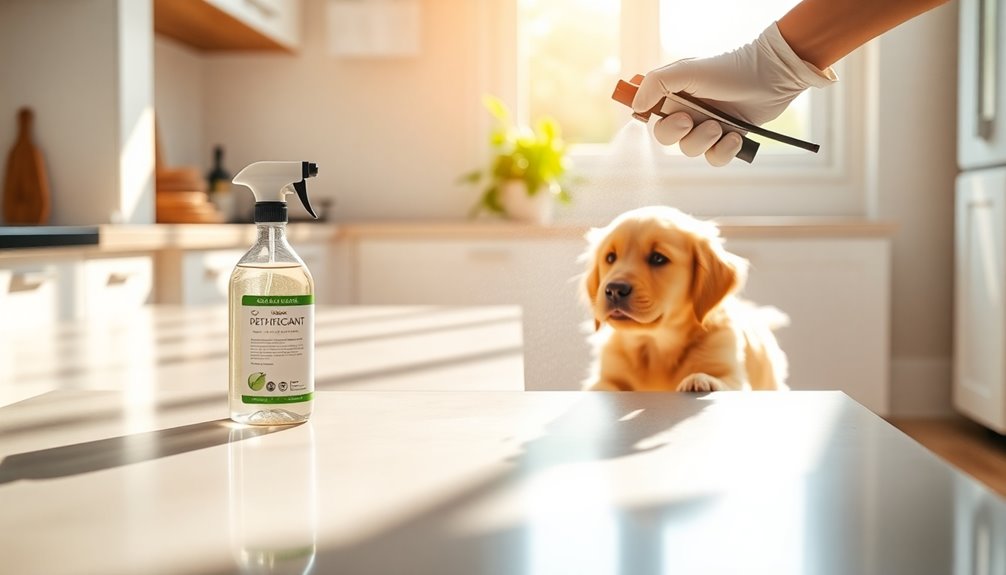
When it comes to keeping your home clean, how can you confirm your disinfectants are safe for your furry friends?
Understanding the risks associated with disinfectant ingredients is essential for pet safety. Many common cleaners contain harsh chemicals that can be harmful if ingested or inhaled by pets. For instance, bleach and ammonia can cause severe respiratory issues or gastrointestinal distress.
Even natural disinfectants, like vinegar, can upset your pet’s stomach if consumed in large quantities. Always check labels for toxic components and research less harmful alternatives. Additionally, consider using kid-friendly cleaning products that prioritize safety for both pets and children.
Keep your cleaning areas well-ventilated, and make sure pets stay away during and after cleaning. By being mindful of what you use, you can maintain a clean home without compromising your pet’s health.
Choosing Pet-Safe Cleaning Products
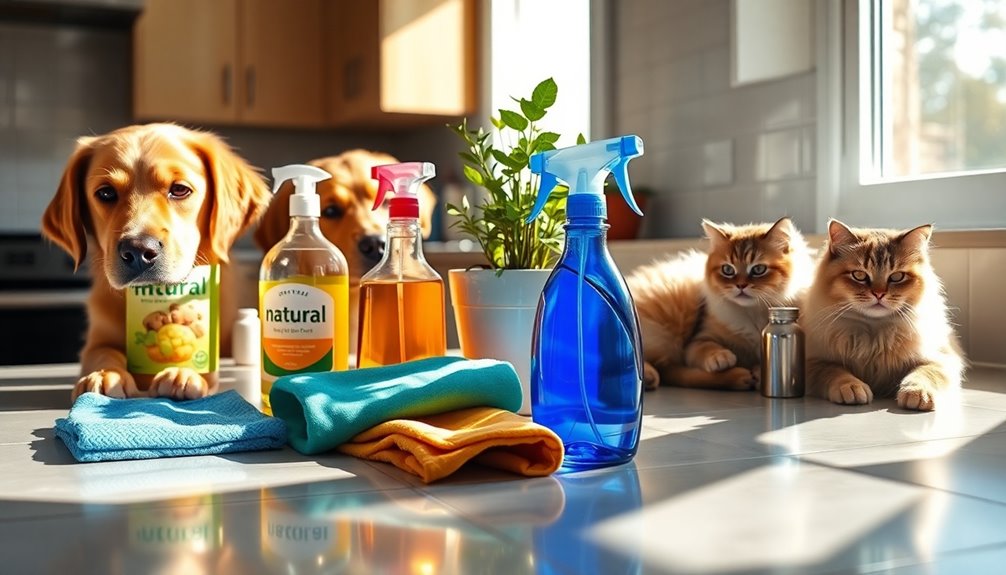
Choosing cleaning products that are safe for your pets doesn’t have to be an intimidating task, especially when you know what to look for. Start by checking for eco-friendly options that prioritize ingredient safety.
Look for labels that indicate non-toxic, biodegradable components without harsh chemicals. Familiarize yourself with common pet-safe ingredients like vinegar, baking soda, and essential oils, which can effectively clean without posing risks to your furry friends. Additionally, consider using white vinegar as a versatile natural cleaner that can disinfect without harmful chemicals.
Choose cleaning products with non-toxic, biodegradable ingredients like vinegar, baking soda, and essential oils to keep your pets safe.
Always avoid products containing bleach, ammonia, or phthalates, as these can be harmful. When in doubt, research brands that specialize in pet-friendly cleaning solutions.
With a little diligence, you can maintain a clean home while ensuring your pets stay safe and healthy.
Natural Disinfectants You Can Use at Home
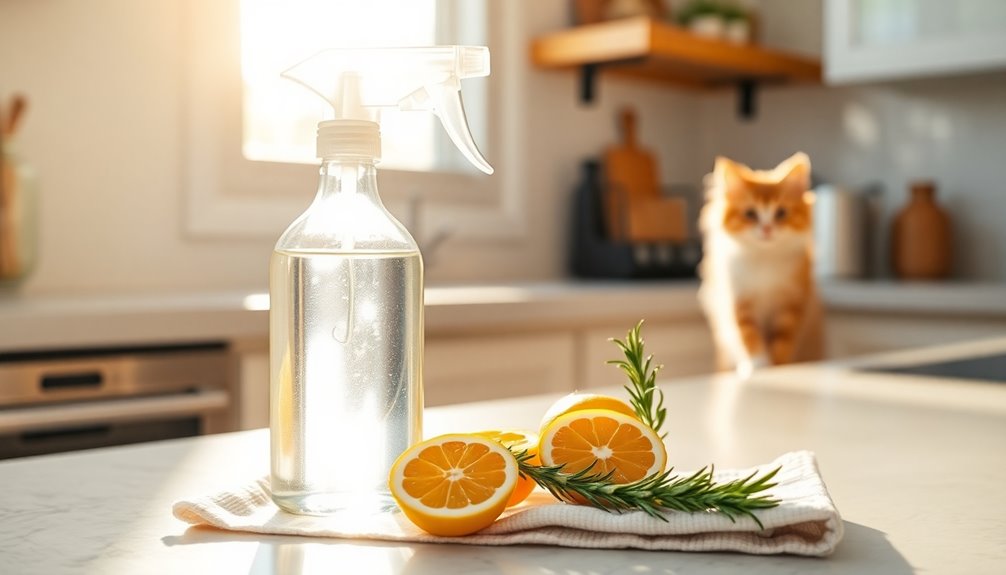
After selecting pet-safe cleaning products, you can enhance your cleaning routine with natural disinfectants that are both effective and safe for your furry companions.
One great option is a vinegar solution, which you can create by mixing equal parts white vinegar and water. This solution works wonders on surfaces while eliminating odors.
Another natural disinfectant is lemon juice. Its antibacterial properties make it ideal for wiping down surfaces and leaving a fresh scent behind. Simply mix lemon juice with water and use it as a spray.
Incorporating these eco-friendly products into your cleaning regimen not only safeguards your pets but also helps reduce environmental impact by minimizing the use of harsh chemicals.
Remember, while these natural options are safer, always test them in a small area first to verify they won’t affect your surfaces.
Your pets will appreciate a clean home just as much as you do!
Best Practices for Disinfecting Pet Areas
Here are some best practices for effective pet area maintenance:
- Choose Pet-Safe Disinfectants: Always opt for products labeled as safe for pets to avoid harmful reactions.
- Clean Before Disinfecting: Remove dirt and debris first; disinfectants work better on clean surfaces.
- Ventilate the Area: Ascertain good airflow while cleaning to minimize any lingering chemical smells.
- Regularly Wash Pet Items: Don’t forget to wash bedding, toys, and bowls regularly to maintain a hygienic space.
Additionally, being aware of toxic substances in conventional cleaners can help you make safer choices for your pets.
How to Safely Clean Surfaces With Pets Around?
While keeping your home clean is important, guaranteeing your pet’s safety during the process is essential. When it comes to safe surface cleaning, opt for pet-friendly techniques. Use natural cleaners like vinegar or baking soda, which are effective yet harmless. Always test a small area first to guarantee your surfaces won’t be damaged.
When cleaning, keep your pets in a separate room to avoid any accidental exposure. After you finish, rinse surfaces with water to remove any residues. It’s also a good idea to wait until everything is dry before allowing your pets back in the area. Regularly cleaning with these methods not only keeps your home spotless but also guarantees a safe environment for your furry friends. Additionally, using natural cleaning alternatives, such as hydrogen peroxide and vinegar, can provide effective disinfecting without harmful side effects.
The Importance of Ventilation While Cleaning
Keeping your home clean not only involves using safe products but also ensuring proper ventilation during the cleaning process.
Good air circulation helps to dilute harmful chemicals, reducing their impact on both you and your pets. Additionally, maintaining balanced indoor humidity levels can further enhance air quality and comfort while cleaning.
Here are some ventilation tips to follow while cleaning:
- Open Windows: Let fresh air in to help disperse any lingering odors or chemicals.
- Use Fans: Position fans to direct air outside, promoting better airflow.
- Clean in Stages: Tackle one area at a time, allowing air to circulate before moving on.
- Take Breaks: Step outside for a few minutes to breathe and reset, ensuring the air is fresh when you return.
Creating a Pet-Free Zone During Disinfection
When you disinfect your home, it’s crucial to establish a pet-free zone to protect your furry friends from harmful chemicals.
Choose a separate area, like a bedroom or bathroom, where you can safely contain your pets during the cleaning process. This temporary relocation helps guarantee they stay away from the disinfectants and any fumes that may arise.
Make sure to close doors and use baby gates if necessary to keep them contained. If possible, consider taking them for a walk or to a friend’s house while you clean.
Always have their favorite toys and blankets in the pet-free zone to keep them comfortable. Additionally, ensure that the cleaning products you use are safe for pets, and consider using eco-friendly cleaning products to further minimize risks to their health.
Signs of Disinfectant Poisoning in Pets
You should be aware of the signs of disinfectant poisoning in your pets.
Common symptoms include drooling, vomiting, and difficulty breathing.
If you notice any of these signs, it’s essential to take immediate action to guarantee your pet’s safety. Additionally, using non-toxic cleaners can prevent potential poisoning and keep your home safe for your furry friends.
Common Symptoms To Watch
How can you tell if your pet has been affected by disinfectant exposure? Recognizing symptoms is vital for quick action. Here are some signs you should watch for:
- Vomiting or diarrhea – These can indicate gastrointestinal distress from chemicals.
- Excessive drooling – If your pet’s salivation increases, it might signal poisoning.
- Lethargy – Noticeable behavioral changes, like unusual tiredness or lack of energy, could suggest discomfort.
- Difficulty breathing – If your pet shows signs of respiratory issues, it’s a serious concern.
Symptoms identification is key; stay alert to any changes in your pet’s behavior.
If you notice these signs, it’s essential to consult a veterinarian immediately for guidance.
Immediate Actions To Take
If you suspect your pet has been exposed to disinfectants, taking immediate action is essential.
Start by removing your pet from the contaminated area to prevent further exposure. Conduct a quick clean up of any spills and ventilate the space by opening windows.
Keep an eye on your pet for signs of distress, like vomiting, drooling, or difficulty breathing. If you notice any of these symptoms, don’t hesitate—contact your veterinarian or an animal poison control center right away for emergency response.
Provide them with information about the disinfectant used and your pet’s symptoms. Acting swiftly can make a significant difference in your pet’s health and recovery.
Always prioritize their safety during cleaning routines.
Tips for Maintaining a Clean Home Without Harsh Chemicals
Keeping your home clean doesn’t have to involve harsh chemicals that can be harmful to your pets. You can explore natural cleaning solutions, safe disinfecting methods, and pet-friendly products that effectively maintain a fresh space. For instance, incorporating essential oils for cleaning can provide natural antibacterial properties while keeping your environment safe for your furry friends. Let’s look at some simple tips to help you create a safe and clean environment for both you and your furry friends.
Natural Cleaning Solutions
While you want your home to be clean and safe, it’s essential to choose natural cleaning solutions that won’t endanger your pets.
Using herbal remedies and eco-friendly solutions can keep your space tidy without harmful chemicals. Here are four effective options:
- Vinegar: Mix equal parts of water and vinegar for a versatile cleaner that cuts through grime.
- Baking Soda: Sprinkle it on surfaces to deodorize and clean; it’s safe for pets and people alike.
- Lemon Juice: Use it as a natural disinfectant and stain remover, leaving a fresh scent.
- Castile Soap: This plant-based soap works well for general cleaning and is gentle on your furry friends.
Embrace these solutions for a cleaner, safer home!
Safe Disinfecting Methods
To maintain a clean home without exposing your pets to harsh chemicals, it’s important to adopt safe disinfecting methods.
Start by using pet safe sanitizers, which effectively kill germs without harmful residues. Look for eco friendly alternatives like vinegar, baking soda, or hydrogen peroxide; these are great for cleaning surfaces without putting your furry friends at risk.
When disinfecting, guarantee proper ventilation and allow surfaces to dry completely before letting your pets back in. You can also use steam cleaners to sanitize without chemicals.
Regularly washing pet bedding and toys with gentle, pet-friendly detergents can help keep your home clean. By choosing the right products, you can create a safe and healthy environment for both you and your pets.
Pet-Friendly Products
Finding the right pet-friendly products can greatly enhance your home’s cleanliness without exposing your furry companions to harmful chemicals.
By choosing eco-friendly options and safe alternatives, you can maintain a clean space while guaranteeing your pets stay healthy.
Here are four effective pet-friendly cleaning products you should consider:
- Vinegar – This natural disinfectant eliminates odors and cleans surfaces without harsh chemicals.
- Baking Soda – Perfect for deodorizing carpets and fabrics, it’s non-toxic and safe for pets.
- Castile Soap – A gentle cleaner made from vegetable oils, ideal for various surfaces.
- Essential Oils (like lavender or lemon) – Use in small amounts for a pleasant scent, but confirm they’re safe for your pets.
With these products, cleaning becomes safer and more effective for your household.
Conclusion
Keeping your pets safe while disinfecting doesn’t have to be a challenging task. By choosing pet-friendly products and following simple guidelines, you can create a clean home without putting your furry friends at risk. Remember, a little prevention goes a long way, so take the time to ventilate and set up a pet-free zone during your cleaning sessions. With these tips, you’ll be able to have your cake and eat it too—maintaining a healthy environment for both you and your pets!