To keep your pet’s sleeping area clean and odor-free, establish a regular cleaning routine and choose the right bedding materials. Wash bedding and blankets frequently, and vacuum the area often to remove pet hair. Use pet-safe odor eliminators to maintain freshness, and consider implementing a no-shoes policy. Watch for allergens that could irritate your pet, and assess worn-out bedding for replacement. There are more effective strategies to enhance their comfort and cleanliness.
Establish a Regular Cleaning Routine
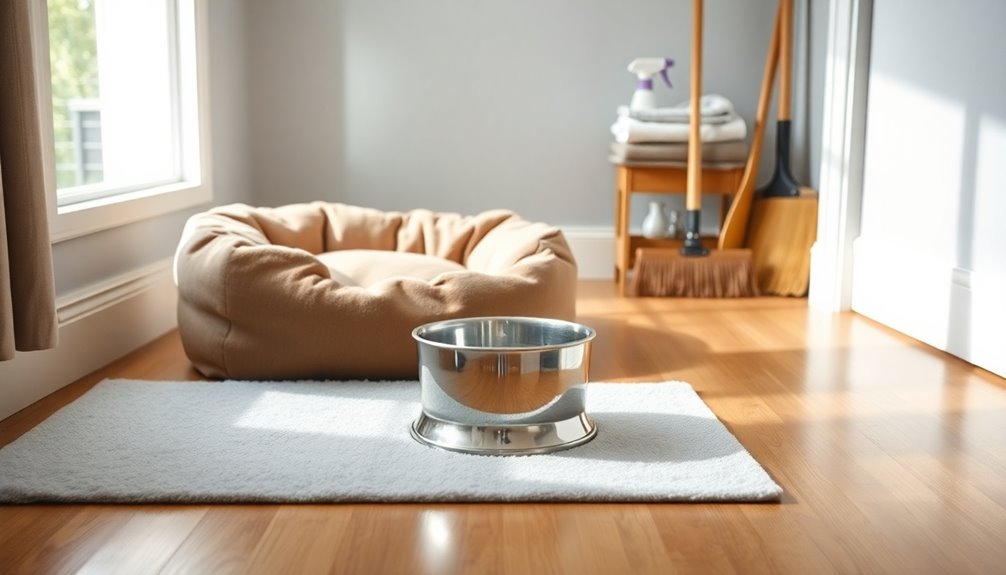
To keep your pet’s sleeping area fresh, it’s essential to establish a regular cleaning routine. Start by gathering your cleaning supplies, including pet-safe disinfectants, a vacuum, and cloths. Set aside time each week to tackle this task, ensuring it fits into your existing schedule.
By managing your time effectively, you can prevent dirt and odors from building up. Begin by removing any bedding, washing it according to the care instructions, and letting it dry completely. Next, vacuum the area thoroughly, removing pet hair and debris.
Effective time management helps you avoid the buildup of dirt and odors in your pet’s sleeping area.
Wipe down surfaces with your chosen disinfectant, ensuring you reach all corners. Regular cleaning not only maintains a pleasant environment but also promotes your pet’s health and happiness, as regular cleaning helps battle odors and stains in your home.
Stick to your routine, and you’ll see the benefits.
Choose the Right Bedding Material
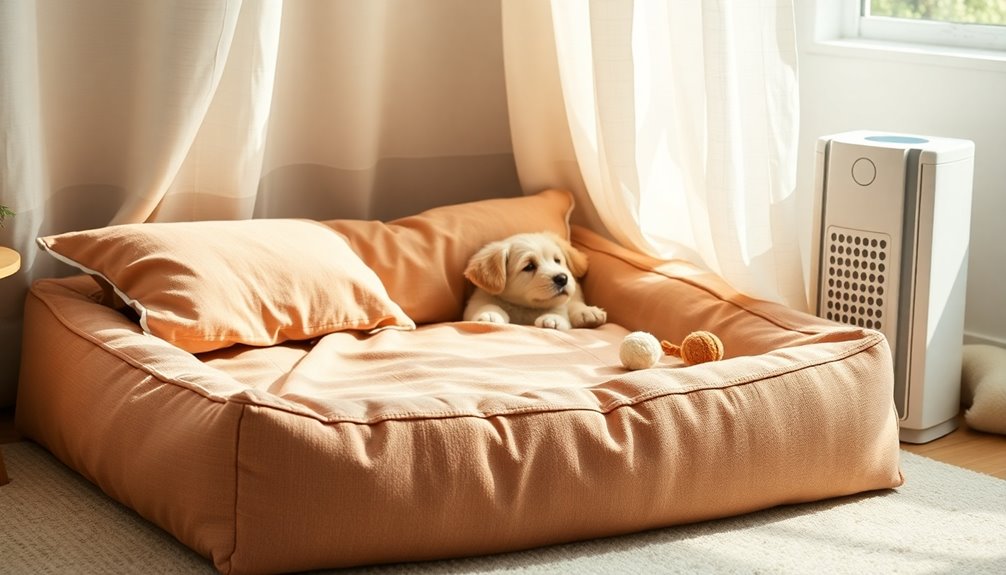
Choosing appropriate bedding materials can greatly impact your pet’s comfort and hygiene. Look for options that are easy to clean and resistant to odors, like microfiber or waterproof fabrics. Different bedding styles, such as orthopedic beds for older pets or cozy blankets for smaller animals, cater to their specific needs. Remember, your pet’s sleeping area should be both inviting and functional. Always consider allergies and sensitivities when selecting bedding materials. A well-chosen bed not only guarantees a good night’s sleep but also helps keep their sleeping area clean and odor-free, making it a happier space for both of you. Regular grooming maintains a healthy coat and reduces shedding, contributing to a fresher sleeping environment.
Wash Bedding and Blankets Frequently
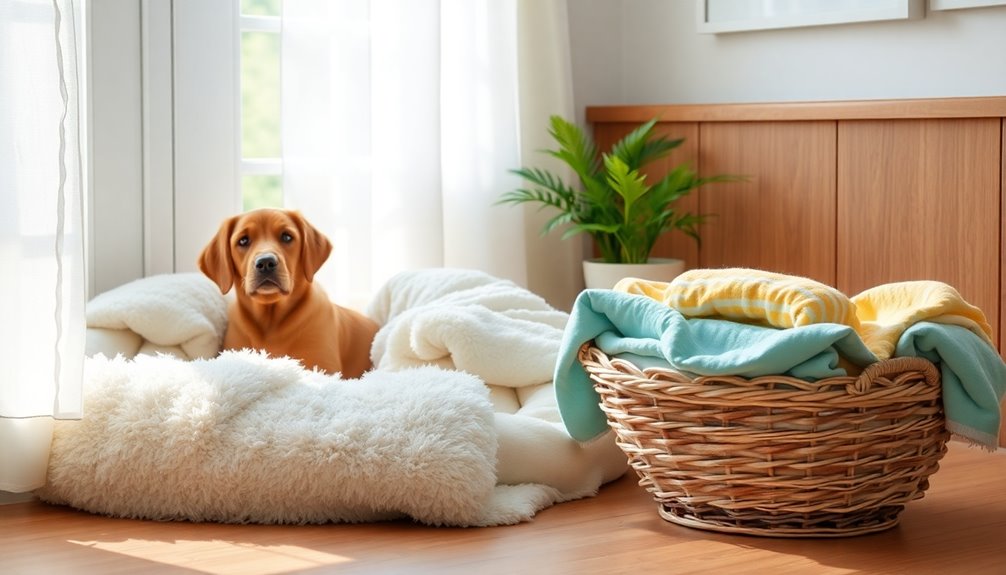
While keeping your pet’s sleeping area clean is essential, washing their bedding and blankets frequently is one of the most effective ways to maintain hygiene.
Depending on the bedding materials, you should wash them at least once a week. Use hot water to kill bacteria and allergens that may accumulate. If your pet’s blankets are particularly dirty, consider pre-soaking them for a few hours to loosen stubborn stains.
Always check the care labels for specific washing techniques, as some materials may require gentle cycles or air drying. Using pet-safe detergents can help eliminate odors without harming your furry friend. Regular washing also aligns with the practice of using non-toxic cleaners to ensure a safe environment for both pets and humans.
Vacuum the Sleeping Area Regularly
To keep your pet’s sleeping area fresh, you need to vacuum regularly.
Start by choosing the right vacuum that can handle pet hair, then establish a cleaning schedule that fits your routine.
Don’t forget to focus on hidden areas where dirt and allergens can build up! Additionally, using a vacuum cleaner with upholstery attachments can enhance your cleaning efficiency by reaching tight spots where pet hair accumulates.
Choose The Right Vacuum
Choosing the right vacuum can make a significant difference in keeping your pet’s sleeping area clean and free of allergens.
Look for vacuum features specifically designed for pet owners, such as strong suction power and specialized attachments for removing pet hair. A vacuum with a HEPA filter can also help trap allergens and dander, improving the air quality in your home.
Consider whether you prefer an upright vacuum for deep cleaning or a lightweight cordless option for quick touch-ups. Regular use of a vacuum tailored for pet hair will help maintain a fresh and hygienic sleeping space for your furry friend.
Don’t underestimate the importance of a good vacuum; it’s a key tool in your cleaning arsenal.
Establish A Cleaning Schedule
Establishing a cleaning schedule is essential for keeping your pet’s sleeping area hygienic and free from dirt and allergens.
A consistent cleaning frequency won’t only maintain a fresh environment but also promote your pet’s health.
Here’s a simple maintenance checklist to get you started:
- Vacuum the sleeping area at least once a week to remove hair and debris.
- Wash bedding and blankets bi-weekly to eliminate odors and bacteria.
- Check for any signs of pests or buildup during your regular cleaning.
- Rotate the sleeping area layout every month to guarantee all spots get attention.
Focus On Hidden Areas
While sticking to a cleaning schedule is important, it’s equally essential to focus on hidden areas where dirt and allergens can accumulate.
Don’t forget about those hidden corners and furniture crevices that often get overlooked during routine cleaning. These spots can trap pet hair, dust, and dander, leading to an unpleasant odor and potential health issues for your furry friend.
When you vacuum, take a moment to move furniture and reach those tricky areas. Use attachments to get into tight spaces and guarantee you’re picking up everything.
Regularly checking these hidden spots will help keep your pet’s sleeping area clean and fresh, making it a more comfortable place for them to rest.
Use Pet-Safe Odor Eliminators
To keep your pet’s sleeping area fresh, using pet-safe odor eliminators is essential. Look for products with natural ingredients that won’t harm your furry friend, and always test a small area first. Establishing a regular application schedule will help maintain a pleasant environment for both you and your pet. Using natural ingredients in cleaning products ensures that you create a safe space for your pets while effectively managing odors.
Natural Ingredients Matter
When it comes to keeping your pet’s sleeping area fresh, using natural ingredients can make a significant difference.
Opting for eco-friendly ingredients not only protects your furry friend but also guarantees a clean environment.
Here are four effective natural cleaning options you can use:
- Baking Soda: Sprinkle it on bedding to absorb odors, then vacuum it up.
- White Vinegar: Mix with water and spray on surfaces to neutralize smells and disinfect.
- Essential Oils: Use pet-safe oils like lavender for a calming scent, but always dilute.
- Lemon Juice: Its natural acidity helps cut through stains and odors.
Spot Testing First
How do you know if a new cleaning product is safe for your pet’s sleeping area? Start by conducting fabric tests.
Before applying any cleaner broadly, try spot cleaning a small, inconspicuous area of the fabric. This helps you see if the product causes discoloration or damage.
Once you’ve chosen a pet-safe odor eliminator, apply it to your test spot, and wait to see the results. If there’s no adverse reaction after a few hours, you’re likely good to go.
Always follow the manufacturer’s instructions and verify the area is well-ventilated during and after cleaning.
Regular Application Schedule
After verifying your chosen cleaning product is safe through spot testing, it’s important to establish a regular application schedule for pet-safe odor eliminators. Consistent use helps maintain a fresh environment for your furry friend.
Here are some maintenance tips to reflect on:
- Daily Checks: Inspect the sleeping area for any signs of odor or mess.
- Weekly Cleanings: Apply your odor eliminator during your regular cleaning frequency each week.
- Seasonal Deep Clean: Schedule a thorough deep clean every season to tackle built-up odors.
- Adjust as Needed: If you notice persistent odors, increase the frequency of your applications.
Sticking to this schedule guarantees a comfortable, clean space for your pet and keeps unpleasant smells at bay.
Designate a Specific Sleeping Spot
Creating a designated sleeping spot for your pet not only gives them a sense of security but also helps keep their sleeping area organized and clean.
By establishing a specific zone, you can cater to your pet’s sleeping preferences, making them feel more at home. Choose a quiet, comfortable location away from noisy distractions and foot traffic. Use a cozy bed or blanket that matches your pet’s size and style.
Regularly check the area for cleanliness, ensuring it remains free from dirt and odors. This designated spot will encourage your pet to settle down in their own space, reducing the likelihood of messes in other areas of your home. Keeping it tidy will also make it easier for you to manage their sleeping environment, and using a pet hair attachment can help maintain a clean and fresh vehicle interior.
Keep the Area Free From Clutter
To maintain a clean sleeping area for your pet, it’s essential to keep the space free from clutter. An organized area not only enhances your pet’s comfort but also simplifies cleaning.
Here are some declutter strategies to help you achieve effective space organization:
- Regularly remove toys: Keep only a few favorite items and store the rest elsewhere.
- Designate a storage box: Use a bin for pet supplies and accessories, making them easy to access.
- Limit bedding options: Stick to one or two comfortable beds to avoid mess.
- Clean regularly: Schedule weekly clean-ups to prevent buildup of dirt and debris. Additionally, involving family members in the cleaning routine can promote teamwork among family members and help maintain cleanliness in your pet’s space.
Utilize Washable Pet Mats
One effective way to keep your pet’s sleeping area clean is by utilizing washable pet mats.
These mats come in various pet mat materials, such as cotton, polyester, or even waterproof options, making them easy to maintain. Choose a mat that suits your pet’s needs and your home’s style.
Regular cleaning frequency is key; aim to wash the mat every week or two, depending on your pet’s shedding habits and any messes they may create. This not only helps eliminate odors but also keeps your pet comfortable. Additionally, using homemade cleaning cloths can further support your efforts by providing effective and eco-friendly cleaning solutions.
Plus, having a washable option means you can quickly replace it when needed, ensuring your furry friend always has a clean spot to rest.
Consider an Air Purifier
While keeping your pet’s sleeping area clean is essential, considering an air purifier can greatly enhance the overall air quality in your home.
Enhancing your pet’s sleeping area with an air purifier can improve air quality and promote a healthier home.
A good air purifier not only reduces odors but also contributes to your pet’s health by filtering out allergens and pet dander.
Here are some benefits to think about:
- Improves air quality by removing dust and pet hair.
- Reduces odors associated with pets, making your home more pleasant.
- Helps with allergies by capturing airborne irritants.
- Promotes better sleep for both you and your pet by creating a fresher environment.
Investing in an air purifier can be a game-changer for maintaining a clean and healthy space for your furry friend! Additionally, HEPA filters are essential in ensuring that the air purifier effectively captures airborne allergens, contributing to a healthier home environment.
Bathe Your Pet Regularly
Bathing your pet regularly is essential for keeping their sleeping area clean. Choose the right shampoo for their coat and establish a bath schedule that works for you both. Don’t forget to dry them thoroughly afterward to prevent any dampness that could lead to odors or discomfort. Additionally, regular grooming helps minimize pet dander and contributes to an overall fresher sleeping environment.
Choose Appropriate Shampoo
Selecting the right shampoo for your pet is essential for maintaining their hygiene and comfort. Using appropriate pet shampoos can help keep your furry friend clean and free of odors, which directly affects their sleeping area.
Here are some tips to reflect upon when choosing a shampoo:
- Skin Sensitivity: Look for hypoallergenic formulas if your pet has sensitive skin.
- Coat Type: Choose shampoos designed for your pet’s specific coat type, whether it’s short, long, or curly.
- Natural Ingredients: Opt for shampoos with natural ingredients to avoid harsh chemicals.
- Flea and Tick Prevention: Contemplate shampoos that offer additional protection against pests.
Incorporating effective bathing techniques will enhance your pet’s cleanliness and comfort.
Keep their sleeping area fresh!
Establish Regular Bath Schedule
Maintaining your pet’s hygiene goes beyond just picking the right shampoo; establishing a regular bath schedule is key to ensuring they stay clean and comfortable.
Start by determining the appropriate bath frequency based on your pet’s breed, coat type, and lifestyle. For instance, dogs that love outdoor adventures might need more frequent baths than indoor cats.
Use effective grooming techniques, like brushing before and after baths, to remove loose fur and dirt. This not only helps keep your pet clean but also reduces odors in their sleeping area.
Remember, a well-timed bath can prevent skin issues and keep your pet looking and feeling great.
Stick to a routine, and you’ll both enjoy the benefits of a clean, fresh pet!
Dry Thoroughly After Bathing
Once you’ve given your pet a bath, it’s important to dry them thoroughly to prevent any discomfort or health issues.
Wet fur can lead to skin infections or chills, so using effective drying techniques is vital. Here are some bathing essentials to keep in mind:
- Use a microfiber towel – It absorbs moisture quickly and is gentle on your pet’s skin.
- Consider a pet dryer – A low-heat option can help speed up the drying process without causing discomfort.
- Dry in sections – Focus on one area at a time, ensuring you reach the underbelly and paws.
- Brush while drying – This not only removes excess water but also prevents tangles in the fur.
Use Natural Cleaning Solutions
While keeping your pet’s sleeping area clean is essential for their health, using natural cleaning solutions can make the process both effective and safe. You can easily whip up a simple cleaner using natural ingredients like vinegar, baking soda, and lemon juice.
These eco-friendly options not only eliminate odors but also disinfect surfaces without harsh chemicals that could harm your pet. Mix equal parts of vinegar and water in a spray bottle for an all-purpose cleaner.
For tough stains, sprinkle baking soda on the spot, let it sit, and then scrub with a damp cloth. Your furry friend will appreciate a clean, fresh sleeping area, and you’ll feel good knowing you’re using safe, natural products.
Implement a No-Shoes Policy
Implementing a no-shoes policy in your home can considerably reduce the dirt and allergens that accumulate in your pet’s sleeping area.
By keeping shoes out, you’re also promoting a healthier environment for both you and your furry friend.
Here are some effective strategies to enforce this policy:
- Designate a shoe storage area: Place a stylish shoe rack near your entrance.
- Provide slippers: Offer comfy slippers for guests to wear inside.
- Create a sign: Post a friendly reminder near the door to encourage compliance.
- Educate your guests: Share the benefits of your no-shoes policy during their visit.
With a little guest education and creative shoe storage solutions, you’ll keep your pet’s space clean and fresh!
Monitor for Allergens and Irritants
To keep your pet’s sleeping area healthy, it’s essential to regularly monitor for allergens and irritants that could affect their well-being.
Start by identifying common allergen sources, such as dust mites, pollen, and pet dander, which can accumulate in bedding. Regularly wash your pet’s blankets and pillows to minimize these allergens.
Pay attention to irritant identification, too; strong cleaning products or air fresheners can trigger sensitivities. Opt for pet-safe cleaners and consider using HEPA filters to reduce airborne irritants.
Keep an eye on any changes in your pet’s behavior or health, like excessive scratching or sneezing, as these may signal a reaction to allergens or irritants in their sleeping environment.
Your vigilance can help guarantee their comfort and health.
Assess and Replace Worn-Out Bedding
Regularly evaluating and replacing worn-out bedding is essential for your pet’s comfort and health.
Worn-out bedding materials can harbor bacteria and odors, which may affect your furry friend’s well-being.
Here are some signs that it’s time to replace your pet’s bedding:
- Visible wear and tear: Look for rips, frays, or thinning fabric.
- Lingering odors: If washing doesn’t eliminate smells, it’s time for a change.
- Loss of support: Flattened or lumpy bedding can compromise your pet’s comfort.
- Allergic reactions: Frequent sneezing or itching could indicate old bedding is causing issues.
Create a Cozy and Inviting Atmosphere
To make your pet’s sleeping area inviting, start by choosing comfortable bedding that suits their size and sleeping style.
Soft lighting can also enhance the atmosphere, creating a warm and relaxing space for your furry friend.
These small changes can make a big difference in how cozy their sleep environment feels.
Choose Comfortable Bedding
Creating a cozy and inviting atmosphere for your pet starts with choosing the right bedding. The right bedding materials can greatly enhance your pet’s comfort levels, making certain they feel secure and relaxed.
Here are some tips to take into account when selecting bedding:
- Memory Foam: Provides excellent support and molds to your pet’s shape.
- Fleece Linings: Adds warmth and softness, perfect for colder nights.
- Washable Covers: Opt for removable and machine-washable covers to maintain cleanliness easily.
- Non-Slip Bottoms: Make sure the bedding stays in place, preventing any slips or slides during restless sleep.
Add Soft Lighting
How can you transform your pet’s sleeping area into a warm and inviting space? One effective way is to add soft lighting.
Think about using gentle lamps or string lights to create a soft ambiance. This not only enhances the look of the space but also provides comforting illumination for your pet.
The calming effects of low lighting can ease anxiety and help your furry friend relax, making it easier for them to drift off to sleep.
Avoid harsh overhead lights that can be jarring; instead, choose fixtures that emit a warm glow.
Conclusion
By following these tips, you can create a clean, comfortable, and inviting sleeping space for your pet. A fresh environment promotes better sleep, reduces odors, and keeps your furry friend healthy and happy. So, embrace the routine, choose quality bedding, and eliminate those pesky odors. When you care for their space, you nurture their well-being; when you nurture their well-being, you deepen your bond. Together, you’ll enjoy peaceful nights and joyful days.