To use a toilet brush the right way, start by clearing the bathroom space and putting on gloves. Apply cleaner under the rim and let it sit. Then, scrub the bowl thoroughly, focusing on stains and hard-to-reach areas like under the rim. Rinse the brush after use to avoid spreading germs. Check the bristles regularly, and replace the brush every six months for ideal hygiene. Keep going to discover tips for alternatives and maintaining your toilet’s freshness!
Choosing the Right Toilet Brush for Your Needs
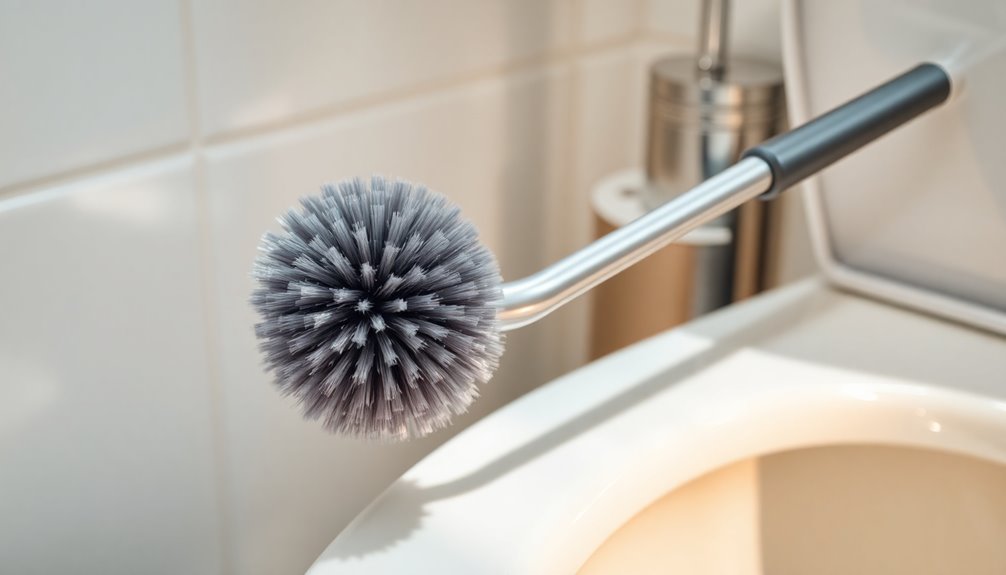
When it comes to choosing the right toilet brush, consider three key factors: bristle type, handle length, and design.
First, evaluate the brush features; stiff bristles tackle tough stains, while softer ones are gentler on surfaces.
Evaluate brush features: stiff bristles handle tough stains, while softer ones protect delicate surfaces.
Next, think about handle length. A longer handle can make cleaning more comfortable, especially if you want to avoid bending too much.
Finally, keep budget considerations in mind. You can find quality options at various price points, so determine how much you’re willing to spend.
A well-designed brush can last longer and effectively maintain cleanliness, ensuring you get your money’s worth. Regular maintenance is essential for preventing stain accumulation and prolonging the life of your toilet.
Understanding the Anatomy of a Toilet Brush
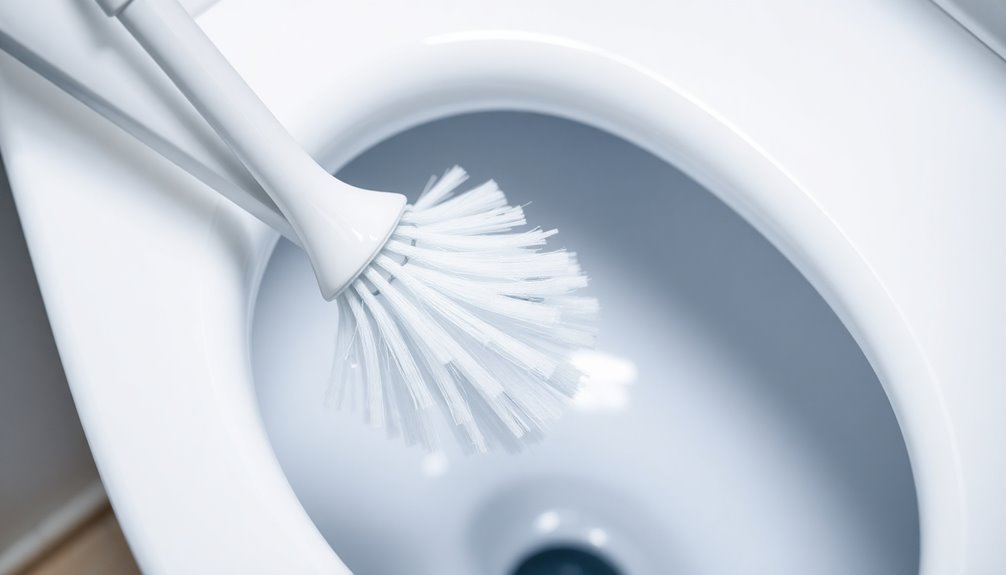
To effectively clean your toilet, it’s important to understand the anatomy of a toilet brush.
Each component, from the handle to the bristles, plays a vital role in its performance. Let’s break down the different types of handles and bristle materials to help you choose the best tool for your needs. Regular cleaning and proper maintenance are essential for ensuring a hygienic bathroom.
Brush Components Explained
Understanding the components of a toilet brush is crucial for effective cleaning. A typical toilet brush consists of a handle, bristles, and a base.
The handle provides grip and control, allowing you to reach all areas of the toilet. Bristles are the heart of the brush; they need to be sturdy yet flexible for thorough cleaning. For ideal brush cleaning, choose a brush with durable bristles that can withstand regular use without fraying.
Finally, the base secures the bristles and often includes a holder to keep the brush upright and dry. Regularly inspect your brush for wear and tear, and practice good bristle care to guarantee it lasts longer and performs effectively.
Handle Types Overview
There are several handle types available for toilet brushes, each designed to enhance your cleaning experience.
Ergonomic handles are a popular choice, providing comfort and reducing strain during use. They often feature a contoured grip, making it easier for you to maneuver the brush in tight spaces.
If you prefer a more convenient option, disposable brushes might suit you better. These often come with a built-in handle that allows for quick and hygienic cleaning without the hassle of maintenance.
When choosing a handle type, consider your cleaning habits and preferences. A good handle not only improves the effectiveness of your cleaning but also enhances your overall experience, making the task less intimidating.
Bristle Materials Differences
While selecting a toilet brush, the bristle material plays an essential role in its effectiveness. You’ll find various options, such as nylon and silicone bristles, each offering unique benefits.
Nylon bristles are known for their durability, making them ideal for tougher stains and scrubbing. They maintain their shape over time, ensuring consistent bristle effectiveness.
On the other hand, silicone bristles are softer and gentler on surfaces, which can be an advantage if you’re worried about scratching. However, they mightn’t tackle heavy grime as effectively.
Ultimately, choosing the right bristle material hinges on your cleaning needs, balancing bristle durability with the level of cleaning power you require for your toilet.
Preparing Your Bathroom for Effective Cleaning
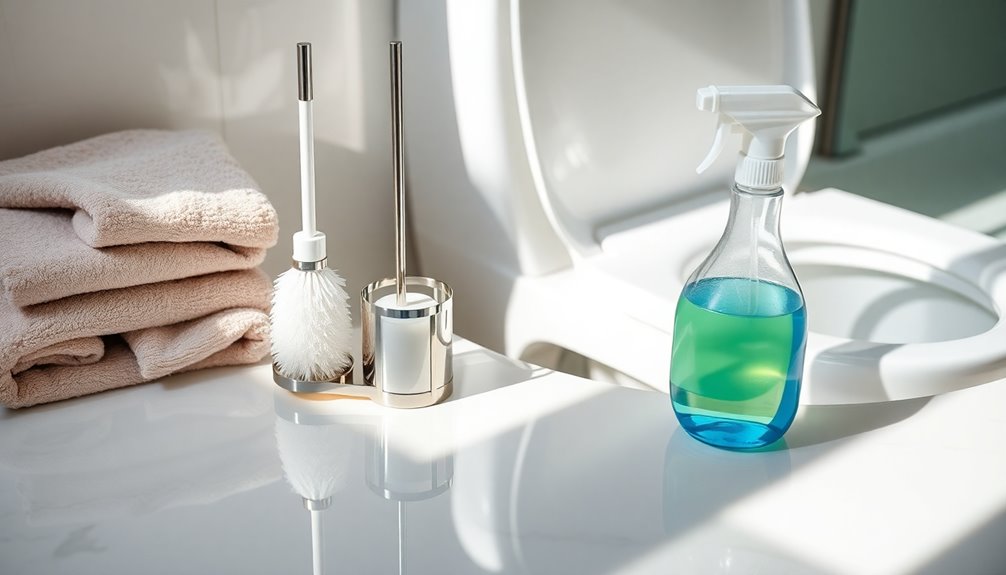
Before you start cleaning, clear the bathroom space of any items that might get in your way. Gather your cleaning supplies so you have everything at hand when you need it. This setup will make the whole process smoother and more effective. Additionally, using non-toxic cleaners ensures a safer cleaning environment for your family.
Clear The Bathroom Space
To effectively clean your bathroom, start by clearing the space around the toilet. Remove any items on the floor, such as rugs or bins, to give you ample room to move. This not only helps with bathroom organization but also enhances space optimization.
Check countertops for toiletries and other items; either move them to a nearby shelf or place them in a designated spot to avoid clutter. Don’t forget to remove any decorative items that might get in the way.
Gather Cleaning Supplies Quickly
Gather your cleaning supplies efficiently to set the stage for a thorough bathroom scrub-down.
Start by checking your cleaning schedule; knowing when you last cleaned will help you decide which products to use. Grab a toilet brush, disinfectant, and all-purpose cleaner.
Don’t forget rubber gloves to protect your hands.
For product recommendations, consider a toilet bowl cleaner with bleach for tough stains and a natural cleaner for surfaces.
Keep a microfiber cloth on hand for quick drying and polishing.
Having everything ready will save you time and make the process smoother.
With your supplies gathered, you’re all set to tackle that toilet and keep your bathroom sparkling clean!
Step-by-Step Guide: How to Use a Toilet Brush
Using a toilet brush effectively can make a significant difference in maintaining a clean bathroom. Follow these simple steps to guarantee you’re using the right toilet brush techniques:
- Prep the Area: Before you start, put on gloves and confirm the toilet bowl is free of debris. This helps avoid any mess while cleaning.
- Apply Cleaner: Squirt your toilet bowl cleaner under the rim and let it sit for a few minutes. This boosts cleaning power and helps with stubborn stains.
- Scrub Thoroughly: Use the toilet brush to scrub the bowl, focusing on the rim and any stains. Regular cleaning with a quality cleaner helps maintain optimal hygiene in your restroom.
Make sure to clean at least once a week for ideal cleaning frequency.
Techniques for Scrubbing: What to Focus On
**
When you grab your toilet brush, focus on the stains that need extra attention. Don’t forget those hard-to-reach areas, as they often hide grime. Also, make sure to scrub under the rim to keep everything fresh and clean. Regular maintenance can significantly reduce mineral deposits that lead to stubborn stains.
Focus On Stains
While tackling toilet stains might seem challenging, knowing where to focus your scrubbing efforts can make a significant difference.
Effective stain removal requires targeted cleaning techniques that address the most problematic areas. Here are three key spots to focus on:
- Under the Rim: This area often collects hard water stains and bacteria. Scrub thoroughly, ensuring you get into the crevices.
- Inside the Bowl: Pay attention to any discoloration or buildup. Use a circular motion to lift stains effectively.
- At the Water Line: This is where you might find stubborn rings. Applying a bit of cleaner and letting it sit can help before scrubbing.
Target Hard-to-Reach Areas
To effectively clean your toilet, you can’t neglect hard-to-reach areas that often harbor grime and bacteria. Focus on spots like the base of the bowl and under the seat.
Use your toilet brush at effective angles to guarantee you scrub every corner thoroughly. For those tricky hard-to-reach spots, angle the brush to get into crevices that might be overlooked.
Apply more pressure in areas that seem especially dirty, but be careful not to damage the porcelain. Don’t forget to work around the hinges and any nooks where buildup can occur.
Scrub Under The Rim
After addressing those hard-to-reach areas, it’s time to focus on scrubbing under the rim. This often-overlooked spot is essential for effective rim maintenance, so let’s refine your scrubbing techniques.
- Angle the Brush: Tilt your toilet brush at a 45-degree angle to reach the underside effectively.
- Apply Pressure: Use firm pressure as you scrub, ensuring you cover all surfaces and remove any buildup.
- Don’t Rush: Take your time, paying attention to any spots that need extra care.
Common Mistakes When Using a Toilet Brush
Using a toilet brush might seem straightforward, but many people make common mistakes that can hinder effective cleaning.
One of the biggest errors isn’t rinsing the brush after use. If you skip this step, you’re just spreading germs around.
Another mistake is using the brush on the rim or seat; it’s designed for the bowl only.
Using the toilet brush on the rim or seat is a common mistake; it’s meant solely for the bowl.
Don’t forget to follow brush hygiene tips, like storing it properly to avoid mold growth.
Also, some people believe that a quick swish is enough; in reality, you need to scrub thoroughly to tackle stains and buildup.
Finally, ignoring the bristles’ condition can lead to ineffective cleaning, which is a common misconception. Using a brush with residual bacteria effectiveness can ensure a cleaner toilet.
Make these adjustments to guarantee a cleaner toilet.
When to Replace Your Toilet Brush?
Even with the best cleaning habits, your toilet brush won’t last forever. Knowing when to replace it is essential for maintaining hygiene.
Here are some key frequency indicators to take into account for your brush lifespan:
- Every 6 months: If you use your brush regularly, aim for a replacement twice a year.
- Visible wear and tear: If bristles are frayed or bent, it’s time for a new one, as this affects cleaning effectiveness.
- Odor or discoloration: Any unpleasant smells or stains signal that bacteria may linger, making replacement necessary. Regular cleaning of the brush roll ensures optimal performance and hygiene.
Cleaning and Maintaining Your Toilet Brush
A clean toilet brush is essential for effective bathroom hygiene. To maintain your toilet brush, rinse it thoroughly after each use to remove any debris and cleaner. This simple step helps guarantee proper toilet brush hygiene.
A clean toilet brush is vital for bathroom hygiene; rinse it after each use to ensure optimal cleanliness.
Regularly inspect the bristles for wear and tear; if they’re frayed, it’s time for a replacement.
Aim to clean the brush holder weekly. Fill it with a bleach solution or disinfectant, let it soak, then rinse. This will eliminate bacteria and odors. Additionally, ensuring regular cleaning of the toilet bowl itself helps reduce the buildup of grime on your brush.
Also, consider the cleaning frequency of your brush—every month, give it a deep clean by soaking in hot, soapy water.
Alternatives to Traditional Toilet Brushes
Here are three options to take into account:
- Silicone Brushes: These brushes are durable, easy to clean, and don’t harbor bacteria like traditional bristles. Their flexible heads can reach into tight spots, making your job easier.
- Disposable Brushes: If you prefer convenience, disposable brushes can save time. Just use them once and toss them out, guaranteeing a fresh clean every time without the hassle of maintenance.
- Electric Cleaners: For a high-tech approach, electric cleaners offer powerful scrubbing action. They require minimal effort and can efficiently tackle tough stains, but make sure you follow the manufacturer’s guidelines for use. Regular cleaning of bathrooms, including toilets, is essential for maintaining hygiene.
Eco-Friendly Toilet Brush Options
If you’re looking for a more sustainable way to keep your toilet clean, eco-friendly toilet brush options can make a significant difference.
Many sustainable brands now offer brushes made from biodegradable materials like bamboo or recycled plastic. These brushes not only help reduce waste but also maintain the effectiveness you need for a thorough clean.
When choosing an eco-friendly option, check for certifications that confirm their sustainability practices. Some brands even use plant-based bristles, ensuring that every part of the brush is environmentally friendly. Additionally, consider brushes that promote reducing waste by being compostable or easily recyclable at the end of their life.
Tips for Keeping Your Toilet Fresh Between Cleanings
To keep your toilet fresh between cleanings, regularly using a few simple strategies can make a big difference.
Here are three effective tips:
- Use Toilet Fresheners: Drop in toilet fresheners that help combat odors and keep your bowl clean. They can release a pleasant scent with every flush.
- Maintain Cleaning Routines: Establish a quick routine where you wipe down the toilet seat and exterior with disinfectant wipes. This prevents buildup and keeps everything looking good.
- Keep the Lid Closed: Closing the lid when not in use can help contain odors and minimize the spread of bacteria.
Troubleshooting Common Toilet Cleaning Issues
Cleaning your toilet can sometimes feel like an uphill battle, especially when stubborn stains or unpleasant odors refuse to budge. If you’re dealing with persistent toilet odor, check your cleaning frequency first. Ideally, you should clean your toilet at least once a week to prevent buildup.
For tough stains, consider using a pumice stone or a specialized cleaner designed for hard water deposits.
If odors linger despite regular cleaning, inspect the area around the toilet for leaks or buildup under the rim.
Vinegar can also help neutralize odors—just pour some into the bowl and let it sit for a while.
With a bit of troubleshooting, you’ll have your toilet sparkling and smelling fresh again in no time!
Conclusion
By using a toilet brush correctly, you’ll keep your bathroom fresh and hygienic. Remember, it’s all about technique and consistency. For instance, after switching to a silicone brush, Sarah found it easier to clean her toilet and noticed fewer stains over time. With a little effort and the right tools, you can make this chore less intimidating and more effective. So grab your brush and get started—your toilet will thank you!