Using a toilet brush is essential for keeping your bathroom clean, but you might be making some common mistakes. Don’t neglect regular cleaning or forget to replace your brush often enough. Always allow the brush to dry properly and consider using gloves to protect your hands. Choosing the right type of brush matters, too, as does knowing when to use alternative tools for deeper cleaning. Keep these tips in mind, and you’ll learn even more ways to enhance your hygiene.
Why a Toilet Brush Is Essential for Bathroom Hygiene
When it comes to maintaining a clean bathroom, a toilet brush is indispensable. This simple tool offers significant toilet brush benefits that can enhance your bathroom sanitation. By scrubbing away stains and bacteria, you guarantee that your toilet remains hygienic and fresh.
Neglecting this task can lead to unpleasant odors and unsightly buildup, making your bathroom less inviting.
Using a toilet brush regularly not only keeps your toilet clean but also minimizes the risk of germs spreading throughout your home. Plus, it’s easy to use and doesn’t require harsh chemicals. Regular cleaning with quality cleaners helps prevent mineral deposits that contribute to toilet bowl rings.
With just a few minutes of effort, you can maintain a healthier environment for you and your family. So, grab that brush and make bathroom hygiene a priority!
Common Misconceptions About Toilet Brush Usage
Many people believe that using a toilet brush is a straightforward task, but there are several misconceptions that can lead to ineffective cleaning.
One common myth is that a quick scrub once a week is sufficient. In reality, cleaning frequency should depend on usage; more frequent cleans are vital in busy households.
Another misconception is that all toilet brushes are created equal. Using the wrong type mightn’t effectively tackle stains or bacteria.
Additionally, some think that rinsing the brush in the toilet is enough. It’s important to disinfect it properly to avoid spreading germs. Regular maintenance prevents stains and bacteria buildup, ensuring a cleaner bathroom environment.
Using the Wrong Type of Toilet Brush: What to Avoid
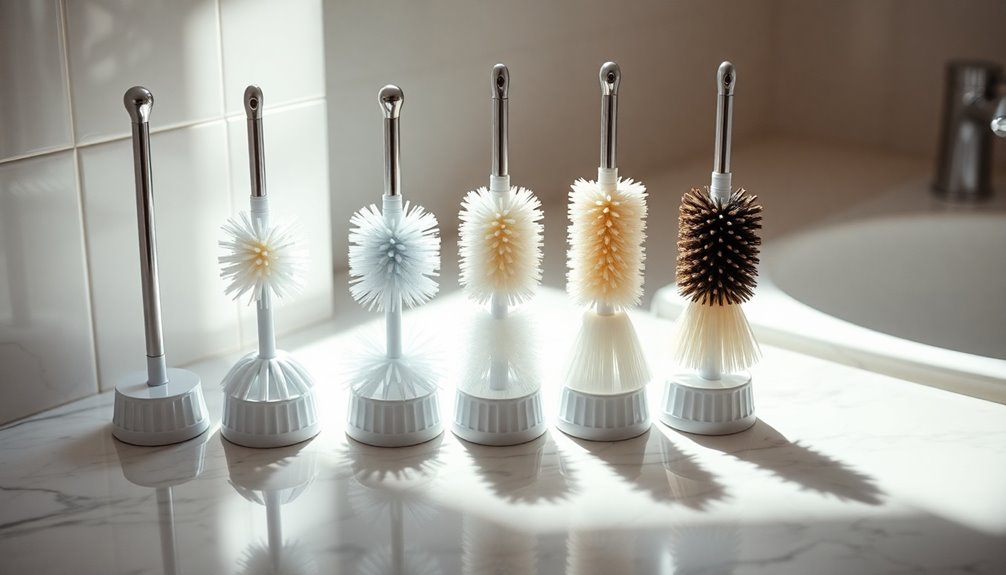
When choosing a toilet brush, it’s essential to take into account the material, size, and shape. Using the wrong type can make cleaning less effective and even damage your toilet. Let’s explore how these factors can impact your cleaning routine. Additionally, opting for brushes with replaceable heads can save money and enhance sustainability in your cleaning practices.
Material Matters Most
While you mightn’t think much about the material of your toilet brush, using the wrong type can lead to ineffective cleaning and even damage to your toilet.
Choosing the right brush materials is essential. For instance, nylon bristles are durable and effective at scrubbing away stains, while softer materials may not provide the same level of cleaning power. You want a brush that combines both brush durability and effectiveness.
Avoid brushes with metal or overly abrasive materials, as these can scratch the porcelain surface, leading to costly repairs. Investing in a high-quality brush made from the right materials will guarantee that your toilet stays clean without risking damage.
Size And Shape Considerations
Choosing the right brush materials is only part of the equation; size and shape also play a crucial role in effective toilet cleaning. When selecting a toilet brush, consider its dimensions. A brush that’s too large might struggle to reach tight spots, while one that’s too small may not provide enough cleaning power.
Ergonomic designs can make a big difference in comfort and efficiency. Look for handles that fit your grip comfortably, allowing you to apply the right amount of pressure without straining your wrist. Avoid brushes that feel awkward or unbalanced in your hand—these can lead to ineffective cleaning and frustration.
Bristle Types Explained
The type of bristles on your toilet brush can make or break your cleaning efforts. Choosing the wrong bristle type can lead to ineffective cleaning and frustration.
For instance, brushes with stiff bristles offer excellent durability and can tackle tough stains but might scratch delicate surfaces. On the other hand, soft bristles provide greater flexibility, allowing you to reach tricky spots without damage. However, they may not be as effective on stubborn grime.
It’s crucial to match the bristle type to your toilet’s needs. Always consider bristle durability for long-lasting use and bristle flexibility for thorough cleaning.
Avoid mixing these factors, as it can lead to poor results and unnecessary wear on your toilet.
Neglecting Regular Cleaning of Your Toilet Brush
If you don’t regularly clean your toilet brush, you’re setting yourself up for a bacteria breeding ground. Ignoring toilet brush maintenance can lead to nasty germs lingering in your bathroom, undermining your hygiene habits.
After each use, rinse the brush thoroughly to remove any residue. Soaking it in a disinfectant solution once a week is also a good practice. This simple step prevents germs from multiplying and spreading. Plus, a clean brush works more effectively during your next cleaning session. Additionally, regular maintenance of your cleaning tools ensures a more hygienic bathroom environment.
Don’t forget to check the holder too; it can trap moisture and bacteria. By prioritizing this aspect of your cleaning routine, you’ll guarantee a healthier environment for you and your family.
Not Replacing Your Toilet Brush Often Enough
Regular maintenance of your toilet brush is important, but it doesn’t end there. You need to pay attention to your brush replacement frequency.
A toilet brush isn’t designed to last forever; its lifespan is typically around six months to a year, depending on usage. Over time, bristles wear down, making it less effective at cleaning, and bacteria can build up, posing hygiene risks.
If you notice frayed bristles or a persistent odor, it’s time for a change. Don’t wait until your brush is falling apart; replace it proactively to maintain a clean and healthy bathroom environment. Using high-quality brushes ensures you can effectively reach hard-to-clean areas, maximizing cleanliness.
Skipping the Pre-Cleaning Routine: Why It Matters
Skipping the pre-cleaning routine can lead to a less effective clean.
You need to assess visible debris, choose the right cleaner, and allow for pre-soak time to maximize your efforts. Incorporating non-toxic cleaners into your routine ensures a safer cleaning experience for your family.
Taking these steps guarantees your toilet brush works as efficiently as possible.
Assessing Visible Debris
Evaluating visible debris in your toilet before grabbing a brush is vital for effective cleaning. Start with a thorough visual inspection.
Look for any buildup, stains, or loose debris that could affect your cleaning process. A proper debris assessment helps you determine the extent of the mess and decide how to tackle it.
If you skip this step, you risk missing problem areas that need extra attention. You might also end up spreading grime around instead of removing it.
By taking the time to assess what you’re dealing with, you can guarantee a more efficient cleaning session, leading to a fresher toilet and less hassle in the long run.
Choosing the Right Cleaner
When you grab a toilet brush, choosing the right cleaner can make all the difference in your cleaning effectiveness.
Consider your cleaning frequency; if you clean often, a milder, eco-friendly option might suffice. Products with natural ingredients can effectively tackle stains without harsh chemicals, making them safer for your family and the environment.
However, if you notice stubborn buildup, you might need a stronger cleaner for occasional deep cleans. Always read labels to verify your chosen cleaner suits your toilet’s materials and won’t cause damage.
Allowing Pre-Soak Time
While you might be enthusiastic to scrub away grime, allowing your toilet cleaner to pre-soak is essential for effective cleaning. Skipping this step can lead to disappointing results.
The pre-soak duration varies by product, but a few minutes can make a significant difference. During ideal soaking, the cleaner penetrates stains and breaks down mineral deposits, making it easier for you to scrub away tough grime.
Without this time, you might find yourself scrubbing harder and longer, which is both frustrating and less effective. So, take a moment to let the cleaner work its magic before diving in with your toilet brush.
Trust me, a little patience goes a long way in achieving a sparkling clean toilet.
Improper Technique: How to Use a Toilet Brush Effectively
Using a toilet brush effectively can make a significant difference in maintaining a clean and hygienic bathroom. Start by applying a quality toilet cleaner, letting it sit for a few minutes.
When you scrub, use effective scrubbing techniques—focus on the rim and under the toilet bowl’s edge, where stains often hide. Make certain to apply enough pressure to remove tough grime, but avoid excessive force that could damage the porcelain.
After scrubbing, don’t forget to rinse the brush in clean water before placing it back in its holder. Good toilet brush maintenance is key; clean it regularly to prevent bacteria buildup and extend its lifespan. Additionally, using a disinfectant like Lysol Disinfectant Spray can further enhance your cleaning routine and ensure a germ-free environment.
Following these steps will guarantee your toilet stays fresh and clean.
Failing to Clean the Brush Holder: A Hidden Mistake
After scrubbing your toilet, it’s easy to overlook the brush holder, but neglecting its cleanliness can lead to hidden hygiene issues.
The brush holder collects germs and bacteria that can transfer back to your toilet or even your hands. Regular brush maintenance isn’t just about cleaning the brush itself; it’s essential to keep the holder clean, too.
To do this, make it a habit to disinfect the brush holder weekly. Use a suitable cleaner, scrub it thoroughly, and let it dry completely before reinserting the brush. This is especially important because, much like kitchen sponges, they can harbor millions of germs if not properly maintained.
This simple step helps maintain a healthier bathroom environment and guarantees that you’re not just moving dirt around. Don’t let a dirty brush holder undermine your toilet-cleaning efforts!
Using Too Much or Too Little Cleaning Product
Many people don’t realize that the amount of cleaning product you use can greatly impact the effectiveness of your toilet cleaning. Using too much can lead to waste and a slippery mess, while using too little mightn’t eliminate stains or bacteria.
To achieve the best results, it’s crucial to understand cleaning product ratios. Follow the manufacturer’s instructions for effective application, making sure you apply just enough to cover the toilet bowl without overwhelming it. A good rule of thumb is to start with a moderate amount; you can always add more if needed.
Finding the right balance guarantees your toilet stays clean and fresh without unnecessary buildup or residue. Remember, less isn’t always more, and neither is excess! Regular cleaning and maintenance prevent calcium buildup and ensure a hygienic toilet bowl.
Not Allowing the Brush to Dry Properly
If you don’t allow your toilet brush to dry properly, you could be setting yourself up for a breeding ground for bacteria.
After each use, it’s essential to guarantee adequate brush drying. When moisture buildup occurs, it creates an environment where germs thrive, undermining your cleaning efforts. To prevent this, always shake off excess water and store the brush in a well-ventilated area. Consider using a holder that encourages airflow, allowing the bristles to dry quickly.
If you neglect this step, you risk spreading bacteria back into your toilet or bathroom. Regular disinfection of cleaning tools is crucial to maintaining hygiene and preventing the risk of cross-contamination. Prioritizing proper drying not only maintains hygiene but also extends the life of your brush, keeping it effective for future cleanings.
Overlooking Alternative Cleaning Tools for Deep Cleaning
While a toilet brush is essential for routine cleaning, you shouldn’t overlook alternative tools that can enhance deep cleaning.
These tools can help you tackle tough stains and hard-to-reach areas effectively.
Consider incorporating these alternative tools into your cleaning routine:
- Pumice Stone: Great for removing mineral deposits without scratching.
- Toilet Cleaning Tablets: These dissolve slowly to keep your toilet fresh between deep cleans.
- Microfiber Cloths: Perfect for wiping down surfaces and getting into crevices.
- Steam Cleaner: Uses high heat to eliminate bacteria and grime without harsh chemicals.
Ignoring the Importance of Wearing Gloves
When you tackle toilet cleaning, don’t skip the gloves. They protect your skin from harsh chemicals and bacteria, keeping your hands safe.
Plus, wearing gloves helps prevent the spread of germs to other surfaces in your home.
Protect Your Skin
Wearing gloves while using a toilet brush is essential for protecting your skin. Many people overlook this simple yet vital step, which can lead to irritation or allergic reactions.
By prioritizing skin protection, you enhance your hygiene habits and keep your hands safe from harsh chemicals and bacteria.
- Prevent skin irritation and rashes
- Avoid contact with harsh cleaning agents
- Maintain better hygiene by minimizing direct contact
- Guarantee a more comfortable cleaning experience
Prevent Germ Spread
Gloves do more than just protect your skin; they play an essential role in preventing the spread of germs. When you use a toilet brush, you’re dealing with bacteria that can easily transfer to your hands and other surfaces. By wearing gloves, you notably reduce the risk of germ transmission, ensuring better hygiene.
It’s vital to remember that even if you wash your hands afterward, you might still carry germs if you don’t wear gloves.
Incorporating this simple hygiene tip into your cleaning routine can make a big difference. So, next time you grab that toilet brush, make sure you’ve got your gloves on.
Prioritizing germ prevention will help keep your home cleaner and healthier for everyone.
Underestimating the Impact of a Clean Toilet Brush on Overall Hygiene
Although many people focus on surface cleanliness, a neglected toilet brush can undermine your overall hygiene efforts. If you’re not regularly cleaning your toilet brush, you might be spreading germs instead of eliminating them.
Here’s why keeping your toilet brush clean matters:
- Germ Reservoir: A dirty brush can harbor harmful bacteria.
- Ineffective Cleaning: A grimy brush won’t clean your toilet effectively.
- Odor Issues: Bacteria buildup can lead to unpleasant smells.
- Health Risks: Poor hygiene can result in illness or infections.
To maintain proper hygiene, pay attention to your cleaning frequency. Regularly disinfect your toilet brush, and you’ll support a healthier bathroom environment.
Don’t underestimate the impact a clean toilet brush can have on your overall hygiene!
Conclusion
In the battle for bathroom hygiene, your toilet brush is your trusty sword, but wield it wisely. Avoiding common mistakes can make all the difference in keeping your toilet pristine. Remember to choose the right brush, clean it regularly, and let it dry properly. With a little care, you’ll not only enhance your bathroom’s cleanliness but also elevate your overall hygiene game. Don’t underestimate the power of a clean brush—it’s your secret weapon against germs!