Proper storage and cleaning of your pet food and treat areas are essential for their health. Use airtight containers to keep food fresh and label them clearly for easy access. Store food in a cool, dry place away from chemicals and keep water bowls clean daily. Establish a cleaning routine to guarantee hygiene and check for expiration dates regularly. You’ll find more effective tips to enhance pet food management and organization if you explore further.
Why Proper Storage of Pet Food Matters
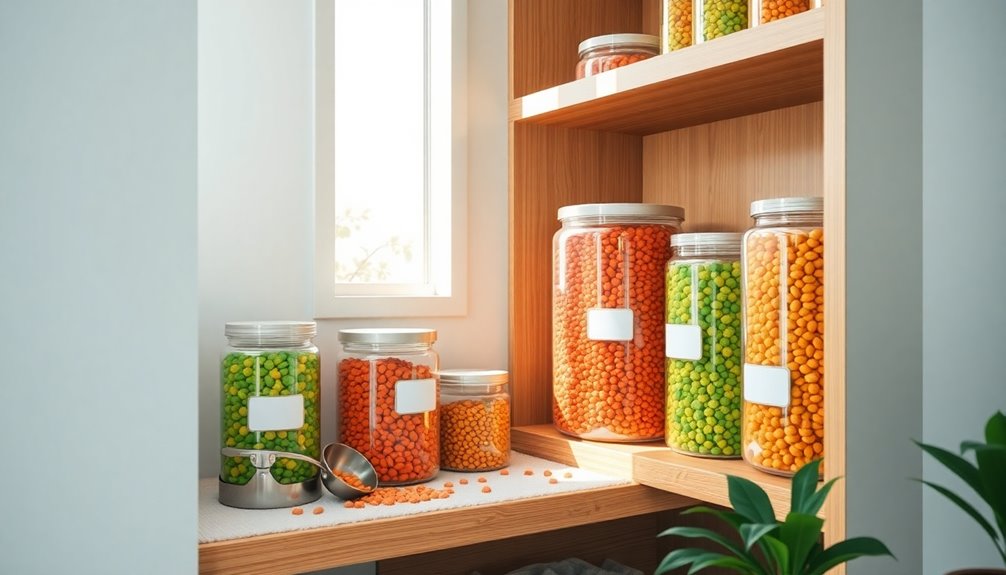
Proper storage of pet food matters because it directly impacts your pet’s health and the food’s longevity. When you store pet food improperly, it can lead to spoilage, nutrient loss, and even contamination. This not only affects pet nutrition but can also result in gastrointestinal issues for your furry friend.
To maintain the quality of your pet’s food, consider using airtight containers that prevent moisture and pests from getting in. You’ll want to keep the food in a cool, dry place, away from direct sunlight. Additionally, using non-toxic cleaners to sanitize the storage area can help ensure a clean environment free from harmful contaminants.
Choose the Right Containers for Pet Food
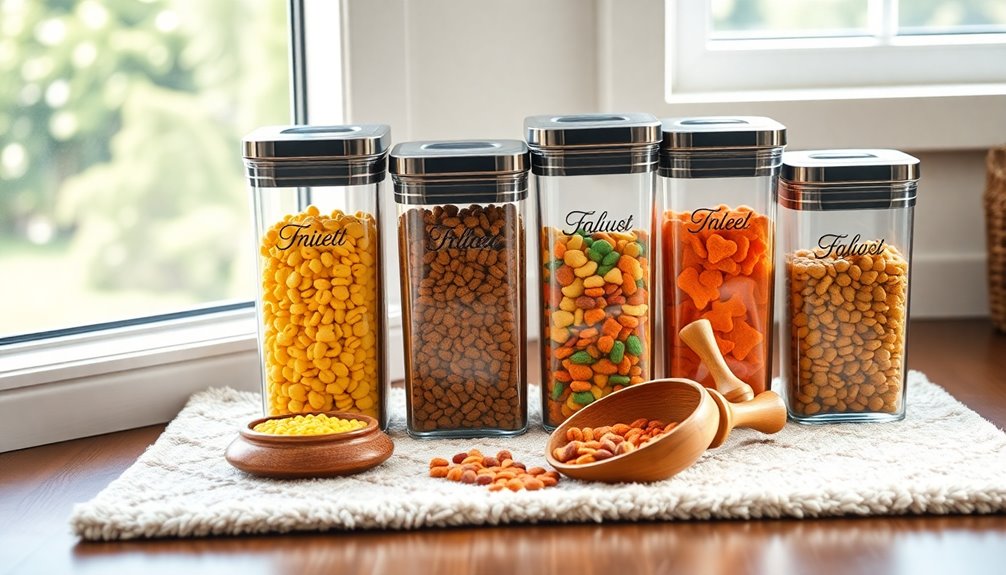
When it comes to storing pet food, choosing the right containers is essential. You’ll want airtight options to keep the food fresh, along with the right size and capacity to fit your needs. Additionally, consider the material’s durability to guarantee your containers last through regular use. Opting for eco-friendly methods to clean the storage area can help maintain a healthier environment for both you and your pets.
Airtight Sealing Options
Choosing the right container for your pet food is essential, as the right airtight sealing option can greatly extend its freshness and prevent pests.
Consider using vacuum sealing for ideal preservation. This method removes air, reducing the risk of spoilage and keeping your pet’s food flavorful.
If vacuum sealing isn’t feasible, look for high-quality storage bags designed for pet food. Confirm they’re made from durable materials and have a secure zip closure to keep air and moisture out.
You can also find specialized containers with airtight lids, perfect for larger quantities.
Whatever you choose, make sure it fits your lifestyle and provides the best protection for your pet’s food. Keeping it fresh is key to their health and happiness!
Size and Capacity Considerations
Finding the right size and capacity for your pet food container is crucial, especially if you want to maintain freshness and convenience.
Start by evaluating your pet’s eating habits and how much food you buy at once. Measure the container dimensions to guarantee it fits neatly in your storage space.
A larger container may save you trips to the store, while a smaller one might be ideal for smaller pets or if you frequently switch brands.
Remember to reflect on the type of food as well; dry kibble takes up less space than bulkier treats.
Ultimately, choosing the right size container will help you keep your pet’s food organized and accessible, making feeding time a breeze.
Material Durability Factors
Selecting the right container for your pet food goes beyond just size; the material of the container plays a significant role in maintaining freshness and preventing spoilage.
Consider these factors when choosing your container:
- Material Strength: Look for sturdy materials like stainless steel or heavy-duty plastic to withstand daily use.
- Weather Resistance: If you store food outdoors, opt for containers designed to resist moisture and extreme temperatures.
- Seal Quality: A tight-sealing lid keeps air and pests out, preserving your pet’s food longer.
- Ease of Cleaning: Choose materials that can be easily washed to prevent contamination.
Opt for Airtight Containers to Keep Food Fresh
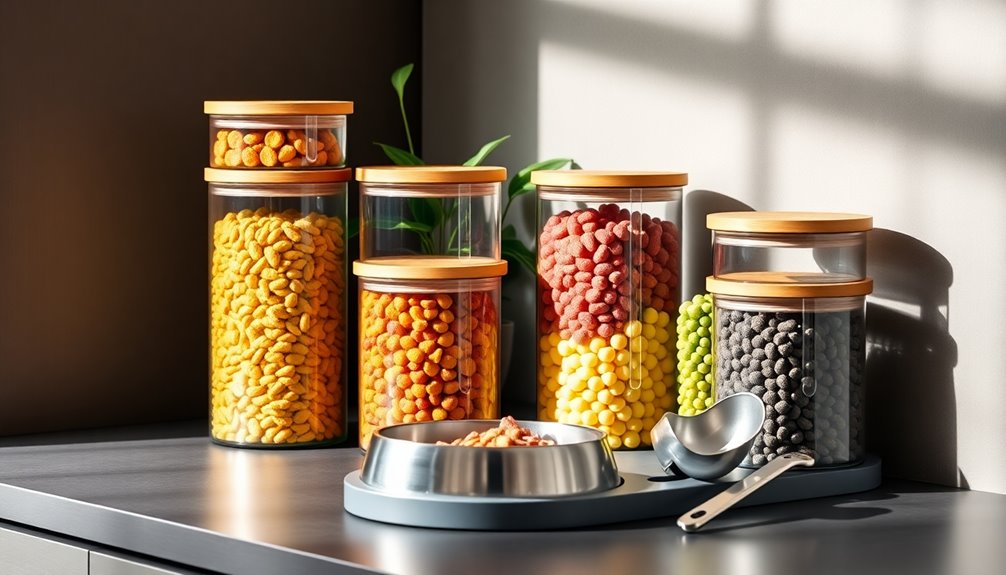
To keep your pet’s food fresh, using airtight containers is a must. These containers prevent moisture and pests from ruining the quality of the food. Additionally, opting for eco-friendly options can help reduce waste in your home while maintaining the freshness of your pet’s food.
Prevent Moisture And Pests
While keeping your pet food fresh might seem straightforward, using airtight containers is essential for preventing moisture and pests.
Moisture control is vital, as it can lead to mold growth, spoilage, and an unpleasant smell. Pests, like insects and rodents, are also drawn to open food containers.
Here are some tips to help you:
- Choose high-quality airtight containers made of durable materials.
- Store food in a cool, dry place, away from sunlight.
- Always seal containers tightly after each use to maintain pest prevention.
- Regularly clean the storage area to eliminate any crumbs or spills.
Maintain Freshness And Quality
By opting for airtight containers, you not only enhance the freshness of your pet food but also preserve its quality over time.
These containers block out moisture and air, which are the main culprits that compromise freshness indicators. When you store food in airtight containers, you greatly reduce the risk of spoilage, ensuring your pet gets the nutrients they need.
Make sure to check the quality preservation dates on the packaging and transfer the food as soon as you open it. Label your containers with dates to keep track of freshness.
This simple step helps maintain the taste and effectiveness of the food, keeping your furry friend happy and healthy. Remember, a little effort goes a long way!
Label Containers Clearly for Easy Access
Organizing your pet food storage is essential, so labeling containers clearly can make your life much easier.
Efficiently organizing pet food storage through clear labeling simplifies your routine and enhances your pet care experience.
When you use effective labeling techniques, you’ll quickly find what you need, saving time and reducing stress.
Here are four tips to get you started:
- Use Clear Labels: Write the contents, feeding instructions, and expiration dates.
- Choose Durable Materials: Consider using waterproof labels for longevity.
- Color Code Containers: Assign colors for different types of food or treats to streamline your routine.
- Select the Right Container Types: Use airtight containers for dry food and resealable bags for treats. Additionally, regularly check for expiration dates to ensure your pet’s food stays fresh and safe.
Store Food in a Cool, Dry Place
To keep your pet food fresh and nutritious, store it in a cool, dry place away from direct sunlight and humidity.
A cool storage area helps prevent the growth of mold and bacteria, ensuring your pet’s food stays safe to eat. Look for a location with a consistent temperature, like a pantry or cupboard, rather than near heat sources such as ovens or radiators.
Make sure the environment is dry to avoid moisture, which can spoil the food. Sealing the food in airtight containers can also help maintain that dry environment, keeping out pests and preserving freshness. Additionally, using eco-friendly biodegradable packaging for pet food can further contribute to reducing environmental impact.
Keep Pet Treats in a Separate Storage Area
While it might be tempting to store your pet treats alongside their regular food, keeping them in a separate storage area can help maintain their freshness and flavor.
Proper treat storage not only preserves the quality but also enhances treat organization. Here are some tips to take into account:
- Choose an Airtight Container: Use a durable, airtight container to keep treats fresh.
- Designate a Specific Area: Find a dedicated spot in your pantry or cabinet for treats, separate from food.
- Label Everything: Clearly label containers to easily identify treats versus food.
- Monitor Expiration Dates: Regularly check the dates to verify treats are still good.
Use a Pet Food Scoop for Accurate Portions
Using a pet food scoop guarantees you’re serving the right portion every time, which is vital for your pet’s health.
With various scoop sizes available, you can choose the one that best fits your pet’s dietary needs. This is especially important for maintaining portion control, ensuring your furry friend gets the right amount of food based on their weight and activity level.
By using a designated scoop, you’ll avoid overfilling bowls and reduce the risk of obesity or other health issues. Plus, it makes feeding time hassle-free! Remember to keep your scoop clean and stored alongside the food to streamline the process. Additionally, keeping your pet’s feeding area clean and organized can help prevent soap scum buildup and maintain a healthy space for your furry friend.
Accurate portions lead to a healthier, happier pet, so make the scoop your best feeding companion!
Regularly Check Expiration Dates on Pet Food
Here are some tips to help you manage expiration reminders effectively:
- Create a Checklist: Write down expiration dates for each food item.
- Set Alerts: Use your phone’s calendar to remind you a month before expiration.
- Organize by Date: Store older items in front, so you use them first.
- Regular Inspections: Check your pet food every month for any expired or spoiled products.
Additionally, keeping your pet’s food area clean can help reduce the risk of pest problems that might arise from food residue and clutter.
Clean Food and Treat Areas Regularly
Regularly cleaning food and treat areas is essential for maintaining your pet’s health and safety. Establish a cleaning schedule to guarantee these spaces stay hygienic. Aim to clean these areas at least once a week, or more frequently if spills or messes occur.
During your cleanings, check for any leftover food or crumbs that could attract pests. Incorporate regular inspections to spot any signs of mold or spoilage. Don’t forget to wipe down surfaces with a damp cloth and remove any debris from the floor. Additionally, consider implementing weekly sponge replacements to minimize contamination risks in your cleaning routine.
Use Non-Toxic Cleaners Safe for Pets
When cleaning your pet’s food area, it’s essential to choose non-toxic cleaners.
Look for products that use safe ingredients and avoid harsh chemicals that could harm your furry friends.
Always read labels carefully to guarantee you’re making the best choices for their health. Many eco-friendly cleaning products, such as those from B Corp certified companies, prioritize safety for pets and the environment.
Choose Safe Ingredients
To keep your pets safe and healthy, it’s essential to choose non-toxic cleaners for your home. Opting for products made with natural ingredients guarantees that your cleaning routine supports pet food safety while keeping your furry friends safe from harmful chemicals.
Here are four safe cleaning options to take into account:
- Vinegar – Great for disinfecting and deodorizing.
- Baking Soda – Effective for scrubbing surfaces and eliminating odors.
- Castile Soap – A gentle soap that’s safe for cleaning pet areas.
- Lemon Juice – Natural antibacterial properties and a fresh scent.
Avoid Harsh Chemicals
Choosing safe ingredients for your pets also means being mindful of the cleaning products you use around their food and living spaces. Harsh chemicals can linger and pose risks to your furry friends, so it’s best to avoid them.
Instead, opt for natural alternatives that effectively clean without harmful effects. Look for eco-friendly options made from plant-based ingredients that are safe for pets. These products can tackle grime and odors without leaving behind toxic residues.
You can even make your own cleaners using simple ingredients like vinegar and baking soda. By making these conscious choices, you’ll create a cleaner and safer environment for your pets, giving you peace of mind while keeping their food areas tidy.
Read Labels Carefully
How can you guarantee the safety of your pets while keeping their spaces clean? One key step is making sure you’re using non-toxic cleaners. While cleaning, always read labels carefully.
Here are some tips to keep in mind:
- Look for Safe Ingredients: Avoid harmful chemicals by choosing cleaners with natural ingredients.
- Check for Certifications: Select products labeled as pet-safe or environmentally friendly.
- Understand Nutritional Analysis: Use this to evaluate pet food; it helps you understand what’s in their diet and makes certain it’s safe.
- Research Brands: Familiarize yourself with brands that prioritize safety in both their products and cleaning solutions.
Organize Treats by Type for Quick Selection
When you’re preparing to treat your pet, having a well-organized selection makes all the difference.
Start by sorting treats into clear treat categories, such as crunchy, chewy, and dental. This method not only keeps your space tidy but also offers you quick access to whatever your pet craves.
Use labeled containers or bins to store each category, guaranteeing that you can easily grab the right treat without rummaging through everything.
You might even consider a tiered shelf or a basket system to maximize space and visibility. Incorporating fun designs can make the storage area visually appealing while encouraging you to keep it organized.
By organizing your treats effectively, you’ll save time during treat time and make certain your pet enjoys a variety of delicious options.
Happy treating!
Create a Designated Feeding Station for Your Pet
Setting up a designated feeding station for your pet can make mealtime smoother and more enjoyable.
Choose an ideal location that’s quiet and away from distractions, and gather all your feeding supplies in one spot.
This organization will help you maintain a clean and efficient feeding routine.
Choose Ideal Location
Creating a designated feeding station for your pet can greatly enhance their mealtime experience. Choosing the ideal location is essential for guaranteeing comfort and convenience factors. Here are some tips to help you find the best space:
- Quiet Area: Pick a spot away from high traffic to minimize distractions.
- Easy Access: Make sure the location is easy for both you and your pet to reach, promoting regular feeding schedules.
- Away from Clutter: Keep the feeding area clear of other items to maintain cleanliness and focus.
- Sunlight Consideration: Avoid direct sunlight to prevent food spoilage and keep your pet comfortable during meals.
Organize Feeding Supplies
To guarantee a smooth feeding routine for your pet, organizing their supplies is key. Start by creating a designated feeding station that’s easily accessible.
Arrange your pet food organization by grouping all feeding supplies together—food containers, bowls, and measuring cups. This layout not only saves time but also minimizes mess during feeding.
Ensure the area is clean and free from distractions, so your pet feels comfortable while eating. Keep treats and supplements nearby for quick access, and consider labeling containers to streamline your feeding supplies layout.
Regularly check for expired items and replenish supplies as needed. By establishing an organized feeding station, you’ll make mealtime a pleasant experience for both you and your pet.
Avoid Storing Food Near Chemicals or Cleaning Supplies
While it might seem convenient to store pet food near cleaning supplies or chemicals, doing so can pose serious risks.
Prioritizing chemical safety is crucial to keep your pets safe. Here are four reasons to avoid this practice:
- Toxic Exposure: In case of spills, harmful chemicals can contaminate your pet’s food.
- Odor Absorption: Pet food can absorb strong chemical odors, affecting its quality and taste.
- Inadvertent Mixing: Accidental mixing of food with cleaning agents could lead to poisoning.
- Compromised Cleaning Protocols: Proper cleaning protocols can be difficult to follow if food is stored nearby, increasing the risk of contamination.
Choose a dedicated storage area for pet food, keeping it away from any chemicals to protect their health and safety.
Keep Water Bowls Clean and Fresh
Since your pet relies on fresh water for hydration and overall health, keeping their water bowl clean is crucial.
Start by washing the bowl daily with hot, soapy water to guarantee proper water bowl hygiene. Rinse it thoroughly to remove any soap residue, as pets can be sensitive to it.
It’s also a good idea to scrub the bowl weekly with a non-toxic cleaner to prevent bacteria buildup. Change the water at least once a day, and consider using filtered water to keep it fresh longer.
If you notice any slime or film, you may need to clean more often. By prioritizing these simple steps, you’ll help prevent bacteria growth and keep your pet happy and healthy.
Consider a Pet Food Storage Calendar for Organization
How can a pet food storage calendar simplify your feeding routine? By keeping track of your pet food inventory and guaranteeing proper pet food rotation, you can maintain freshness and prevent waste.
A pet food storage calendar helps streamline your feeding routine by tracking inventory and ensuring food freshness.
Here are four benefits of using a pet food storage calendar:
- Organized Inventory: Keep tabs on what you have and when it expires.
- Schedule Purchases: Plan when to buy more food to avoid last-minute trips.
- Track Storage Conditions: Guarantee food is stored properly to maintain quality.
- Meal Planning: Easily see what’s on hand to create balanced meals.
With storage tracking, you’ll save time and money while guaranteeing your furry friend always gets the best nutrition.
A pet food storage calendar is a game changer!
How to Manage Bulk Purchases of Pet Food?
When you stock up on pet food in bulk, it’s essential to manage your purchases wisely to guarantee your furry friend always has fresh meals.
Start by choosing high-quality storage solutions that keep food dry and protected from pests. Airtight containers work wonders, as they maintain freshness and prevent odors. Label each container with the purchase date to track expiration easily.
Rotate your stock—use the oldest food first to minimize waste. If you buy in larger quantities, consider splitting bulk purchases with friends or family to make sure you’re not overwhelmed.
Finally, regularly check your supplies, ensuring you use what’s essential before the next purchase. With these tips, bulk buying can be a practical and efficient way to keep your pet happy and healthy.
Conclusion
By following these storage and cleaning tips, you’re not just keeping your pet’s food fresh; you’re transforming their feeding area into a fortress of freshness! Imagine your pet’s kibble practically dancing with joy in its airtight container, while water bowls sparkle like jewels in a treasure chest. With a little organization, you’ll have a pet food paradise that even the pickiest of pets would envy. So, get ready to release a world of culinary delight for your furry friend!