If you’re dealing with pet nose prints on your windows and glass doors, there are 16 effective ways to clean them up. Start by mixing equal parts vinegar and water in a spray bottle for a quick homemade cleaner. Microfiber cloths work wonders for trapping dirt without scratching. For tough stains, try a baking soda paste. If you’re looking to prevent future smudges, consider using sheer curtains or window film. For more tips and techniques, keep exploring!
Quick and Easy Glass Cleaner Recipe for Pet Owners
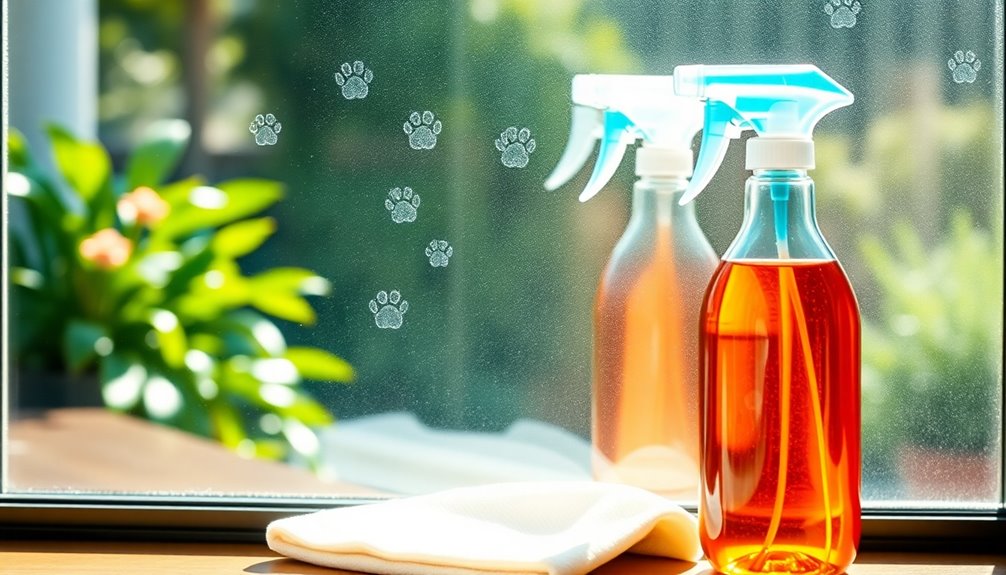
If you’re a pet owner, you know how quickly glass surfaces can get smudged with paw prints and nose marks.
To tackle this mess, you can whip up a quick and easy homemade cleaner that’s both effective and pet safe. Start with equal parts water and white vinegar in a spray bottle. This simple solution not only cuts through grime but also leaves your glass sparkling. Additionally, using a squeegee daily can help minimize moisture and reduce the frequency of cleaning needed.
If you prefer a pleasant scent, add a few drops of essential oils, ensuring they’re safe for pets. Shake the bottle gently before use, then spray the mixture onto the glass and wipe it clean with a microfiber cloth.
With this homemade cleaner, you’ll enjoy a spotless view without worrying about your furry friends.
How to Use Vinegar and Water for Streak-Free Shine
Using a vinegar and water solution is a simple way to achieve a streak-free shine on your windows and glass doors. You’ll need to prepare the right mixture and apply it effectively for the best results. Vinegar and newspaper make an excellent combination for cleaning glass surfaces without leaving lint behind. Let’s explore how to create that solution and the techniques to apply it properly.
Vinegar Solution Preparation
To achieve a streak-free shine on your windows and glass doors, mixing a simple vinegar solution is key.
Start by combining equal parts of white vinegar and water for an effective cleaner. This 1:1 solution ratio maximizes vinegar benefits, such as cutting through grime and eliminating odors.
If your glass is particularly dirty, you can adjust the ratio to include more vinegar—try a 2:1 mix for tough spots.
Pour the mixture into a spray bottle for easy application. Always remember to use distilled water if you want to avoid mineral spots.
This straightforward approach not only enhances the shine but also makes your cleaning routine eco-friendly. Enjoy sparkling windows without harsh chemicals!
Application Techniques Explained
Achieve a streak-free shine by applying your vinegar solution with the right techniques.
Start by using a microfiber cloth or a soft sponge; they’re great for trapping dirt without scratching your glass. Dampen your cloth with the vinegar solution, but don’t soak it.
Effective methods involve working from top to bottom, ensuring any drips fall onto areas that haven’t been cleaned yet. Use a circular motion to wipe the glass, then finish with vertical or horizontal strokes for an even finish.
Finally, for those stubborn spots, apply a bit more pressure, and don’t forget to regularly change your cloth to avoid spreading dirt.
With these application techniques, your windows will sparkle like new!
The Power of Baking Soda: A Natural Cleaning Solution
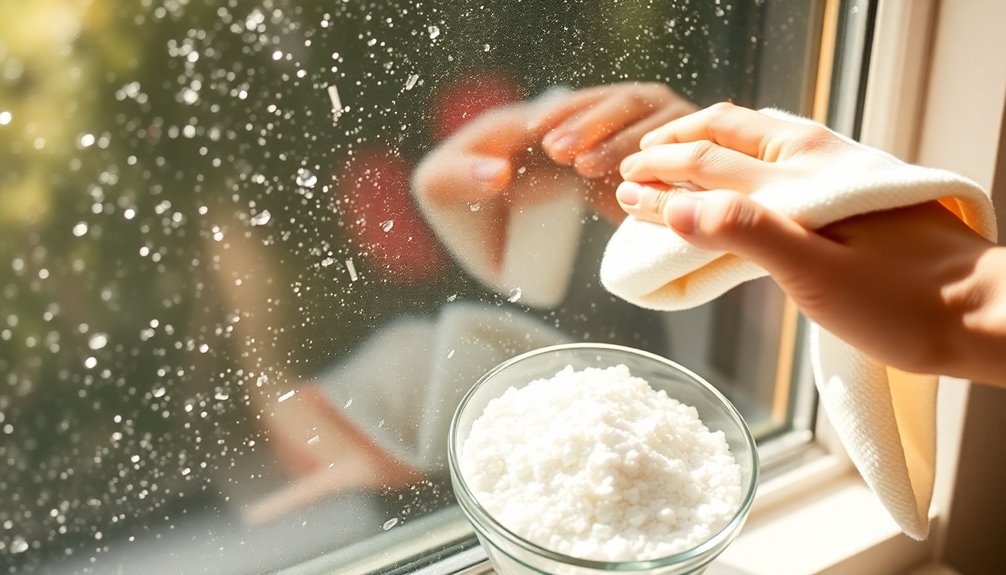
Baking soda is a powerhouse when it comes to natural cleaning solutions. Its gentle abrasive qualities make it perfect for tackling tough grime on your windows and glass doors. Let’s explore the benefits and application techniques that can transform your cleaning routine. Additionally, this versatile ingredient is often recommended for preventing grime buildup, making it a fantastic choice for maintaining cleanliness in your home.
Baking Soda Benefits
While many cleaning products can be harsh and full of chemicals, baking soda stands out as a powerful and natural solution for tackling dirt and grime. You’ll love how versatile this simple ingredient is.
As a natural deodorizer, baking soda eliminates unpleasant odors, leaving your space fresh. When it comes to stubborn stains, baking soda acts as an effective stain remover, making it easier to clean those pesky pet nose prints off your windows and glass doors.
Plus, it’s safe to use around your pets and family, giving you peace of mind. Whether you need to scrub, deodorize, or lift stains, baking soda is your go-to cleaning ally, proving that natural solutions can be just as effective as their chemical counterparts.
Application Techniques Explained
Transform your window and glass door cleaning routine with the power of baking soda. This natural cleaner not only lifts grime but also tackles those pesky pet nose prints effectively.
Start by mixing two tablespoons of baking soda with water to create a paste. Use a soft cloth or sponge as your cleaning tool, applying the paste directly to the affected areas. Gently scrub in circular motions to lift dirt without scratching the glass.
For stubborn spots, let the paste sit for a few minutes before wiping it away with a damp cloth. Finish by rinsing the surface with clean water and drying with a microfiber cloth for a streak-free shine.
You’ll love the results!
Microfiber Cloths: The Best Tool for Pet Nose Prints
Microfiber cloths are a game changer when it comes to tackling those pesky pet nose prints on your glass doors and windows. Their unique fibers attract dirt and moisture, making them incredibly effective at lifting away smudges without scratching the surface.
You’ll appreciate the microfiber benefits, as they’re also reusable and durable, saving you money in the long run.
When you use a microfiber cloth, you’ll notice a significant increase in cleaning efficiency compared to traditional cleaning rags. They require less cleaning solution, so you can quickly wipe away those nose prints with ease.
Plus, they’re safe for your pets, ensuring a worry-free cleaning experience. Regular cleaning of microfiber cloths enhances overall cleaning performance, and enjoy spotless windows and doors!
Using Commercial Glass Cleaners Safely Around Pets
After tackling those pet nose prints with microfiber cloths, it’s important to contemplate the cleaning solutions you use.
When selecting commercial glass cleaners, prioritize safe product selection. Many traditional cleaners contain chemicals that can be harmful to your furry friends. Instead, opt for pet-friendly alternatives that effectively clean without risking your pet’s health. Look for biodegradable, non-toxic options clearly labeled as safe for pets. Always ventilate the area while cleaning, and consider keeping your pets away until surfaces are dry. Additionally, consider brands like Puracy that deliver safe and effective plant-based cleaning solutions. If you’re unsure about a product’s safety, check online reviews or consult your veterinarian. By being mindful of the cleaning solutions you choose, you can keep your windows sparkling without compromising your pet’s well-being.
Essential Oils: Adding a Fresh Scent to Your Cleaning Routine
If you want to enhance your cleaning routine with delightful scents, essential oils are a fantastic option. Not only do they make your home smell great, but many essential oil blends are also pet safe.
Here are some tips for incorporating them into your window cleaning:
- Choose pet safe scents: Lavender, chamomile, and citrus oils are calming and safe for your furry friends.
- Mix your own blends: Combine a few drops of essential oils with water in a spray bottle for a revitalizing cleaner.
- Use as a finishing touch: After cleaning, add a couple of drops to a cotton ball and place it near windows for a lasting fragrance.
Additionally, essential oils like citrus oils not only provide a refreshing aroma but also possess germ-fighting properties, enhancing your cleaning effectiveness.
With these tips, your windows will shine, and your home will smell wonderful!
The Magic of Newspaper for Sparkling Windows
Using newspaper for cleaning windows is a time-tested trick that can leave your glass sparkling without streaks. This old-fashioned method has a few newspaper benefits that make it a favorite among many.
The ink on the newspaper acts as a mild abrasive, helping to lift dirt and grime easily. Plus, it absorbs moisture effectively, preventing those annoying streaks you often get with paper towels.
To use this technique, simply crumple up a sheet of newspaper, dip it in your favorite window cleaner, and wipe away. You’ll be amazed at how clear and bright your windows can look. Additionally, opting for an eco-friendly cleaner can enhance this process by reducing environmental impact while achieving a pristine finish.
Utilizing Squeegees for a Professional Finish
When it comes to achieving a streak-free shine, choosing the right squeegee is essential. You’ll also want to master the technique to make your cleaning routine efficient and effective. Let’s explore how these two elements can elevate your window-cleaning game. Additionally, using electric cleaning brushes can help you tackle tough grime on windows and glass doors before you squeegee for a polished finish.
Choosing The Right Squeegee
A high-quality squeegee is essential for achieving a streak-free finish on your windows and glass doors.
When choosing the right one, consider these factors:
- Squeegee materials: Opt for rubber blades that provide ideal flexibility and durability.
- Squeegee sizes: Choose a size that fits your window dimensions; smaller sizes work well for tight spaces, while larger ones cover more area efficiently.
- Handle comfort: Look for ergonomic handles that offer a good grip, making your cleaning process easier.
Mastering Squeegee Technique
Master the art of squeegeeing to achieve that professional finish on your windows and glass doors. Start by selecting the right squeegee type for your task—whether it’s a classic rubber blade or a larger commercial squeegee.
Before you begin, verify your glass is clean and free of debris. Use a consistent, firm pressure to glide the squeegee from top to bottom, wiping the blade after each stroke with a clean cloth. This prevents streaks and guarantees a smooth surface.
Don’t forget about squeegee maintenance; regularly check for wear and replace the blade when needed. A well-maintained squeegee not only enhances your cleaning efficiency but also prolongs its lifespan, ensuring stunning results every time.
Homemade Pet-Friendly Cleaning Wipes for Quick Cleanups
If you’re looking for a quick and effective way to keep your windows and glass doors spotless while ensuring your pets stay safe, homemade pet-friendly cleaning wipes are the perfect solution.
These wipes are simple to make and use safe, pet-friendly ingredients that won’t harm your furry friends.
Homemade pet-friendly cleaning wipes are easy to make and safe for your beloved pets.
To create your own, gather these items:
- 1 cup of distilled water
- 1/4 cup of white vinegar
- 1 tablespoon of mild dish soap
Mix the ingredients in a bowl, then soak reusable cloths in the solution.
Once they’re fully saturated, store them in an airtight container for easy access. With these homemade cleaning wipes, you can tackle those pesky pet nose prints quickly and safely! Additionally, using distilled white vinegar as a key ingredient not only cleans but also combats bacteria, making it an excellent choice for pet-friendly cleaning solutions.
The Importance of Regular Cleaning to Prevent Build-Up
While you might think occasional cleaning is enough, regular upkeep is essential to prevent grime and dirt from building up on your windows and glass doors.
Establishing a cleaning schedule helps you stay consistent and guarantees that pet nose prints don’t become a permanent feature of your home. By making cleaning a part of your maintenance habits, you can catch dirt and smudges before they accumulate, making your cleaning efforts easier and more effective. Regularly wiping your glass surfaces will also enhance your home’s overall appearance and allow more natural light to filter in. Implementing a daily cleaning routine can further streamline your efforts and ensure that your spaces remain tidy.
Don’t wait for the buildup to become overwhelming; prioritize regular cleaning to maintain a fresh and inviting space for both you and your furry friends.
How to Train Your Pet to Avoid Nose Prints on Glass?
Training your pet to avoid leaving nose prints on your glass is easier than you think.
Use positive reinforcement techniques to reward them for staying away from the windows, and establish clear boundaries to help them understand where they can and can’t go.
With consistent practice, you’ll keep your glass looking spotless!
Positive Reinforcement Techniques
To keep your windows and glass doors free from pesky nose prints, positive reinforcement techniques can make all the difference.
By using reward systems, you can effectively train your pet to stay away from the glass while encouraging good behavior. Here are a few strategies to contemplate:
- Use treats: Reward your pet with a treat when they choose to stay back from the glass.
- Praise: Give verbal praise and affection when your pet avoids the area, reinforcing their good choices.
- Redirect: When they approach the glass, gently redirect them to a designated area and reward them for going there instead.
Establish Clear Boundaries
Establishing clear boundaries is essential for training your pet to avoid leaving nose prints on your windows and glass doors.
Start by identifying areas where you don’t want them to go. Use boundary training methods like a simple command or a physical barrier, such as baby gates, to keep them away from these surfaces.
When your pet approaches the glass, redirect them to a designated spot with a toy or treat. Consistency is key—repeatedly reinforce the desired behavior and discourage unwanted actions.
Monitor their progress and adjust your training techniques as needed. Over time, your pet will learn the boundaries and respect your space, reducing those pesky nose prints and improving their overall behavior.
Cleaning Glass Doors: Tips for Hard-to-Reach Areas
While cleaning glass doors may seem straightforward, tackling hard-to-reach areas can be a challenge.
Fortunately, with the right cleaning tools and techniques, you can make the job easier. Here are some tips to help you out:
- Use a squeegee: Perfect for large surfaces and tough spots.
- Extendable dusters: Great for corners and high spots that are usually neglected.
- Microfiber cloths: Ideal for detail cleaning and getting into tight spaces.
Don’t forget to check behind door handles and around the edges where dirt tends to accumulate.
With these strategies, you’ll guarantee every inch of your glass doors shines, even in those hard-to-reach areas!
The Role of a Steam Cleaner in Deep Cleaning Glass Surfaces
When you’re looking to achieve a deep clean for your glass surfaces, a steam cleaner can be a game changer. It effectively removes stubborn pet nose prints and grime without harsh chemicals.
One of the key steam cleaner benefits is its ability to sanitize surfaces using high-temperature steam, which cuts through dirt and kills bacteria. Plus, it’s perfect for those hard-to-reach areas that traditional cleaning methods struggle with.
By incorporating this tool into your deep cleaning techniques, you’ll save time and achieve a streak-free shine. Just point the nozzle at the glass, and let the steam do the work.
With a steam cleaner, you’ll enjoy cleaner, clearer glass surfaces that enhance your view and brighten your space.
The Best Time of Day for Window Cleaning
Timing can greatly impact the effectiveness of your window cleaning efforts.
To achieve streak-free, sparkling windows, consider these ideal times:
- Early morning: The cool temperatures prevent cleaning solutions from drying too quickly.
- Late afternoon: The sun is less intense, reducing glare and allowing you to see streaks more clearly.
- Overcast days: Soft, diffused light helps you spot smudges without harsh sunlight interfering.
How to Remove Stubborn Marks: Tips for Tough Residues
After you’ve chosen the right time for window cleaning, tackling stubborn marks becomes the next challenge.
Choosing the perfect time to clean your windows sets the stage for effectively removing those stubborn marks.
For those stubborn stains left by pet nose prints, start by mixing equal parts of white vinegar and water in a spray bottle. Spray the solution directly on the marks and let it sit for a few minutes to break down the residue.
Then, use a microfiber cloth to gently scrub the area in circular motions.
If the stains persist, try a baking soda paste—mix baking soda with water until it forms a thick consistency. Apply it to the marks and scrub lightly.
Rinse with warm water and dry with a clean cloth. These residue removal techniques will help restore your windows and glass doors to their sparkling best!
Preventative Measures: Keeping Windows Smudge-Free
To keep your windows smudge-free, it’s essential to implement a few simple habits that make a big difference.
By adopting these preventative cleaning measures, you can minimize the need for frequent scrubbing and maintain a clearer view.
Here are some effective pet proofing strategies:
- Use window film to reduce glare and hide smudges.
- Install sheer curtains to deter your pets from getting too close.
- Create a designated pet space away from windows to limit nose prints.
These steps not only protect your windows but also contribute to a cleaner home environment.
Conclusion
To sum up, keeping your windows and glass doors free from pet nose prints doesn’t have to be a chore. By using simple methods like a vinegar-water mix or a steam cleaner, you’ll enjoy sparkling surfaces in no time. For instance, imagine a busy household with three dogs; after switching to a microfiber cloth and a natural cleaner, the family found their windows looking brand new, making their home feel brighter and more welcoming.