To keep the playroom clean without constant nagging, establish a daily cleaning routine and use clear storage solutions for toys. Implement a “one in, one out” rule and create designated play zones to manage clutter. Set up a toy rotation system for variety, and use a reward system to encourage consistent cleanup. Teach kids to clean as they go, and lead by example to instill good habits. Discover more engaging strategies to keep the space tidy effortlessly.
Create a Cleaning Routine With Kids
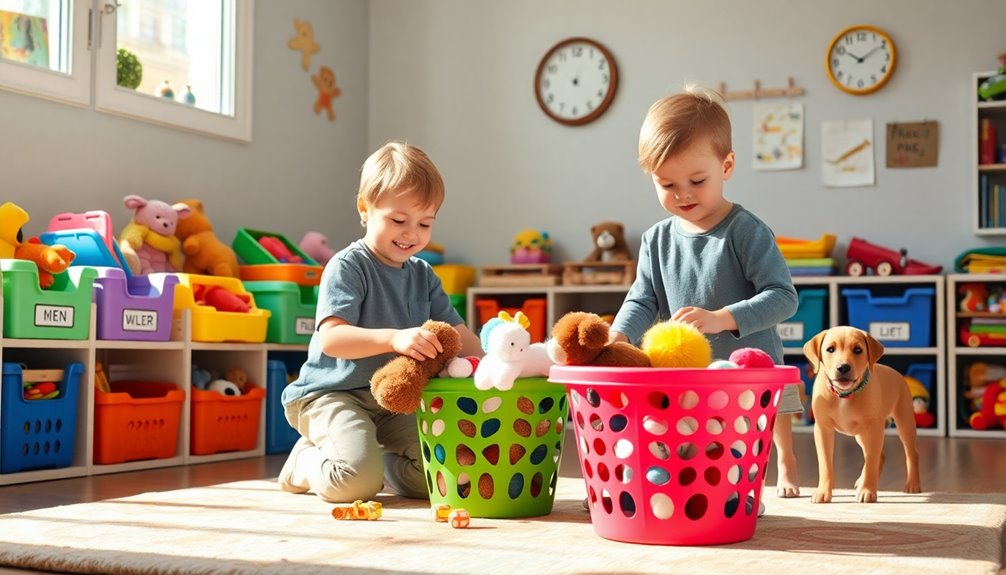
Although it might seem intimidating at first, creating a cleaning routine with your kids can make tidying up the playroom a fun and engaging activity.
Start by setting a specific time each day for cleaning, turning it into a family ritual. Get everyone involved by assigning age-appropriate tasks that promote teamwork.
Encourage your kids to take ownership of their cleaning habits by letting them choose their favorite songs to play during cleanup time. Celebrate small victories together, whether it’s completing a task or keeping the playroom clean for a week.
This not only builds responsibility but also strengthens family bonds. Remember, with a bit of creativity, cleaning can become a cherished family activity rather than a chore! Additionally, implementing a structured cleaning schedule can help maintain consistency and make the process smoother for everyone involved.
Use Clear Storage Solutions for Toys
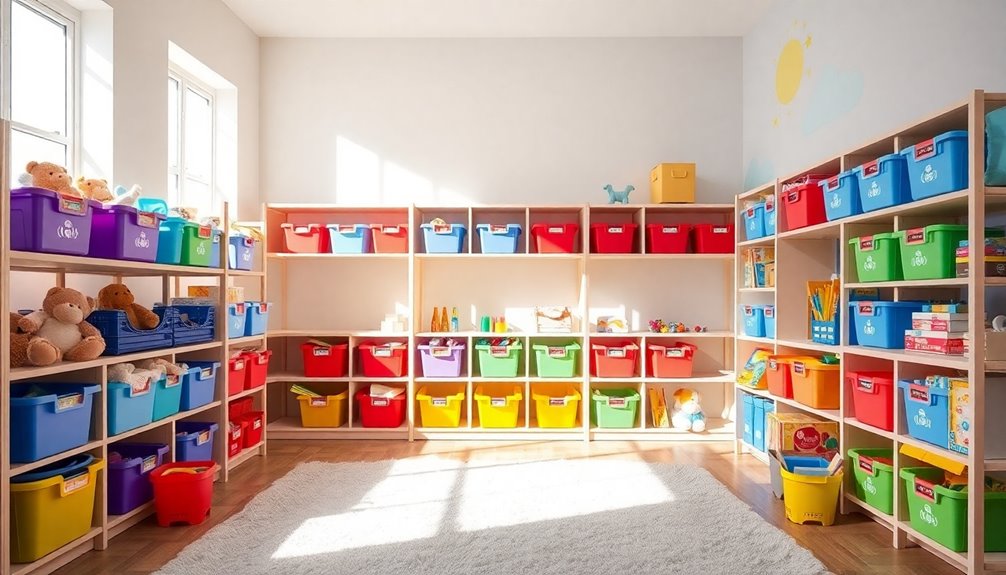
Using clear storage solutions for toys can transform your playroom into an organized haven.
By utilizing transparent bins, you can easily see what’s inside, making clean-up a breeze for both you and your kids.
Here are four tips to help you get started:
- Select various sizes of transparent bins to accommodate different types of toys.
- Label each bin with toy labels to identify contents, so kids know where everything belongs.
- Group similar toys together (like blocks, dolls, or cars) for efficient organization.
- Encourage your kids to help by making it a fun challenge to put toys back in their designated bins.
Additionally, keeping your playroom dry and well-ventilated can help prevent musty smells and maintain a fresh environment.
With these strategies, maintaining a tidy playroom becomes a manageable task.
Implement a “One In, One Out” Rule
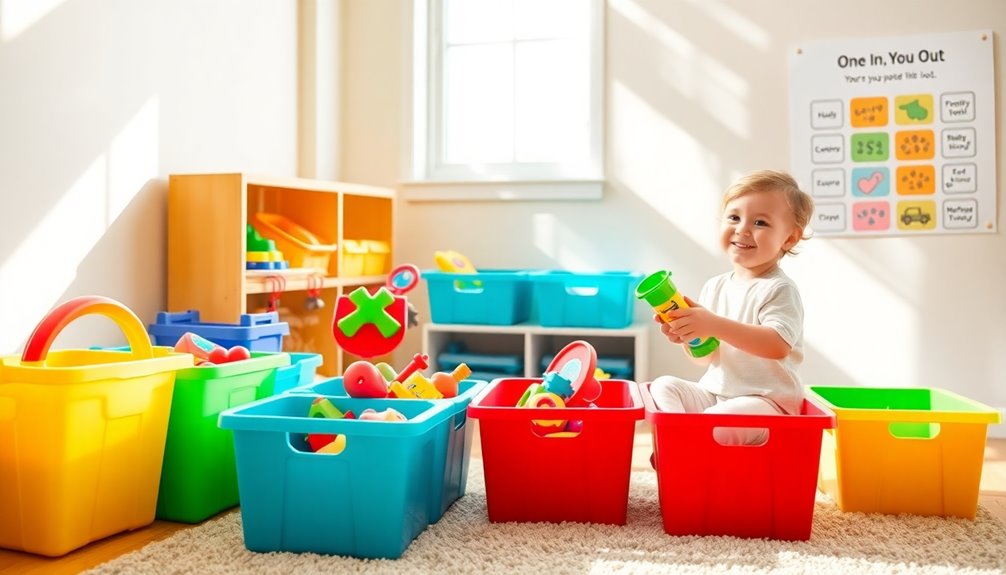
To keep your playroom tidy, try implementing a “One In, One Out” rule. This approach encourages you and your kids to make thoughtful toy choices and share or rotate toys with friends. Additionally, consider using kid-friendly cleaning products to maintain a safe and clean environment for your little ones while they play.
Encourage Thoughtful Toy Choices
Implementing a “One In, One Out” rule can transform how you manage toys in your playroom. By encouraging thoughtful toy choices, you help your kids make mindful selections when it comes to their playthings. This not only keeps clutter at bay but also instills valuable lessons about consumerism.
Here are a few tips to get started:
- Discuss Needs vs. Wants: Talk with your kids about what toys they really play with versus those collecting dust.
- Set Limits: Designate a specific number of toys they can keep.
- Encourage Quality Over Quantity: Focus on thoughtful purchases that spark creativity.
- Involve Kids in Decisions: Let them choose which toys to donate or give away.
This way, managing their toys becomes a collaborative effort!
Promote Sharing and Rotation
How can sharing and rotating toys create a more dynamic play environment? By implementing a “One In, One Out” rule, you encourage your kids to share toys while keeping clutter at bay.
When they bring in a new toy, they choose one to donate or store, helping them learn the value of sharing toys and responsibility. This not only reduces the number of toys in the playroom but also keeps their interest alive.
Rotate responsibilities by assigning each child a turn to choose which toy to swap out, fostering teamwork and collaboration.
You’ll notice a cleaner space and a more engaging playtime, as children rediscover forgotten toys, making each play session fresh and exciting.
Create Designated Play Zones
Creating designated play zones can really help keep your playroom organized.
Start by defining clear boundaries for each area, using color-coded zones to make it easy for your kids to understand where certain toys belong.
Assign specific toys to each zone, so everything has its place and cleanup becomes a breeze. Additionally, implementing the one in, one out rule can help prevent clutter accumulation and maintain an organized playroom.
Define Play Area Boundaries
Establishing clear boundaries in your play area can greatly enhance your child’s play experience. By defining specific zones, you can help them understand where to play and what the play area rules are. Use boundary signs to make these areas visually appealing and easy to recognize.
Here are four tips to create effective play area boundaries:
- Designate Zones: Separate areas for different activities, like reading, building, or crafts.
- Use Furniture: Arrange shelves or furniture to create physical barriers between zones.
- Set Clear Rules: Post simple play area rules near each zone to remind your child of expectations.
- Incorporate Colors: Utilize colorful mats or rugs to differentiate various play spaces.
With these tips, you’ll foster a cleaner, more organized playroom!
Use Color-Coded Zones
Using color-coded zones can transform your playroom into an organized and visually stimulating environment.
By applying color psychology, you can create distinct areas that help your kids identify where to play and what to do. For example, use blue for reading, green for arts and crafts, and red for active play.
This kind of zone organization not only makes it easier for your kids to find their favorite toys but also encourages them to put things back in their designated zones. You’ll notice they’ll be more engaged and focused, reducing chaos.
Plus, it adds a fun aesthetic to the space. So grab some paint or colored tape, and start creating those vibrant zones today!
Assign Specific Toys Here
Assigning specific toys to designated play zones helps maintain order and encourages your kids to engage with their toys purposefully.
By implementing toy categorization strategies, you can create clear storage location designations that make it easy for your kids to find and put away their toys.
Here are four effective steps to set up these zones:
- Group Similar Toys: Organize toys by type, like blocks, dolls, or art supplies.
- Label Storage Areas: Use labels or pictures to identify where each toy belongs.
- Create Defined Spaces: Designate specific areas for each toy category to reduce clutter.
- Encourage Responsibility: Teach your kids to return toys to their designated zones after playtime.
This approach fosters independence and keeps your playroom neat!
Set Up a Toy Rotation System
A toy rotation system can be a game changer for maintaining a clean playroom while keeping your kids engaged.
Start by creating a toy inventory, categorizing toys into groups based on type or interest. This way, you can easily track what toys your children have.
Creating a toy inventory by categorizing them helps you easily track what your children have.
Rotate these toys every few weeks, introducing only a selection at a time. The rotation benefits include reducing clutter and helping your kids appreciate their toys more.
When they see something they haven’t played with in a while, it feels new and exciting. You’ll find that your kids are more likely to keep their play area tidy, as they won’t be overwhelmed by too many options at once. Additionally, implementing a 10-minute daily tidy-up routine as a family activity can further encourage children to maintain cleanliness in their play space.
Make Cleaning a Game or Challenge
Cleaning doesn’t have to be a boring chore; you can turn it into a fun game!
Set a timer and challenge your kids to see how many toys they can put away before the clock runs out, or create a treasure hunt where they find and collect specific items. Making cleanup exciting not only speeds things up but also teaches your kids to enjoy tidying up. Additionally, engaging in these activities helps foster essential life skills that will benefit them in the future.
Cleaning Race Timer
Transform tidying up into an exciting challenge by setting a cleaning race timer. You can make cleaning feel less like a chore and more like a fun game. Here’s how to get started with race challenges:
- Set a Timer: Choose a duration (like 5 or 10 minutes) for the cleaning race.
- Pick a Task: Decide what needs cleaning, such as toys, books, or art supplies.
- Compete: Invite your kids to beat the clock and see who can clean the most in the time allotted.
- Celebrate: Reward their efforts with a small treat or extra playtime once the timer goes off.
Using a cleaning timer not only speeds up the process but also makes it enjoyable for everyone involved!
Treasure Hunt Cleanup
Turn tidying up into an adventure with a Treasure Hunt Cleanup!
Create a treasure map that marks spots where toys and games are scattered. Assign points for each item found, turning the cleanup into an exciting challenge. You can hide small rewards, like stickers or treats, as hidden treasures to motivate your kids.
Each time they find an item, they’ll feel like a pirate discovering gold! As they clean, encourage them to race against the clock or each other, making it even more thrilling.
Not only will they enjoy the process, but they’ll also learn the importance of responsibility in maintaining a tidy playroom. Soon, your playroom will be clean, and your little adventurers will have had a blast!
Label Everything for Easy Identification
A well-organized playroom makes a world of difference when it comes to maintaining cleanliness and order. One effective way to achieve this is by labeling everything for easy identification.
You can use various label types and colors to make organization fun and engaging for your kids. Here are some ideas to get you started:
- Toy Bins: Use colorful labels to categorize toys, like ‘Blocks’ or ‘Stuffed Animals’.
- Art Supplies: Label drawers or containers for crayons, markers, and paper.
- Games: Clearly mark boxes for board games or puzzles.
- Bookshelves: Use labels to indicate different genres or age groups.
With labels in place, your kids will know where everything belongs, making cleanup a breeze! Additionally, using portable caddies for easy transport can aid in keeping cleaning supplies handy for quick tidying sessions.
Involve Kids in Decluttering Sessions
Getting kids involved in decluttering sessions can make a significant difference in maintaining a clean playroom. Instead of viewing it as a chore, turn it into fun decluttering games.
You can create a friendly competition to see who can sort toys into their designated bins the fastest. Introduce sorting activities based on categories like colors or sizes, making the process enjoyable and engaging.
Encourage your kids to decide what they want to keep, donate, or toss, giving them ownership of their space. This not only lightens your load but also teaches them valuable skills in organization and responsibility. Additionally, involving children in decluttering fosters a sense of ownership over their environment, which can enhance their emotional balance and well-being.
Use Baskets and Bins for Quick Cleanups
Once you’ve involved your kids in the decluttering process, maintaining that clean playroom becomes easier with the right tools.
Using baskets and bins for quick cleanups can make a big difference. Here are four tips to help you with effective basket organization and bin labeling:
- Choose Colorful Bins: Bright colors make it fun for kids to identify where items belong.
- Label Everything: Use clear, easy-to-read labels on each bin for quick identification.
- Designate Specific Purposes: Assign each basket a specific type of toy or activity to streamline cleanup.
- Keep Them Accessible: Place bins within reach so kids can easily put things away after playtime.
Additionally, an organized space encourages kids to take ownership of their environment and promotes a sense of calm and order! With these strategies, you’ll encourage your kids to take ownership of their space!
Establish Daily Cleanup Times
Establishing daily cleanup times not only keeps the playroom tidy but also helps kids develop a sense of responsibility. By setting a specific time each day for cleanup, you create a routine that your children can easily follow.
To make it even more effective, use daily reminders like a cleanup calendar. This calendar can hang in the playroom, visually prompting your kids to clean up at the designated time. Encourage them to check off tasks as they complete them, reinforcing their sense of accomplishment.
Consistency is key, so stick to the same time each day. Over time, your children will learn that tidying up is part of their daily responsibilities, leading to a cleaner playroom and a more organized space. Incorporating efficient cleaning habits can further streamline the process and make it enjoyable for your kids.
Incorporate Fun Music for Tidying Up
To make tidying up feel less like a chore, consider incorporating fun music into your cleanup routine. A musical cleanup can transform the experience into a game, making it enjoyable for everyone.
Here are some ideas to get you started:
- Create a Cleanup Playlist: Choose upbeat songs that your kids love.
- Set a Timer with Music: Play a song and challenge your kids to finish cleaning before it ends.
- Incorporate Rhythm Games: Turn picking up toys into a fun dance-off, where they can groove while they work.
- Sing Along: Encourage them to sing while they clean, turning the task into a mini-concert.
With music, tidying up becomes a fun activity rather than just another chore!
Encourage Kids to Personalize Their Space
Encouraging your kids to personalize their playroom can make tidying up feel more rewarding.
Create art display areas for their masterpieces, set up personalized storage solutions, and let them choose themed decor that reflects their interests.
When they’ve a say in their space, they’re more likely to keep it neat and organized.
Art Display Areas
While creating art display areas in your playroom, you give kids the chance to showcase their creativity and make the space feel uniquely theirs.
These artistic organization strategies can help maintain order while celebrating their imaginative efforts.
Try incorporating these creative displays:
- Corkboard Wall: Designate a section for pinning up their artwork and changing it regularly.
- Clip Hangers: Use clip hangers to easily swap out art without damaging the pieces.
- Art Frames: Invest in frames that open from the front, allowing for quick updates.
- Hanging Wire: String a wire across the wall with clips for a dynamic, rotating gallery.
Personalized Storage Solutions
After showcasing their artwork, kids can further personalize their playroom by incorporating unique storage solutions.
Custom shelving offers a fun way for them to display their favorite toys and books, making everything easily accessible. Encourage your child to choose colors and designs that reflect their personality, turning storage into a creative expression.
Toy organizers are another fantastic option, allowing kids to sort their belongings by type or size. Let them pick out organizers that appeal to them, whether it’s bins with fun patterns or boxes in their favorite colors.
When kids feel a connection to their storage, they’re more likely to keep things tidy. Personalizing their space not only makes clean-up easier but also fosters a sense of ownership.
Themed Decor Choices
When kids get to choose themed decor for their playroom, they not only express their interests but also create an inviting atmosphere. This personal touch can motivate them to keep their space tidy.
Here are some ideas to inspire you:
- Playful Murals: Let your child pick a favorite character or scene to paint on the wall.
- Colorful Rugs: Choose rugs that match the theme, making the room cozy and fun.
- Themed Decorations: Incorporate items like wall decals, bedding, or curtains that reflect their interests.
- Interactive Displays: Create areas for showcasing their artwork or trophies, making them feel proud of their space.
Use a Reward System for Consistent Cleanup
Implementing a reward system can greatly motivate kids to keep their playroom tidy. By using reward charts, you can visually track their progress and encourage consistent cleanup.
Set specific goals, like cleaning up toys or organizing books, and let your child earn incentive stickers for each task completed. Once they collect a certain number of stickers, offer a fun reward, like a special outing or a small treat.
This not only reinforces positive behavior but also makes cleaning feel like a game. Kids love working toward a goal, and with your support, they’ll take pride in their tidy space.
Soon, keeping the playroom clean will become a habit, making your life a lot easier!
Teach Kids to Clean as They Go
Building on the idea of a reward system, teaching kids to clean as they go helps instill lifelong habits that make tidying up easier.
Teaching kids to clean as they go fosters lifelong habits, making tidying up a simpler task for everyone.
You can encourage these tidy habits through fun activities. Here are some ideas:
- Set a Timer: Turn cleaning into a game by timing how long it takes to pick up toys.
- Cleaning Games: Create a scavenger hunt for items that need to be put away.
- Music Motivation: Play a favorite song and challenge them to clean before the song ends.
- Daily Cleanup Routine: Establish a quick cleanup routine after playtime to make it a natural part of their day.
Lead by Example: Show Your Cleaning Habits
One effective way to teach kids the importance of cleanliness is to lead by example. When you actively engage in cleaning, you provide a powerful cleaning demonstration that shows them how it’s done.
Make cleaning a family activity, where everyone pitches in and follows your lead. Your role modeling makes a significant impact; they’re more likely to mimic your habits if they see you tidying up regularly.
Share your methods for organizing toys or putting away games, and let them see how satisfying it’s to maintain a clean space.
Create a Visual Cleaning Checklist
Creating a visual cleaning checklist can make tidying up the playroom more engaging for your kids.
A visual cleaning checklist can transform tidying the playroom into a fun and engaging activity for your kids.
By using visual prompts, you’ll help them understand their tasks better and feel more accomplished. Here’s a simple checklist design to get you started:
- Pick Up Toys: Sort them into bins.
- Wipe Surfaces: Use a damp cloth to clean tables and shelves.
- Organize Books: Place them in a designated area.
- Check for Trash: Empty any waste bins.
Incorporating images alongside these tasks can motivate your kids to participate.
Make the checklist colorful and fun, so they’ll want to refer to it.
With a little creativity, cleaning can turn into an enjoyable activity instead of a chore!
Conclusion
In the garden of parenting, nurturing a tidy playroom can bloom with just a little care. By planting routines, watering with clear storage solutions, and pruning excess toys, you can cultivate an environment where kids thrive in cleanliness. As they learn to tend to their space, they’ll grow into responsible stewards of their surroundings. With patience and guidance, your playroom can flourish, turning chaos into harmony without the need for constant reminders. Embrace the journey, and watch the magic unfold!