A weekly cleaning schedule can transform your home, making it orderly and calm with minimal effort. Start by evaluating your space and prioritizing high-traffic areas. Incorporate daily tasks like making the bed and wiping counters to keep clutter at bay. Divide weekly chores by room to stay organized. Use time-saving hacks and involve the family for a collaborative effort. With a structured approach, you’ll maintain a tidy space effortlessly. Discover strategies that can elevate your cleaning game even further.
Why a Weekly Cleaning Schedule Matters
A weekly cleaning schedule can transform your home from chaotic to calm in just a few hours each week. By committing to this routine, you’ll reap numerous cleaning benefits, including enhanced mental clarity and a healthier environment.
You’ll find that effective time management becomes easier, allowing you to tackle tasks without feeling overwhelmed. Organized living fosters a sense of control, while family involvement can make cleaning feel less like a chore and more like a team effort.
This collective approach not only strengthens bonds but also boosts productivity across the board. With consistent effort, you’ll experience significant stress reduction, making your home a sanctuary where you can truly relax and thrive. Additionally, implementing weekly cleaning tasks can help maintain a consistently tidy environment.
How to Create Your Personalized Cleaning Plan

Creating your personalized cleaning plan starts with evaluating your living space to understand what needs attention. From there, prioritize your cleaning tasks so you focus on what matters most. Finally, set realistic timeframes to guarantee you stay on track without feeling overwhelmed. Incorporating multi-purpose cleaning products can also help streamline your cleaning process.
Assess Your Living Space
To craft an effective cleaning plan, start by evaluating your living space. Walk through each room and take note of areas that need attention. This space evaluation helps you identify what’s working and what’s not.
Next, conduct a clutter assessment. Look for items you no longer use or need; these can be donated or discarded. Pay special attention to high-traffic areas, as they often accumulate more mess.
Consider your lifestyle and how often you use each room to determine where to focus your efforts. By understanding your space and its challenges, you can create a personalized cleaning plan that fits your unique needs, making cleaning less overwhelming and more manageable.
Prioritize Cleaning Tasks
Now that you’ve assessed your living space and identified areas needing attention, it’s time to prioritize your cleaning tasks.
Start by listing your cleaning priorities based on urgency and impact. Consider delegating some tasks to family members or roommates to lighten your load.
- Identify high-traffic areas that need frequent cleaning.
- Focus on rooms where clutter accumulates quickly.
- Tackle deep-cleaning tasks less often but schedule them in.
- Regularly reassess and adjust your priorities as needed.
Set Realistic Timeframes
As you map out your cleaning plan, it’s essential to set realistic timeframes for each task. Consider how long each chore typically takes and factor in your daily schedule. By establishing realistic expectations, you’ll avoid frustration and feel more accomplished.
Start with your most urgent tasks and allocate time accordingly, ensuring you leave room for breaks.
Good time management is key; don’t underestimate how long some jobs might take. For instance, deep cleaning your kitchen could require more time than a quick dusting.
Break larger tasks into smaller, manageable segments, allowing you to track progress without feeling overwhelmed. This way, you’ll create a cleaning routine that fits seamlessly into your life, making it easier to maintain a tidy home.
Essential Tools and Supplies for Effective Cleaning
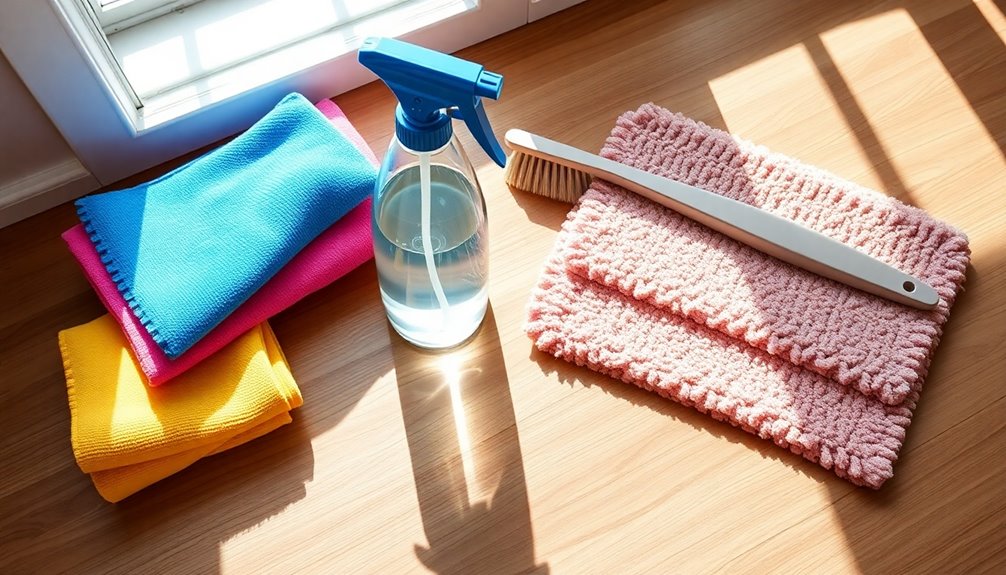
A well-equipped cleaning arsenal can make all the difference in maintaining a tidy home. To tackle your cleaning tasks efficiently, gather essential tools and supplies that suit your needs.
Consider these items to boost your cleaning routine:
- Surface cleaners: Choose eco-friendly supplies that are safe for your family and pets.
- Vacuum options: Invest in a quality vacuum to handle various surfaces and dirt types.
- Mop types: Select a mop that’s easy to use and effective for your floors.
- Storage bins: Use these for organization tips, keeping your cleaning products and tools neatly arranged.
Additionally, incorporating biodegradable sponges can enhance your cleaning process while being environmentally conscious.
With the right cleaning products and time-saving gadgets, you’ll streamline your routine and enjoy a cleaner home.
Daily Cleaning Tasks to Keep Clutter at Bay
To keep clutter at bay, you’ll want to tackle a few essential daily tasks.
Simple habits can make a big difference, helping you maintain a tidy home without the overwhelm.
Let’s explore some quick clutter-busting tips that fit easily into your routine. Establishing daily cleaning routines can significantly reduce clutter and promote organization.
Essential Daily Tasks
Keeping your home tidy doesn’t have to be an intimidating task; just a few essential daily chores can make all the difference.
By incorporating these simple daily habits into your cleaning routines, you’ll maintain a clutter-free space that feels inviting.
- Make your bed every morning.
- Wipe down kitchen counters after meals.
- Sort and put away mail daily.
- Do a quick evening tidy-up before bed.
These tasks only take a few minutes each but create a significant impact.
By staying consistent, you’ll find that a little effort each day prevents overwhelming messes and keeps your home feeling fresh and organized.
Start today, and watch how these small changes transform your living space!
Quick Clutter-Busting Tips
Although clutter can creep in unexpectedly, implementing a few quick daily tasks can help you stay on top of it.
Start by identifying different clutter types in your home—like mail, clothes, or dishes—and tackle them individually. Set a timer for 10 minutes each day to declutter a specific area.
Use decluttering strategies such as the “one-in, one-out” rule: for every new item you bring in, let go of an old one. Create designated spots for essentials, ensuring everything has a home.
Encourage family members to do the same, making it a team effort. By staying consistent with these small tasks, you’ll keep clutter at bay and maintain a more organized, peaceful living space.
Weekly Chores: A Breakdown by Room
Breaking down your weekly chores by room can make cleaning feel less overwhelming and more manageable. Focus on key areas to maintain a clean and organized home.
Here’s a simple guide:
- Kitchen cleanliness: Wipe down surfaces and tackle the fridge.
- Bathroom basics: Sanitize surfaces, clean mirrors, and restock essentials.
- Living room: Use effective dusting techniques and tidy up clutter.
- Bedroom refresh: Change linens, organize your space, and manage pet hair.
Incorporating laundry routines throughout the week makes it easier to handle.
Don’t forget to include seasonal decluttering to keep your space fresh.
Incorporating seasonal decluttering is essential for maintaining a fresh and inviting space.
With these organizing tips, you’ll create a home that feels inviting and stress-free.
Monthly Deep-Cleaning Tasks You Shouldn’t Skip
When it comes to keeping your home in top shape, monthly deep-cleaning tasks are essential. You shouldn’t overlook key areas that need attention, and seasonal maintenance can make a big difference. Plus, having the right tools will help you tackle these jobs effectively. Incorporating a structured cleaning schedule ensures that you cover all necessary areas without feeling overwhelmed.
Essential Deep-Clean Areas
While you may keep up with weekly cleaning tasks, it’s vital to prioritize deep-clean areas each month to maintain a healthy home.
By following a deep clean checklist, you’ll guarantee that essential areas don’t get overlooked. These tasks can make a big difference in your home’s cleanliness and comfort.
- Kitchen appliances: Deep clean the oven, refrigerator, and microwave.
- Bathrooms: Scrub grout and descale showerheads.
- Dusting: Get rid of dust from ceiling fans and light fixtures.
- Floors: Move furniture to vacuum and mop those hard-to-reach spots.
Incorporating these essential areas into your monthly routine will help keep your living space fresh and inviting.
Seasonal Maintenance Tasks
As the seasons change, it’s essential to tackle specific maintenance tasks that often get overlooked in your regular cleaning routine.
Create seasonal checklists to guarantee you cover everything. For spring, consider deep cleaning your windows and checking for any water leaks.
In summer, focus on outdoor areas—cleaning patios and checking your grill.
Fall is the perfect time to inspect your heating system and clean gutters, preparing for winter.
Finally, during winter, don’t forget about checking smoke detectors and making sure your home stays dry.
Each task reflects climate considerations, ensuring your home remains safe and efficient throughout the year.
Tools For Effective Cleaning
Effective cleaning starts with the right tools. Investing in quality cleaning gadgets makes a world of difference.
With eco-friendly supplies, you can keep your home spotless without harming the environment. Incorporate time-saving tools into your routine, like efficient vacuums and multi-purpose cleaners that tackle various surfaces in one go.
Organizing caddies help you keep everything in one place, making deep cleaning a breeze.
Here are some must-have items for your cleaning arsenal:
- Microfiber cloths for dusting and polishing
- Scrubbing brushes for tough stains
- Storage solutions to keep supplies organized
- Cleaning checklists to stay on track
With these tools, you’ll streamline your cleaning process and guarantee you don’t skip those essential monthly tasks.
Tips for Involving the Whole Family in Cleaning
Getting the whole family involved in cleaning can transform a chore into a fun, shared experience. Start by implementing chore rotation, so everyone knows their responsibilities.
Assign age-appropriate tasks to guarantee everyone contributes effectively. Use teamwork strategies to encourage collaboration; perhaps tackle larger jobs together.
Introduce cleaning games to make the process enjoyable, like timed challenges or scavenger hunts for items to clean. Don’t forget motivation techniques—set up reward systems for completed tasks, like a family movie night or treats.
Good communication is key; discuss what needs to be done and listen to everyone’s ideas. By fostering a positive environment, family cleaning becomes less of a burden and more of a bonding activity. Additionally, incorporating mindfulness practices during cleaning sessions can enhance the overall experience for everyone involved.
How to Stay Motivated to Stick to Your Schedule
Sticking to your cleaning schedule can feel challenging, but a few strategies can keep you motivated.
Try incorporating some effective motivation techniques to make cleaning less of a chore. Here are a few tips:
- Set small goals: Break tasks into bite-sized pieces, so they feel more manageable.
- Use timers: Challenge yourself to clean for just 15 minutes and see how much you can accomplish.
- Reward yourself: Treat yourself after completing tasks to create a positive association with cleaning.
- Find an accountability partner: Share your schedule with a friend or family member to keep each other on track.
Additionally, consider implementing a systematic approach to your cleaning tasks to enhance efficiency and ensure thoroughness.
Adjusting Your Cleaning Routine for Different Seasons
As the seasons change, so do your cleaning needs, which means it’s essential to adjust your routine accordingly.
Create seasonal checklists to help you focus on specific tasks each time the weather shifts. For example, in spring, prioritize deep cleaning windows and decluttering spaces to make way for new energy. Regular cleaning can increase home value and prevent costly repairs, making it even more vital during seasonal transitions.
In summer, you might want to tackle outdoor areas like patios and gardens.
As fall arrives, shift your focus to preparing your home for winter—check gutters and clean heating vents.
Finally, winter calls for a focus on cozy indoor spaces, ensuring dust and allergens are kept at bay.
Handling Unexpected Messes: Quick Fixes
While unexpected messes can throw you off your cleaning schedule, having a few quick fixes in your arsenal can make all the difference.
Here are some efficient strategies for quick cleanups that provide stress relief and help with clutter control:
- Baking Soda Magic: Sprinkle it on spills or odors for easy cleanup.
- Multi-Surface Wipes: Keep them handy for emergency solutions on countertops or tables.
- Clear Bins: Use these for mess prevention—toss items in when you’re short on time.
- Timer Tactics: Set a timer for 10 minutes to tackle messes quickly and improve time management.
- Natural Remedies: Incorporate eco-friendly methods for cleaning that are effective and safe for your home.
With these cleaning hacks, you’ll stay on top of unexpected challenges and maintain a tidy home!
Time-Saving Cleaning Hacks for Busy Lives
When you’re juggling a busy schedule, finding time for cleaning can feel impossible, but implementing a few smart hacks can streamline the process.
Start with cleaning shortcuts that help you maintain a tidy space without dedicating hours. For instance, keep a small caddy with essential supplies handy, so you’re always ready for quick clean-ups.
Adopt organization strategies like decluttering regularly; this reduces the amount of stuff that needs cleaning. Use baskets to group similar items and make tidying up quicker.
Set a timer for short bursts of cleaning—just 10 minutes can make a big difference. Finally, tackle one area at a time to avoid feeling overwhelmed. Incorporating speed cleaning techniques into your routine can revolutionize how you manage household chores.
With these strategies, you’ll find cleaning becomes more manageable in your busy life.
Setting Up a Reward System for Cleaning Success
Creating a reward system can boost your motivation to keep your space clean. By establishing clear reward categories, you can tailor your incentive ideas to fit your personal motivations.
Start tracking progress to celebrate those cleaning milestones, whether solo or as a family. Consider incorporating team challenges to make cleaning fun and engaging.
- Set up family rewards for everyone’s efforts.
- Create small incentives for daily tasks and bigger ones for weekly goals.
- Plan celebration moments after achieving significant milestones.
- Use a chart or app to visually track your progress.
With a well-structured reward system, you’ll find cleaning becomes less of a chore and more of an opportunity to enjoy your space together!
Maintaining a Tidy Home Between Cleanings
To keep your home tidy between cleanings, develop a daily routine that incorporates quick tasks. Start with five minutes each morning to make your bed and put away items left out.
In the evening, tackle any dishes and wipe down surfaces. This daily commitment boosts your cleaning motivation and prevents clutter from piling up.
For clutter management, designate a spot for everything and encourage family members to do the same. Use baskets or bins to quickly gather stray items.
When you notice clutter accumulating, take a moment to sort through it. By maintaining these habits, you’ll find that your home stays organized and welcoming, making your weekly cleanings much easier and less overwhelming.
Conclusion
By establishing a weekly cleaning schedule, you transform chaos into calm, making your home a haven rather than a hassle. You’ll find that a few minutes each day keeps clutter at bay, while dedicated cleaning sessions turn challenging tasks into manageable ones. Embrace the satisfaction of a tidy space, and remember: a little effort now means less stress later. So, grab your supplies, stick to your plan, and enjoy the rewards of a cleaner, more organized life.