As a pet owner, you should focus on deep cleaning tasks monthly to create a safe environment for your furry friends. Wash and refresh their bedding, clean toys to eliminate germs, and vacuum thoroughly, including under furniture. Don’t forget to disinfect food and water bowls, deep-clean carpets, and change air filters for fresh air. Organizing pet records is essential too. There’s much more to reflect on for a clean home, so keep exploring these important tasks.
Wash and Refresh Pet Bedding Regularly
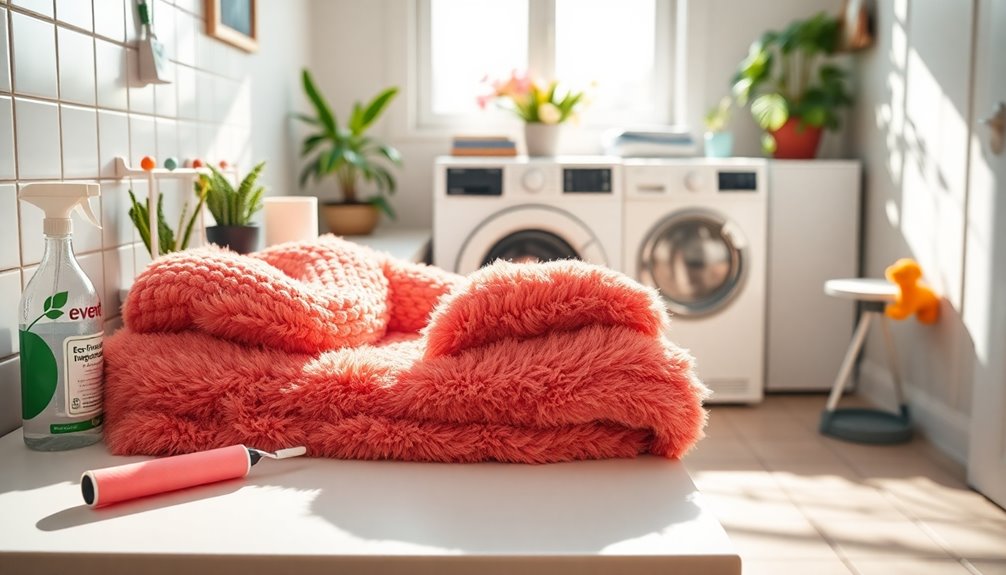
When you have pets, washing and revitalizing their bedding regularly is essential for maintaining a clean and healthy home. Depending on the bedding materials, you might need to wash them weekly or biweekly. Fabrics like cotton and microfiber tend to trap dirt and odors, so keep an eye on them. If your pet has allergies, you may want to increase the washing frequency to combat allergens. Always follow the care instructions to avoid damaging the materials. Using pet-safe detergents can help eliminate any residual odors without harming your furry friend. After washing, make certain to dry the bedding thoroughly to prevent mold growth. Regularly revitalizing their bedding not only keeps your home cleaner but also guarantees your pet sleeps comfortably. Additionally, incorporating regular grooming and bathing can further help control odors and keep blankets fresh.
Clean Pet Toys to Eliminate Germs
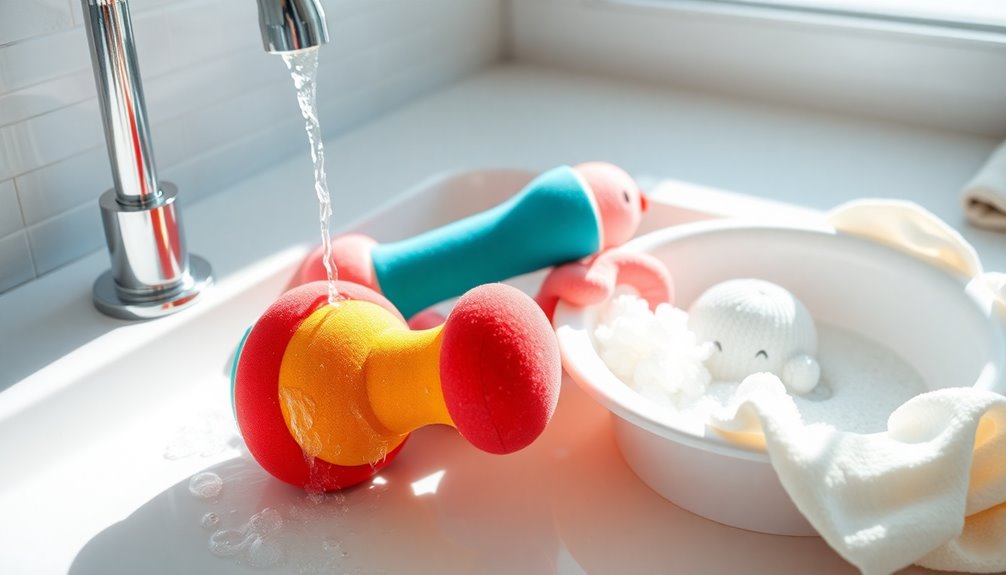
Since pet toys can harbor germs and bacteria, cleaning them regularly is crucial for your pet’s health.
Use effective toy disinfecting techniques to guarantee a germ-free playtime. Start by checking the labels on your pet’s toys—many are machine washable. Toss them in with your laundry or use a gentle cycle with pet-safe detergent.
For non-washable toys, wipe them down with a mixture of water and white vinegar or a pet-safe disinfectant. Let them air dry completely before giving them back to your furry friend. Additionally, regular cleaning of toys can help reduce microbial hazards that may affect your pet’s well-being.
Don’t forget to clean plush toys and rubber chew toys regularly, as they can accumulate dirt and germs. Keeping your pet’s toys clean helps protect their health and keeps playtime enjoyable!
Vacuum Thoroughly, Including Under Furniture
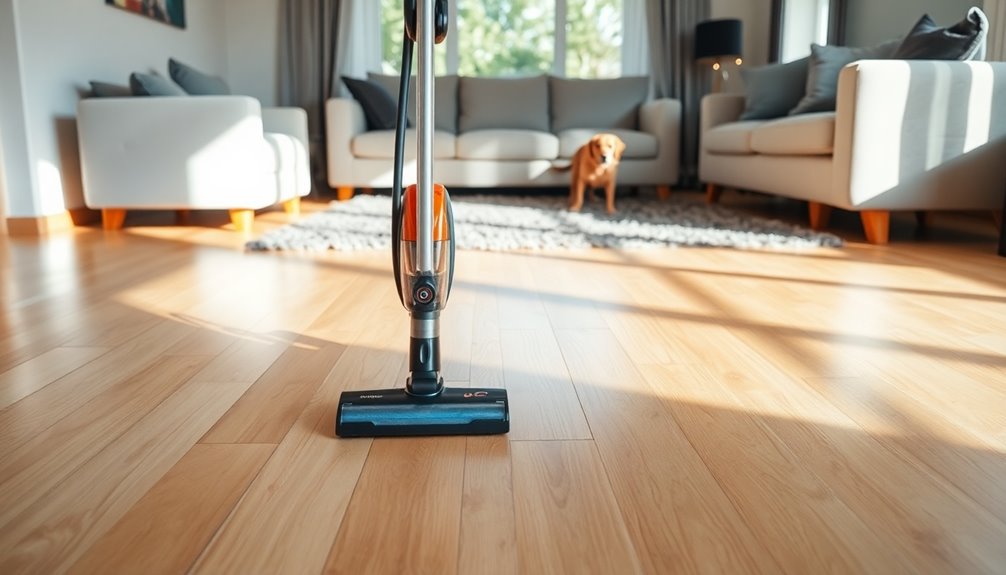
Vacuuming regularly is essential for keeping your home free from pet hair and allergens.
To make the most of your efforts, use efficient techniques that reach every corner, especially under furniture where debris tends to accumulate. Additionally, employing slow, deliberate strokes can significantly enhance your vacuuming effectiveness by ensuring a thorough clean of carpet fibers.
Importance Of Vacuuming Regularly
Even if you think your home looks clean, neglecting regular vacuuming can leave hidden pet hair and dander lurking beneath furniture and in hard-to-reach areas.
By vacuuming thoroughly, you’ll not only remove visible hair but also improve your indoor air quality. Pet dander can trigger allergies, so keeping up with vacuuming is vital for a healthy home.
Regular vacuuming guarantees your vacuum filters stay clean and effective. Clogged filters can reduce suction power, making it harder to pick up stubborn pet hair.
Plus, it helps keep your vacuum in better condition, extending its lifespan. Make it a habit to vacuum regularly, and you’ll enjoy a cleaner, fresher living space for both you and your furry friends.
Best Techniques For Efficiency
To maximize your vacuuming efficiency, focus on tackling hard-to-reach areas, especially under furniture where pet hair often hides.
Use efficient cleaning hacks like attaching a crevice tool to your vacuum for those tight spots. Move furniture when possible; this not only guarantees a thorough clean but also prevents hair buildup.
Consider setting a timer for each room as a time-saving technique, keeping you focused and efficient. Always vacuum in a systematic pattern, like a grid, to avoid missing any areas.
Don’t forget to empty your vacuum regularly for peak suction power. By implementing these strategies, you’ll make your monthly deep cleaning quicker and more effective, leaving you with more time to enjoy with your furry friends!
Deep-Clean Carpets to Remove Hair and Odors
A clean carpet is essential for maintaining a fresh home, especially when you share your space with furry friends.
Start by vacuuming thoroughly to remove pet hair and dander. Don’t forget to use a vacuum equipped with a HEPA filter for the best results.
For deeper cleaning, consider renting a carpet cleaner or using a steam cleaner to tackle embedded dirt and odors. You can also sprinkle carpet fresheners before vacuuming to help with odor elimination.
Look for products specifically designed for pet owners to neutralize smells effectively. Regular use of natural remedies can also aid in maintaining a cleaner environment and removing stubborn odors.
After cleaning, allow your carpets to dry completely to prevent mold and mildew.
Regular deep-cleaning will keep your carpets looking great and your home smelling fresh.
Disinfect Food and Water Bowls Monthly
Since your pets eat and drink from their bowls daily, it’s important to disinfect them monthly to prevent the buildup of bacteria and odors.
Start your bowl cleaning routine by emptying and rinsing both the food and water bowls. Use a pet-safe disinfectant or a mixture of vinegar and water to scrub the surfaces thoroughly. Eco-friendly products can be particularly effective in breaking down bacteria without exposing your pets to harsh chemicals.
Pay special attention to any nooks where food particles might hide. Rinse well to remove any cleaning residue, then dry the bowls completely before refilling them.
This monthly practice not only keeps your pets healthy but also maintains their dining area fresh. Regular bowl cleaning is a simple yet effective step in your bacteria prevention strategy that contributes to your pet’s overall well-being.
Wipe Down High-Touch Areas for Hygiene
It’s crucial to keep high-touch areas clean, especially when you have pets roaming around.
Surfaces like doorknobs, light switches, and remote controls can harbor germs and pet dander.
Using effective cleaning solutions can help you maintain a healthy environment for both you and your furry friends. Additionally, incorporating proper ventilation practices while cleaning can further reduce indoor air pollutants and enhance overall air quality.
Common High-Touch Surfaces
High-touch surfaces in your home can harbor bacteria and allergens, especially when you have pets. Focus on cleaning areas that you and your furry friends interact with daily.
Common high-touch surfaces include doorknobs, light switches, remote controls, and countertops. Don’t forget pet-related items like food and water bowls, leashes, and toys, as these can also become germ hotspots.
Regularly wiping down these surfaces helps reduce the risk of illness and keeps your environment healthy. Pay special attention to your pet’s favorite resting spots, as they can trap dander and dirt.
Effective Cleaning Solutions
To keep your living space hygienic, using effective cleaning solutions is key. Focus on high-touch areas like doorknobs, light switches, and pet toys, which can harbor germs.
Natural cleaners are an excellent choice, as they’re safe for both you and your furry friends. Try a simple solution of equal parts vinegar and water for a powerful, eco-friendly disinfectant. You can also use baking soda to tackle tough stains or odors.
While commercial products work, many contain harsh chemicals that can be harmful. By opting for eco-friendly solutions, you not only protect your pets but also contribute to a healthier environment.
Make it a habit to wipe down these surfaces monthly for a cleaner, safer home.
Clean and Sanitize Pet Crates and Carriers
Pet crates and carriers serve as essential safe havens for your furry friends, but they can quickly accumulate dirt, odors, and bacteria.
For effective crate maintenance, start by removing all bedding and toys, then vacuum any loose fur or debris. Use a pet-safe cleaner to wipe down surfaces, ensuring you get into corners and crevices. Rinse with water and dry thoroughly to prevent moisture buildup.
Don’t forget to sanitize the carrier by spraying it with a disinfectant designed for pet use, such as a DIY disinfecting spray. Allow it to air dry completely before reintroducing your pet.
Regular attention to carrier hygiene not only keeps your pet healthy but also makes their space more inviting. Aim to do this task monthly for the best results.
Wash Pet Grooming Supplies to Avoid Bacteria
Keeping your pet grooming supplies clean is essential to prevent bacteria buildup.
Regularly washing brushes, combs, and clippers not only promotes your pet’s health but also enhances their grooming experience. To ensure maximum cleanliness, consider using a disinfectant solution to eliminate harmful germs during washing.
Let’s explore effective washing techniques to guarantee your tools are always in top shape.
Importance Of Regular Cleaning
While you may enjoy cuddling with your furry friend, neglecting to regularly clean their grooming supplies can lead to a buildup of harmful bacteria. Establishing a consistent cleaning frequency is vital for maintaining your pet’s health.
Dirty brushes, combs, and toys can harbor germs that may cause skin irritations or infections. By washing these items monthly, you not only guarantee your pet stays healthy but also promote a cleaner home environment.
The health benefits extend beyond your pet; a clean space reduces allergens and unpleasant odors too. Regular cleaning helps prevent the spread of bacteria, making it important for both your furry companion and your family.
Effective Washing Techniques
To guarantee your grooming supplies stay free from harmful bacteria, it’s essential to use effective washing techniques.
Start by gathering your supplies and following these steps:
- Rinse Thoroughly: Before washing, rinse off any loose hair or debris to prevent clogging your washing machine.
- Optimal Detergent Selection: Choose a pet-safe detergent that’s tough on bacteria yet gentle on your grooming tools.
- Wash on Hot: Use hot water to kill germs effectively, but confirm your materials can withstand the heat.
- Dry Completely: After washing, dry your grooming tools completely to avoid moisture, which can foster bacterial growth.
Dust and Clean Shelves of Pet Supplies
Since your pet supplies can accumulate dust and allergens over time, it’s essential to give those shelves a thorough cleaning.
Start by removing all items from the shelves, allowing you to assess what you have for pet supply organization. Wipe down the shelves with a damp cloth and a pet-safe cleaner to eliminate dust and any lingering odors.
Don’t forget to check expiration dates on food and treats; dispose of anything outdated. After cleaning, return the supplies to the shelves, arranging them neatly for better shelf maintenance.
Consider using bins or baskets to keep similar items together. Regularly dusting and organizing guarantees a cleaner environment for you and your pet, promoting their health and happiness. Incorporating non-toxic cleaning alternatives ensures a safe space for both you and your furry friends while effectively tackling messes.
Clean and Organize the Pet Area for Safety
To keep your pet safe, start by removing any hazardous items from their area. Make sure to organize pet supplies so everything is easily accessible and secure. A tidy space not only enhances safety but also creates a more enjoyable environment for you and your furry friend. Additionally, maintaining a hygienic environment through regular cleaning routines can help reduce allergens and promote the health of both you and your pet.
Remove Hazardous Items
Creating a safe environment for your pets starts with removing hazardous items from their area.
Ensuring pet safety means regularly checking for hazardous materials that could harm your furry friends. Here are four items to look out for:
- Cleaning Supplies: Store chemicals like bleach and detergents out of reach.
- Medications: Keep all medications, including over-the-counter ones, secured.
- Plants: Remove or relocate toxic plants that can be harmful if ingested.
- Electrical Cords: Organize and conceal cords to prevent chewing and potential shocks.
Organize Pet Supplies
A well-organized pet area not only enhances your home’s aesthetic but also promotes safety and efficiency for both you and your furry companions.
Start by evaluating your pet supply inventory—food, toys, grooming tools, and medications. Discard any expired items or those that are no longer used.
Next, invest in pet supply storage solutions like bins or shelves to keep everything tidy and accessible. Clearly label containers to make finding items a breeze.
Make sure that frequently used items are within reach while safely storing any hazardous materials out of your pet’s reach.
Regularly revisiting your organization system helps maintain a clutter-free space, making certain both you and your pets enjoy a safe, functional environment.
Deodorize and Sanitize the Litter Box
Although keeping a clean litter box can feel like a never-ending chore, regular deodorizing and sanitizing are crucial for maintaining a fresh home and your pet’s health.
Effective litter box maintenance not only guarantees proper odor control but also prevents health issues.
Here are four steps to deodorize and sanitize your litter box:
- Empty the Litter Box: Remove all used litter and waste thoroughly.
- Wash the Box: Use warm, soapy water or a mild pet-safe cleaner to scrub the box.
- Rinse and Dry: Rinse thoroughly to eliminate soap residue and dry completely.
- Add Fresh Litter: Fill the box with a high-quality litter designed for odor control.
Clean Outdoor Pet Spaces for a Healthy Environment
Keeping your outdoor pet spaces clean is essential for their health and happiness.
Regular waste removal prevents unpleasant odors and harmful bacteria from accumulating.
Plus, disinfecting these areas guarantees a safe environment for both your pets and your family.
Regular Waste Removal
When you regularly remove waste from your pet’s outdoor space, you create a healthier environment for both your furry friend and your family.
Keeping areas clean not only prevents unpleasant odors but also helps reduce the risk of disease.
Here are some effective waste disposal tips to follow:
- Schedule regular clean-ups: Set aside time weekly to check for and remove waste.
- Use appropriate tools: Invest in a sturdy pooper scooper or waste bags for easy collection.
- Dispose of waste properly: Seal it in bags and throw it away in your trash bin.
- Maintain litter box cleanliness: Regularly check and clean the litter box to prevent odors and attract pests.
Disinfecting Pet Areas
A clean outdoor space is essential for your pet’s health and well-being. Regularly disinfecting surfaces, like your pet’s kennel or play area, helps prevent the buildup of harmful bacteria and parasites.
Start by removing any debris and waste. Then, choose pet safe cleaners that effectively eliminate germs without posing risks to your furry friend.
Apply the cleaner according to the product instructions, ensuring you cover all surfaces, including toys and equipment. Let it sit for the recommended time before rinsing thoroughly.
Don’t forget to wash your pet’s bedding regularly too! By committing to these cleaning tasks, you’ll create a healthier environment for your pet to enjoy, minimizing the chance of illness and promoting their overall happiness.
Deep-Clean Upholstered Furniture for Fur Removal
Upholstered furniture can quickly become a magnet for pet hair, making regular cleaning a necessity for pet owners.
Upholstered furniture attracts pet hair, making regular cleaning essential for pet owners.
Using effective upholstery cleaning techniques and proper fur removal tools can help keep your furniture looking fresh. Here are four steps to deep-clean your upholstered furniture:
- Vacuum: Use a vacuum with a pet hair attachment to remove loose fur and dander.
- Lint Roller: Roll a lint roller over the fabric to pick up stubborn hair that the vacuum missed.
- Fabric Brush: Use a fabric brush to loosen embedded fur and dirt.
- Spot Clean: If any stains or odors linger, spot clean with a pet-safe upholstery cleaner.
With these methods, you’ll keep your furniture fur-free and inviting.
Wash and Care for Pet Clothing and Accessories
Keeping your pet’s clothing and accessories clean is essential to their health and comfort. Regular washing helps eliminate dirt, allergens, and odors, ensuring your furry friend feels their best.
When choosing materials for pet fashion, opt for machine-washable fabrics that can withstand frequent cleaning. Look for durable options like polyester or cotton blends, which are easy to maintain and comfortable for your pet.
It’s also important to check for any specific care instructions, as some items may require special treatment.
Don’t forget to wash collars, leashes, and pet beds too! Regularly maintaining these items not only keeps your pet stylish but also promotes a healthier living environment.
Make it a monthly routine to inspect and refresh your pet’s wardrobe!
Treat and Clean Pet Stains Immediately
After ensuring your pet’s clothing and accessories are clean, it’s time to tackle any stains they might leave behind.
Prompt action is essential for effective pet odor removal and stain prevention.
Timely intervention is crucial for successfully eliminating pet odors and preventing stains from setting in.
Here’s how to address those pesky stains:
- Blot the Stain: Use a clean cloth to absorb as much liquid as possible without rubbing.
- Apply a Cleaner: Use a pet-safe cleaner specifically designed for stain removal.
- Rinse: Gently rinse the area with water to remove any residue from the cleaner.
- Dry: Pat the area dry with a towel, ensuring it’s completely dry to prevent mold or odors.
Inspect and Clean Air Vents for Allergens
Since pets can stir up allergens that linger in your home, inspecting and cleaning your air vents is essential for maintaining a healthy environment.
Air vents can become significant allergen sources, trapping pet hair, dander, and dust. Start by turning off your HVAC system to prevent any debris from circulating. Remove vent covers and vacuum the inside thoroughly to eliminate buildup. Use a damp cloth to wipe down the covers before reattaching them.
Additionally, consider replacing air filters monthly, as they help trap allergens and improve air quality.
Regularly cleaning your air vents not only reduces allergens but also enhances the efficiency of your heating and cooling system, ensuring you and your pets breathe easier.
Clean Windows to Maintain a Clear View
When you clean your windows, not only do you enhance the view, but you also let in more natural light, which can uplift both your mood and your pet’s environment.
Here are some effective window cleaning tips to guarantee you’re maintaining visibility and a spotless shine:
- Use a microfiber cloth to prevent streaks while cleaning.
- Mix equal parts vinegar and water for a natural cleaning solution that’s pet-friendly.
- Wash windows on cloudy days to avoid quick drying, which can leave streaks.
- Clean window tracks with a vacuum attachment to remove dirt and pet hair.
Regularly Change Air Filters for Fresh Air
Keeping your windows clean improves your home’s ambiance, but ensuring the air you breathe is fresh is just as important, especially for pet owners.
Regularly changing your air filters plays a vital role in maintaining good air quality. Pet dander, hair, and odors can accumulate quickly, so it’s essential to check your filters every month.
When you neglect filter maintenance, you risk reducing airflow and letting allergens circulate throughout your home. Simply replace your filters according to your system’s recommendations, usually every 1-3 months.
Organize Pet Records and Important Documents
A well-organized pet record system can save you time and reduce stress when dealing with your furry companions.
Proper record keeping and document organization are essential for managing your pet’s health and wellbeing. Here’s how to streamline your documents:
- Vaccination Records: Keep a copy of all vaccination histories and updates.
- Medical History: Document any past illnesses, treatments, or surgeries for easy reference.
- Training Certificates: Maintain records of training courses or certifications your pet has completed.
- Identification Documents: Store copies of microchip information, adoption papers, and pet insurance details.
Schedule a Deep Clean for the Entire Home
Since pets can leave behind fur, dander, and odors, scheduling a deep clean for your entire home is crucial for maintaining a healthy environment.
To make this task easier, create a deep clean checklist that includes your living spaces, carpets, upholstery, and pet areas. Break down the cleaning tasks into manageable sections so you won’t feel overwhelmed.
Set up scheduling reminders on your phone or calendar to guarantee you don’t forget each month. Consider enlisting help from family members or hiring professionals if you need extra hands.
A thorough deep clean not only keeps your home fresh but also contributes to your pet’s health, minimizing allergens and odors that can accumulate over time.
Conclusion
So, while your furry friend lounges in their royal throne (aka your couch), it’s time to release your inner cleaning warrior! You’ve got a month’s worth of deep cleaning tasks to tackle, ensuring your home doesn’t resemble a pet-themed disaster zone. Embrace the chaos, grab that vacuum, and channel your best cleaning superhero. After all, a clean home means fewer surprises under the couch—and who wouldn’t want to avoid finding last week’s sock in there? Happy cleaning!