Last updated: · By Megan Hart
The best mop and bucket for your floors depends on your floor type, how dirty the floor gets, and whether you need to disinfect or simply clean. For most homes, a microfiber mop with washable pads and a bucket with a built-in wringer covers the widest range of jobs, while a spray mop works well for quick spills. Mops and buckets only work as well as the habits around them, so this guide covers mop types, what to look for in a bucket, a step-by-step method, and basic hygiene and safety.
This guide draws on published studies and general product design. It does not report lab tests of specific models, and brand specifications change often, so check the current label or manufacturer page before you buy.
Key Takeaways
- In one hospital floor study, a microfiber mop system with a detergent cleaner removed about 95% of microbes, compared with about 68% for cotton string mops.
- The CDC advises cleaning a surface before disinfecting it, because dirt can reduce how well disinfectant chemicals kill germs.
- CDC healthcare guidance calls for mop heads and cleaning cloths to be laundered and fully dried regularly, at least daily in those settings.
- Steam mops are not suitable for every floor, so check the manufacturer’s instructions before using one on wood, laminate or unsealed surfaces.
- Never mix bleach with ammonia or acidic cleaners, and keep the room ventilated while you mop.
What Are the Main Types of Mops?
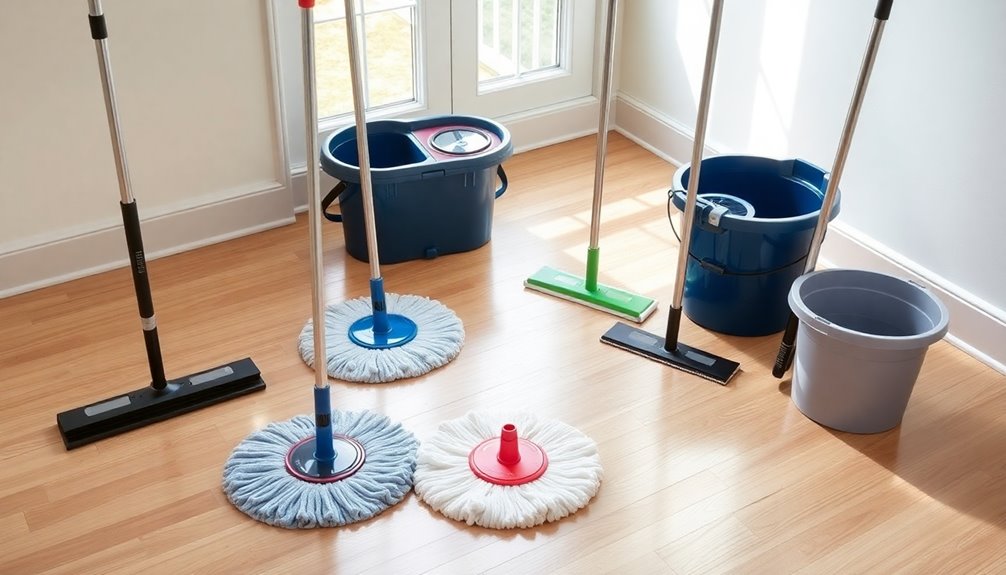
The five common mop types are spray mops, spin mops, traditional string mops, flat microfiber mops and steam mops. Each suits different floors and messes, and none cleans every surface equally well. The table below compares them at a glance.
| Mop type | Best for | Main limitation |
|---|---|---|
| Spray mop | Quick cleanups and light daily dirt | Covers a small area per pass and relies on a refillable solution tank |
| Spin mop and bucket | Larger rooms and more controlled wetness | The bucket needs floor storage space |
| Traditional string mop | Heavy grime on tile, vinyl and sealed concrete | Can leave more water behind and spread dirt if not rinsed often |
| Flat microfiber mop | Fine dust, everyday dirt and washable pad use | Pads need frequent washing and full drying |
| Steam mop | Some sealed tile and sealed stone floors | Not suitable for many wood and laminate floors; heat and moisture can cause damage |
Which Mop Should You Start With?
If you own one mop, choose a microfiber flat mop with washable pads, since it handles dust and everyday dirt on most hard floors. Add a bucket with a wringer if you clean larger rooms or use stronger cleaners. A spray mop is a useful second tool for quick cleanups in kitchens and entryways.
Are Microfiber Mops Better Than Cotton?
Microfiber mops appear to remove more microbes from floors than cotton string mops, based on the available studies, but most of the evidence comes from clinical settings. A hospital floor study led by Rutala and colleagues found that a microfiber mop system removed about 95% of microbes with a detergent cleaner, compared with about 68% for cotton string mops. The same study found that adding a disinfectant did not improve the microfiber result.
A 2022 study in the American Journal of Infection Control by Fulenchek and colleagues compared new and laundered microfiber mop pads in a clinical setting. The authors found similar microbial removal for both, which suggests that properly laundered pads can keep performing. They also note that CDC prefers microfiber for environmental cleaning because of its enhanced microbial removal. You can read the Fulenchek study comparing new and reprocessed microfiber on health care surfaces for the full methods.
These results come from hospital floors, not kitchens or bedrooms. Home dirt, floor finishes and cleaning routines differ, and these studies did not measure whether mopping prevents illness in a house. For most households, the practical takeaway is that microfiber with a detergent cleaner and clean pads is a reasonable everyday choice. For the original hospital comparison, see the microbiologic evaluation of microfiber mops for surface disinfection.
How Do You Choose a Bucket for Mopping?
A good mop bucket holds enough water for a full room, keeps clean and dirty water apart, and wrings the mop head without soaking your hands. Capacity and footprint are the two trade-offs to weigh. Larger buckets reduce refills but take up more space in a closet or on a kitchen floor.
- Capacity: Choose a size that covers your largest room in one or two fills. Smaller buckets are easier to carry but need more refills.
- Two compartments: A wash side and a rinse or wring side keep dirty water out of your clean solution.
- Wringer fit: Confirm the wringer works with your mop head, since some pads and heads only fit certain systems.
- Height and wheels: Wheels and a comfortable handle height reduce strain on your back and shoulders during long sessions.
- Storage footprint: Measure your closet before buying a large spin-mop bucket.
How Do You Mop Floors Step by Step?
Effective mopping starts with removing loose dirt and then cleaning with the right solution while rinsing the mop head often. The cleaning step matters even when you plan to disinfect, because CDC advises cleaning surfaces before disinfecting them.
- Sweep or vacuum the floor first. Loose grit can scratch finishes and turn into streaks when it gets wet.
- Fill the bucket with the amount of cleaner the label specifies. Use warm water only if the label allows it.
- Dip the mop head and wring it until it is damp rather than dripping. Start in the corner farthest from the exit.
- Work in sections, moving toward the exit so you never step on a freshly mopped area.
- Rinse or swap the mop head when it looks dirty, and change the water when it turns cloudy or gritty.
- Let the floor air-dry fully, and keep people and pets off it until it is dry to reduce slip risk.
If your floor is glazed tile or grout-heavy, compare options in our guide to tile cleaners for kitchen floor maintenance before choosing a cleaner for your mop.
How Should You Care for Mop Heads and Pads?
Wash reusable pads after each heavy use, dry them completely, and replace disposable or worn pads when they stop picking up dirt. CDC healthcare guidance recommends decontaminating mop heads and cleaning cloths regularly, including laundering and drying them at least daily. That standard is stricter than most homes need, but the principle applies: a dirty mop head spreads soil instead of removing it.
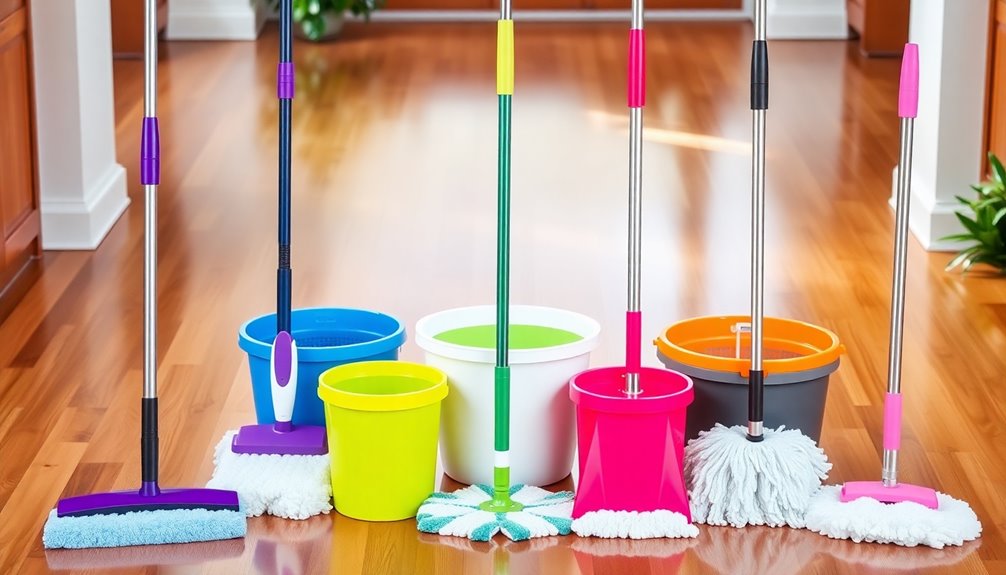
Damp pads left in a closed bucket or cabinet can develop odors and mildew. Rinse the bucket and wringer after each use, and store the mop with the head hanging or standing upright so air can reach it. Clean the handle and wringing mechanism now and then, because grit in moving parts can make a spin mop harder to use.
How Often Should You Wash Mop Pads?
Wash pads after every kitchen or bathroom job, since those rooms collect grease, food residue and moisture. For light dusting in bedrooms or hallways, a pad can often go through several uses before washing. Always wash a pad immediately if it smells sour or looks visibly soiled.
What Safety Steps Matter When Mopping?
Read the label, never mix cleaning products, ventilate the room, and keep children and pets away until the floor is dry. Mixing certain household cleaners can release harmful gases, and bleach combined with ammonia or acidic cleaners is a common dangerous pairing. Our guide to cleaning products you should never mix lists more combinations to avoid.
Steam mops use very hot water and steam, which can cause burns, so keep cords and the steam head away from skin and children. Some steam mops also add moisture that can damage finished wood or laminate, so follow the floor manufacturer’s guidance. If you want to compare steam options for sealed floors, see our review of the best floor steamer for clean floors.
When Should You Talk to a Professional?
Talk with your doctor if someone in your home has asthma, a lung condition, or a weakened immune system and you are unsure which cleaners are safe to use. If you find recurring mold in your mop storage or on floors, or you suspect an infection in your household, ask a healthcare provider or your local health department for guidance. If someone swallows or inhales a cleaning product, call Poison Control at 1-800-222-1222 or emergency services right away.
Which Mop Setup Fits Your Home?
The right setup depends on your floor type, the size of your home and how much storage you have. Use this checklist to narrow your options before you shop.
- Sealed tile or vinyl: a microfiber flat mop or spin mop works well, and a steam mop may suit some sealed surfaces if the manufacturer allows it.
- Wood or laminate: use a damp mop with a cleaner the floor manufacturer approves, and avoid soaking the boards.
- Small apartment with limited storage: choose a spray mop or a compact flat mop.
- Large home or heavy grime: choose a spin mop with a bucket, or a two-bucket method with a rinse bucket.
- Pets or frequent spills: choose a microfiber system with washable pads that are easy to swap.
- Budget control: reusable washable pads cost less over time than disposable pads, so compare the cost per year, not just the purchase price.
If you are comparing current models, our expert picks for the best floor mops for a spotless home cover more options by price and floor type.
Frequently Asked Questions
Is a microfiber mop better than a regular mop?
Microfiber mops picked up more microbes than cotton string mops in a hospital floor study, and they tend to trap fine dust well. Their advantage depends on using clean, properly washed pads and a suitable cleaner. For most homes, a microfiber mop is a practical default for hard floors.
Can a mop disinfect a floor?
Mopping alone cleans the floor, and it does not guarantee disinfection. Disinfecting requires a product that is labeled for that purpose and used according to its label, including the contact time the surface must stay wet. CDC advises cleaning a surface before disinfecting it, because dirt can reduce disinfectant effectiveness.
How often should you change mop water?
Change the water whenever it looks cloudy, gritty or discolored, and do not keep mopping with dirty water. In a large room, you may need to change it several times during one job. Keeping a second bucket for rinsing can reduce how often you need to empty the cleaning solution.
Can I use a steam mop on hardwood floors?
Many steam mop manufacturers advise against using steam on unsealed or some sealed hardwood and laminate, because moisture can cause swelling, warping or finish damage. Check both the steam mop’s instructions and the flooring manufacturer’s care guide before you use one. If you are unsure, a damp microfiber mop with an approved cleaner is a safer choice.
Conclusion
The right mops and buckets depend on your floor type, the size of your home and how much grime you deal with. Microfiber with clean, washable pads and a bucket that wrings well covers most everyday jobs, and the research supports choosing microfiber for routine floor cleaning. Keep your pads clean and dry, follow the label on every product, and check the manufacturer’s guidance before using a steam mop on any floor.
More on Mops and Buckets
- 16 Mop and Broom Cleaning Tips Most People Don’t Know
- Best Mop and Bucket Combos for Laminate Floors
- Best Mop and Bucket Combos for Quick and Efficient Cleaning
- Best Mops for Laminate Floors in 2024
- Choosing Your Weapon: The Best Mops for Concrete, Laminate, and Hardwood Floors
- Review: The Top Robot Mops for Kitchen Floors
- The Best Floor Mops for a Spotless Home – Expert Picks
- The Best Mop for Greasy Kitchen Tiles
- Wall Cleaner Mop – The Easiest Way to Clean Walls
- Why Choose the Best Vacuum and Mop Combo?
Related guides: Shine On: The Best Floor Cleaners for Every Surface (Hardwood, Tile, Laminate & More!) · 10 Essential Cleaning Sponges for a Sparkling Home · 7 Essential Cleaning Cloth Types for Every Household
Free tools: Cleaning Products You Should Never Mix
Always follow the product label, test on a hidden area first, and never mix cleaning products such as bleach and ammonia. Read our safety disclaimer and editorial policy.
One Reply to “Top 5 Best Mops and Buckets for a Sparkling Clean Floor”